CANBERRA, Australia: US President Joe Biden, his Chinese counterpart Xi Jinping, Japanese Prime Minister Yoshihide Suga and Russian President Vladimir Putin are among Pacific Rim leaders gathering virtually to discuss strategies to help economies rebound from a resurgent COVID-19 pandemic.
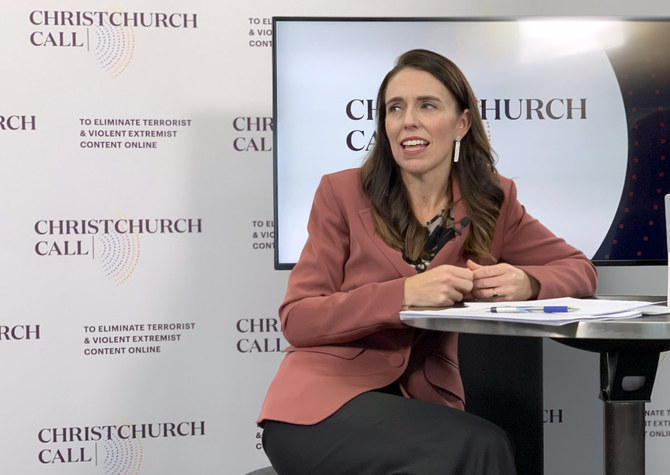
New Zealand Prime Minister Jacinda Ardern will chair the special leaders’ meeting Friday of the 21-member Asia-Pacific Economic Cooperation forum.
But the pandemic and vaccine diplomacy have proved to be divisive issues among members of a forum that says its primary goal is to support sustainable economic growth and prosperity in the Asia-Pacific region.
Biden’s participation at the meeting demonstrates US leadership in the Indo-Pacific region and the United States’ commitment to multilateral institutions, White House press secretary Jen Psaki said.
“As the president’s first engagement with many of the APEC leaders, particularly those in Southeast Asia, he will also emphasize the importance he places on the region as well as his vision for free and open Indo-Pacific,” Psaki said.
Biden would also update leaders on what the United States was doing to “serve as an arsenal of vaccines for the region” and to support all those suffering from COVID-19, she said.
China’s Foreign Ministry spokesperson Zhao Lijian said the “important meeting” came at a critical time as the world was facing a resurgence in COVID-19 infection numbers and international cooperation against the pandemic had entered a new stage.
“We hope all parties can uphold the vision of an Asia-Pacific community with a shared future, carry forward the Asia-Pacific partnership, send a positive message of fighting the coronavirus with solidarity and deepen economic recovery and cooperation,” Zhao said.
Suga will speak about his determination to hold a safe and secure Olympics when the games start in Tokyo on July 23, Japan’s Chief Cabinet Secretary Katsunobu Kato said.
Suga will also emphasis Japan’s determination to secure fair access to vaccines for all countries and regions to support the global effort toward ending the COVID-19 pandemic, and Tokyo’s vision to expand a free and fair economic bloc, Kato said.
Ardern said APEC’s first leaders’ meeting outside the usual annual summits “reflects our desire to navigate together out of the COVID-19 pandemic and economic crisis.”
“APEC economies have suffered their biggest contraction since the Second World War over the past year, with 81 million jobs lost. Responding collectively is vital to accelerate the economic recovery for the region,” said Ardern, whose South Pacific island nation has been among the most successful in the world in containing the virus.
The pace of a global vaccine rollout and conditions attached to international vaccine deals are vexed issues among APEC members.
The United States has been accused by some of hoarding vaccines. Biden came up well short on his goal of delivering 80 million doses of COVID-19 vaccine to the rest of the world by the end of June as a host of logistical and regulatory hurdles slowed the pace of US vaccine diplomacy.
Although the Biden administration has announced that about 50 countries and entities will receive a share of the excess COVID-19 vaccine doses, the US had shipped fewer than 24 million doses to 10 recipient countries by July 1, according to an Associated Press tally.
Taiwan, an APEC member that China claims as a renegade territory, has accused Beijing of tying the delivery of coronavirus vaccines to political demands. The government of the self-ruled island says China has intervened to block vaccine deliveries to Taiwan from fellow APEC members Japan and the United States.
China has accused Australia of interfering in the rollout of Chinese vaccines in former Australian colony Papua New Guinea. Both Australia and Papua New Guinea are also APEC members.
Sino-Australian relations plummeted last year when Australia called for an independent investigation into the origins of and responses to the pandemic.
China said that by May it was providing COVID-19 vaccines to nearly 40 African countries, describing its actions as purely altruistic.
The vaccines were donated or sold at “favorable prices,” a Chinese Foreign Ministry official said.
The online leaders’ meeting that is chaired from the New Zealand capital Wellington and straddles 11 time zones comes before the scheduled annual summit in November.
New Zealand’s pandemic response has been among the most effective in the world and the isolated nation of 5 million people has recorded just 26 COVID-19 deaths. But its vaccination campaign has been far slower than in most developed countries.
Ardern said leading a regional response to the pandemic was one of New Zealand’s highest priorities when it took over as APEC’s chair from Malaysia in an annual rotation among the 21 members.
“I will be inviting discussion on immediate measures to achieve more coordinated regional action to assist recovery, as well as steps that will support inclusive and sustainable growth over the long term,” she said. “APEC leaders will work together to get through the pandemic and promote a sustainable and inclusive recovery, because nobody is safe until everyone is safe.”


![]()

Pacific Rim leaders discuss economic way out of pandemic
Short Url
https://arab.news/4abfj
Pacific Rim leaders discuss economic way out of pandemic


Latest updates



© 2026 SAUDI RESEARCH & PUBLISHING COMPANY, All Rights Reserved And subject to Terms of Use Agreement.