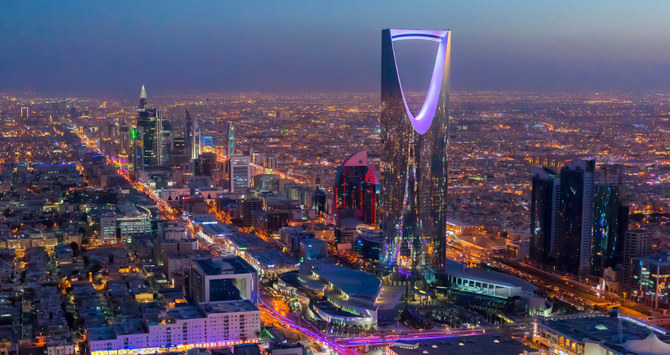
Siemens Energy to power 30,000 new homes in Riyadh

The energy company will this month start work on the project that will be fully completed by August 2023. (Shutterstock)
Short Url
Updated 02 July 2021
Follow

Siemens Energy to power 30,000 new homes in Riyadh

RIYADH: Siemens Energy is to supply power to 30,000 homes as part of the first community being built by developer Roshn in Riyadh.
Mahmoud Sulaimani, managing director of Siemens Energy in Saudi Arabia, said: “This contract will enable Siemens Energy to create more jobs for Saudi talents and will provide homes to meet the needs of Saudi families.
“One of our main values as Siemens Energy is to care for the communities where we live and so it is an honor for us to be able to contribute to such a great project.”
The energy company will this month start work on the project that will be fully completed by August 2023.
Roshn was launched in August last year by the Public Investment Fund (PIF) to deliver high-quality residential neighborhoods to Saudi nationals. The company is committed to supporting the Kingdom’s Vision 2030 goal of increasing the rate of home ownership in the country to 70 percent.
The developer’s master project in the Saudi capital will extend over an area of more than 20 million square meters and will include in excess of 30,000 homes.
The project’s first phase involves 4,000 homes that will become available for sale by the middle of this year.
In February, Roshn’s group chief executive officer, David Grover, told Arab News: “Our communities are entirely inclusive, with homes to suit all tastes and budgets. Our aim is to provide a modern, aspirational living experience while giving residents the freedom to interpret what this means to them in their own unique way.
“Our communities have been designed to inspire a strong sense of neighborly spirit and genuine connection between residents.”
Facilities will include mosques, schools, cafes, restaurants, healthcare, leisure, and entertainment options acting as a self-contained “city within a city.”


Post-break return of students drives surge in education spending, SAMA data shows

Updated 10 sec ago
Follow

Post-break return of students drives surge in education spending, SAMA data shows

RIYADH: Spending on education in Saudi Arabia increased by 141.1 percent for the week ending Jan. 24, as students returned to the classroom after the mid-year break.

This was accompanied by a 7 percent increase in spending on books and stationery, which reached SR146.17 million ($38.9 million).

According to the latest data from the Saudi Central Bank, the over POS value dropped 10.6 percent to SR12.52 billion, with transactions representing a 9.7 percent week-on-week decrease to 213.62 million.

This week saw negative changes across all the remaining sectors. Spending on bakeries and pastries saw an 18.4 percent decline to SR229.71 million, while gas stations saw an 11 percent drop. Professional and business services decreased by 11.6 percent.

Expenditure on apparel and clothing fell by 19.7 percent to SR985.94 million, followed by a 2.8 percent drop in spending on jewelry.

Spending on car rentals in the Kingdom fell by 14.7 percent, while airlines saw a 9.3 percent decrease to SR38.16 million.

Expenditure on food and beverages saw a 7.9 percent decline to SR1.88 billion, claiming the largest share of the POS. Restaurants and cafes retained the second position despite an 18.5 percent decrease to SR1.50 billion.

Geographically, Riyadh accounted for the largest share of total POS spending, but still saw a 6 percent dip to SR4.46 billion, down from SR4.74 billion the previous week. The number of transactions in the capital settled at 69.07 million, down 6.8 percent week on week.

In Jeddah, transaction values decreased by 13.6 percent to SR1.75 billion, while Dammam reported a 4.8 percent decrease to SR640.59 million.

POS data, tracked weekly by SAMA, provides an indicator of consumer spending trends and the ongoing growth of digital payments in Saudi Arabia. 

The data also highlights the expanding reach of POS infrastructure, extending beyond major retail hubs to smaller cities and service sectors, supporting broader digital inclusion initiatives. 

The growth of digital payment technologies aligns with the Kingdom’s Vision 2030 objectives, promoting electronic transactions and contributing to the Kingdom’s broader digital economy.