

Saudi mortgage firm buys portion of ANB’s housing finance portfolio

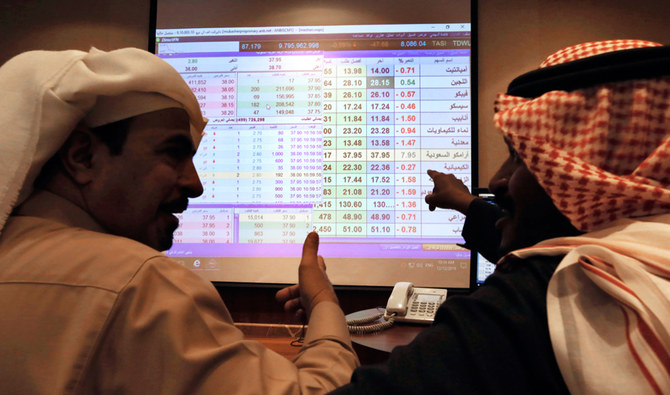
Saudi traders chat as they follow a screen displaying Saudi stock market values at the Arab National Bank in Riyadh, Saudi Arabia. (AP file photo)
Short Url
Updated 29 June 2021
Follow

Saudi mortgage firm buys portion of ANB’s housing finance portfolio

  • The move is part of the Saudi government’s wider Vision 2030 goal to increase long-term liquidity in the housing financing market and boost the rate of Saudi homeownership to 70 percent by 2030

RIYADH: The Saudi Real Estate Refinance Company (SRC), the mortgage finance giant owned by the Kingdom’s sovereign wealth fund, the Public Investment Fund (PIF), said on Tuesday that it had bought a “significant portion” of the housing finance portfolio owned by Arab National Bank (ANB).

According to an SRC statement, the agreement will “provide liquidity to ANB, which in turn provides greater homeownership opportunities for over 2 million of the bank’s customers.”

The move is part of the Saudi government’s wider Vision 2030 goal to increase long-term liquidity in the housing financing market and boost the rate of Saudi homeownership to 70 percent by 2030.

“SRC will continue to cultivate partnerships to help realize the objectives of the housing program, one of the Kingdom’s Vision 2030 programs, through facilitation of liquidity provision to originators and enabling affordability of home financing to Saudi families,” Fabrice Susini, CEO of SRC, said.

Salah Bin Rashid Al-Rashid, ANB chairman, added: “We are proud of our partnership with SRC which will enable the bank to recycle the liquidity resulting from the sale process and inject it back into the real estate financing market. This will also stimulate the bank’s refinancing activity.”

The SRC in March issued a SR4 billion ($1.07 billion) domestic sukuk — the Islamic equivalent of a bond. Susini told Arab News in May that the SRC’s current balance sheet had more than tripled between the end of 2019 and the end of 2020, but did not rule out going back to the market for another capital injection.

Established in 2017 and fully owned by the PIF, the SRC is often referred to by Reuters as the Saudi equivalent of US mortgage finance giant Fannie Mae. In its review of Saudi Arabia’s Vision 2030 programs earlier this year, the Council of Economic and Development Affairs pointed out that the rate of homeownership in the Kingdom had increased to 60 percent, compared with 47 percent five years ago.


Arab food and beverage sector draws $22bn in foreign investment over 2 decades: Dhaman 

Updated 28 December 2025
Follow

Arab food and beverage sector draws $22bn in foreign investment over 2 decades: Dhaman 

JEDDAH: Foreign investors committed about $22 billion to the Arab region’s food and beverage sector over the past two decades, backing 516 projects that generated roughly 93,000 jobs, according to a new sectoral report. 

In its third food and beverage industry study for 2025, the Arab Investment and Export Credit Guarantee Corp., known as Dhaman, said the bulk of investment flowed to a handful of markets. Egypt, Saudi Arabia, the UAE, Morocco and Qatar attracted 421 projects — about 82 percent of the total — with capital expenditure exceeding $17 billion, or nearly four-fifths of overall investment. 

Projects in those five countries accounted for around 71,000 jobs, representing 76 percent of total employment created by foreign direct investment in the sector over the 2003–2024 period, the report said, according to figures carried by the Kuwait News Agency. 

“The US has been the region's top food and beverage investor over the past 22 years with 74 projects or 14 projects of the total, and Capex of approximately $4 billion or 18 percent of the total, creating more than 14,000 jobs,” KUNA reported. 

Investment was also concentrated among a small group of multinational players. The sector’s top 10 foreign investors accounted for roughly 15 percent of projects, 32 percent of capital expenditure and 29 percent of newly created jobs.  

Swiss food group Nestlé led in project count with 14 initiatives, while Ukrainian agribusiness firm NIBULON topped capital spending and job creation, investing $2 billion and generating around 6,000 jobs. 

At the inter-Arab investment level, the report noted that 12 Arab countries invested in 108 projects, accounting for about 21 percent of total FDI projects in the sector over the past 22 years. These initiatives, carried out by 65 companies, involved $6.5 billion in capital expenditure, representing 30 percent of total FDI, and generated nearly 28,000 jobs. 

The UAE led inter-Arab investments, accounting for 45 percent of total projects and 58 percent of total capital expenditure, the report added, according to KUNA. 

The report also noted that the UAE, Saudi Arabia, Egypt, and Qatar topped the Arab ranking as the most attractive countries for investment in the sector in 2024, followed by Oman, Bahrain, Algeria, Morocco, and Kuwait. 

Looking ahead, Dhaman expects consumer demand to continue rising. Food and non-alcoholic beverage sales across 16 Arab countries are projected to increase 8.6 percent to more than $430 billion by the end of 2025, equivalent to 4.2 percent of global sales, before exceeding $560 billion by 2029. 

Sales are expected to remain highly concentrated geographically, with Egypt, Saudi Arabia, Algeria, the UAE and Iraq accounting for about 77 percent of the regional total. By product category, meat and poultry are forecast to lead with sales of about $106 billion, followed by cereals, pasta and baked goods at roughly $63 billion. 

Average annual per capita spending on food and non-alcoholic beverages in the region is projected to rise 7.2 percent to more than $1,845 by the end of 2025, approaching the global average, and to reach about $2,255 by 2029. Household spending on these products is expected to represent 25.8 percent of total expenditure in 13 Arab countries, above the global average of 24.2 percent. 

Arab external trade in food and beverages grew more than 15 percent in 2024 to $195 billion, with exports rising 18 percent to $56 billion and imports increasing 14 percent to $139 billion. Brazil was the largest foreign supplier to the region, exporting $16.5 billion worth of products, while Saudi Arabia ranked as the top Arab exporter at $6.6 billion.