IDLIB: In northwest Syria, where health care is rudimentary and those displaced by war are packed into squalid camps, the arrival of vaccines to fight COVID-19 should have been cause for relief.
Instead, a UN-backed vaccination campaign has met with suspicion and mistrust by an exhausted population, who feel betrayed by their government and abandoned by the international community after a decade of conflict that ruined their lives.
“It’s all a lie, even if the dose is for free I wouldn’t take it,” said Jassem Al-Ali, who fled his home in the south of Idlib province and now lives in Teh camp, one of many in a region controlled by opponents of the Damascus government.
Youssef Ramadan, another camp resident who lived under bombardment for years, echoed the doubts. “Will we be like sheep who trust the herder until they are slaughtered?” he asked.
A consignment of 54,000 doses of the AstraZeneca vaccine arrived in Idlib at the end of April, the first batch for opposition-held Syrian territory, delivered through the global vaccine-sharing platform COVAX. Inoculations started on May 1.
“There is a large amount of hesitancy and what made it worse is everything in the media continuously about AstraZeneca and blood clots,” Yasser Naguib, a doctor who heads a local vaccine team working in opposition-held areas, told Reuters.
Similar concerns about the coronavirus vaccine have slowed the rollout in Europe and elsewhere amid worries about rare cases of blood clots associated with the AstraZeneca shot.
Most governments have said benefits far outweigh the risks, although some have restricted it to certain age groups. But the challenge in Idlib goes beyond doubts about vaccines. Some question whether the virus itself is a threat.
“If there really was coronavirus in Idlib you would hear about tens of thousands of people getting it,” said 25-year-old Somar Youssef, who fled his home in Idlib’s rural Maara region.
Naguib said it was challenging to convince people fasting during Ramadan to take a shot when they can’t take oral medication for any side effects, such as a fever. Eid Al-Fitr, marking the end of the Muslim month, starts this week.
“We are optimistic that after Eid it will be better,” he said, adding that a 55-strong team was working to raise awareness about virus risks and vaccine benefits.
At the same time as doses from COVAX landed in Idlib, 200,000 shots arrived in Damascus, part of the World Health Organization campaign to inoculate about 20 percent of Syria’s population, or 5 million people across the nation, this year.
Officials have not given any indication about take up in government-held areas, where Damascus also aims to use vaccines from Russia, the government’s military ally, and China.
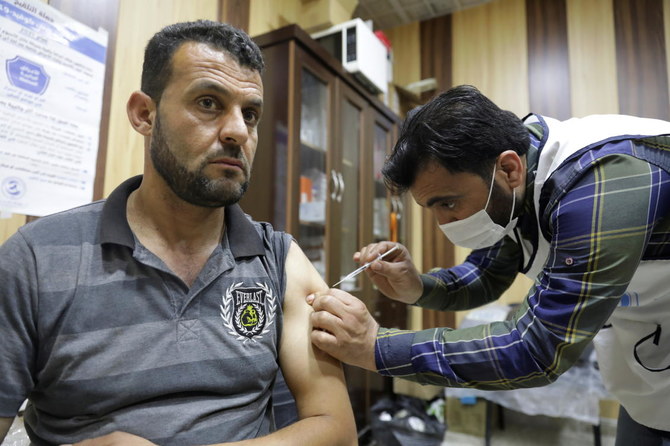
In Idlib, Naguib said 6,070 people out of around 40,000 health care and humanitarian workers on a priority list had been vaccinated by May 9. But even some health care workers are wary.
A Reuters witness saw just seven out of 30 medical workers receiving vaccines on the first day of a campaign at one Idlib medical center. Initially, only three had volunteered.
“As a director of the kidney dialysis unit, I was the first one to get the vaccine and I wanted to encourage the rest, who were scared because of all the rumors about it,” said Taher Abdelbaki, a doctor at another clinic, the Ibn Sina medical center.
By the end of 2021, two more COVAX vaccine batches are expected to arrive in Idlib to inoculate about 850,000 people in a region of about 3.5 million people, a target that leaves the region’s vaccination teams with much work to do.
“We will not be their lab rats here in the north,” said Abdelsalam Youssef, a community leader in Teh camp.


![]()

’It’s all a lie’: hesitancy hampers vaccine drive in war-scarred Syrian area
Short Url
https://arab.news/nbs5c
’It’s all a lie’: hesitancy hampers vaccine drive in war-scarred Syrian area
- Consignment of 54,000 doses of AstraZeneca vaccine arrived in Idlib at April’s end, the first batch for opposition-held Syrian territory
- The challenge in Idlib goes beyond doubts about vaccines as some question whether the virus itself is a threat


Latest updates


© 2026 SAUDI RESEARCH & PUBLISHING COMPANY, All Rights Reserved And subject to Terms of Use Agreement.