BEIRUT: A Lebanese prosecutor Wednesday indicted eight retired military figures including a former army chief over “illicit enrichment,” a judicial source said, in a first under a new anti-graft law.
Popular anger has grown in the past year over alleged corruption among the political elite in Lebanon, where a dire economic crisis has pushed the poverty rate up to more than half the population.
Since mass protests erupted in October 2019, the under-fire ruling class has repeatedly pledged to root out graft, and this year the parliament passed a new law to combat illicit enrichment.
But critics have expressed little trust in a system they say is riddled with nepotism.
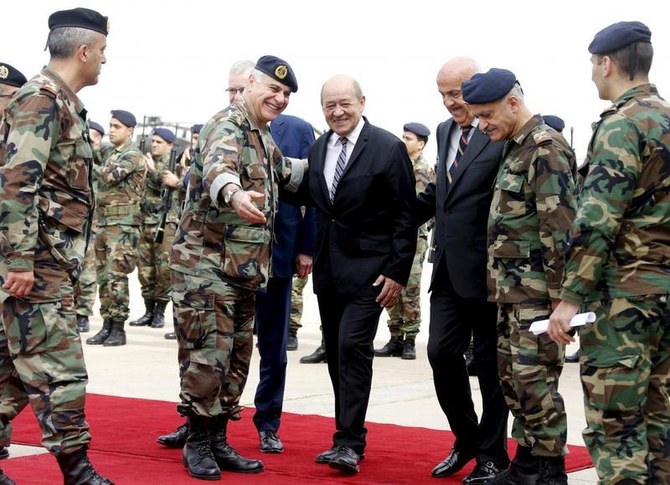
Those accused of graft on Wednesday included former army chief Jean Kahwaji, who held the post from 2008 to 2017, and several former military intelligence chiefs, the judicial source said.
The Beirut state prosecutor launched proceedings over their alleged “illicit enrichment, and using their official positions to reap vast wealth,” the source said.
A preliminary investigation showed a lack of correlation between their wealth and their income, the source said, adding that they would be questioned on December 10.
The official National News Agency said it was the first time such indictments were made since the law was passed.
It also made mention of a bank that several years ago had allegedly allowed Kahwaji and members of his family to deposit sums of up to $1.2 million in their accounts, without justification as to the origin of the funds.

Lebanon indicts 8 retired military figures over alleged graft
https://arab.news/w34s3
Lebanon indicts 8 retired military figures over alleged graft
- Those accused of graft include former army chief Jean Kahwaji, who held the post from 2008 to 2017, and several former military intelligence chiefs
- The under-fire ruling class has repeatedly pledged to root out graft, and this year the parliament passed a new law to combat ‘illicit enrichment’
Trump warns Iran of ‘very traumatic’ outcome if no nuclear deal
- Speaking a day after he hosted Netanyahu at the White House, Trump said he hoped for a result “over the next month”
WASHINGTON: US President Donald Trump threatened Iran Thursday with “very traumatic” consequences if it fails to make a nuclear deal — but Israeli Prime Minister Benjamin Netanyahu said he was skeptical about the quality of any such agreement.
Speaking a day after he hosted Netanyahu at the White House, Trump said he hoped for a result “over the next month” from Washington’s negotiations with Tehran over its nuclear program.
“We have to make a deal, otherwise it’s going to be very traumatic, very traumatic. I don’t want that to happen, but we have to make a deal,” Trump told reporters.
“This will be very traumatic for Iran if they don’t make a deal.”
Trump — who is considering sending a second aircraft carrier to the Middle East to pressure Iran — recalled the US military strikes he ordered on Tehran’s nuclear facilities during Israel’s 12-day war with Iran in July last year.
“We’ll see if we can get a deal with them, and if we can’t, we’ll have to go to phase two. Phase two will be very tough for them,” Trump said.
Netanyahu had traveled to Washington to push Trump to take a harder line in the Iran nuclear talks, particularly on including the Islamic Republic’s arsenal of ballistic missiles.
But the Israeli and US leaders apparently remained at odds, with Trump saying after their meeting at the White House on Wednesday that he had insisted the negotiations should continue.
- ‘General skepticism’ -
Netanyahu said in Washington on Thursday before departing for Israel that Trump believed he was laying the ground for a deal.
“He believes that the conditions he is creating, combined with the fact that they surely understand they made a mistake last time when they didn’t reach an agreement, may create the conditions for achieving a good deal,” Netanyahu said, according to a video statement from his office.
But the Israeli premier added: “I will not hide from you that I expressed general skepticism regarding the quality of any agreement with Iran.”
Any deal “must include the elements that are very important from our perspective,” Netanyahu continued, listing Iran’s ballistic missile program and its support for armed groups such as the Palestinian movement Hamas, Yemen’s Houthi rebels and Hezbollah in Lebanon.
“It’s not just the nuclear issue,” he said.
Despite their differences on Iran, Trump signaled his strong personal support for Netanyahu as he criticized Israeli President Isaac Herzog for rejecting his request to pardon the prime minister on corruption charges.
“You have a president that refuses to give him a pardon. I think that man should be ashamed of himself,” Trump said on Thursday.
Trump has repeatedly hinted at potential US military action against Iran following its deadly crackdown on protests last month, even as Washington and Tehran restarted talks last week with a meeting in Oman.
The last round of talks between the two foes was cut short by Israel’s war with Iran and the US strikes.
So far, Iran has rejected expanding the new talks beyond the issue of its nuclear program. Tehran denies seeking a nuclear weapon, and has said it will not give in to “excessive demands” on the subject.