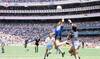
LONDON: The debate as to whether Diego Maradona is the best player the world has ever seen will spark back into life with the news of his death at the age of 60 on Wednesday, However, those lucky Saudi fans who saw him in action in Jeddah in 1987 will surely insist that he was the greatest. Even those who do not will join the Arab world in mourning the loss of Argentine.
Maradona is best known internationally for leading Argentina to victory in the 1986 World Cup when he was at the peak of his form. His performances in Mexico will never be forgotten.
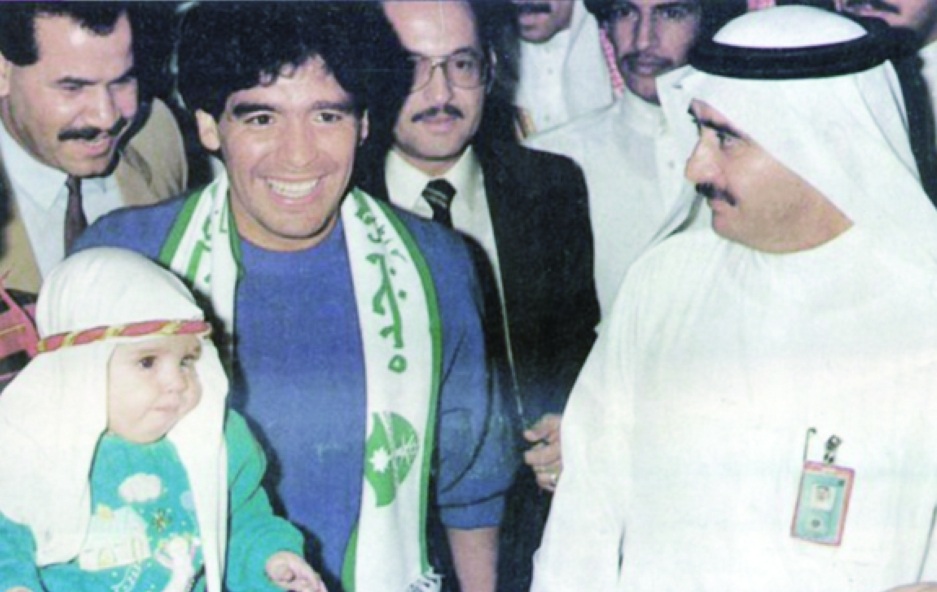
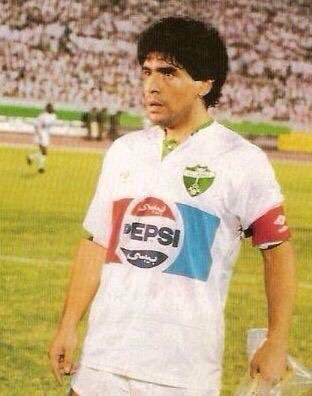
So to see him in Jeddah a year later wearing the shirt of Al-Ahli was something special. He had joined to help celebrate the club’s 50th anniversary in an exhibition game against Brondby of Denmark.
Napoli, where he played every week, were unhappy that their star asset was heading to Saudi Arabia and were afraid of a possible injury, but this was Maradona and he did what he wanted, on and off the pitch with a fee of $100,000 too good to turn down.
Inspired by the star’s presence, Al-Ahli defeated their European opponents 5-2. Three were made by the South American and he scored the other two. The first was a delightful lob over the Danish goalkeeper with the second a casual flick. It sent a full house wild with delight. It wasn’t just the skill but the love of football that thrilled.
Maradona scored just once against Arab opposition but fans of Morocco will not mind that their defense was breached by the maestro in a 1994 friendly against Argentina. It was his last penultimate goal for his country and after failing a drugs test at the subsequent World Cup, he never played on the international stage again.
Diego Maradona played an exhibition match for Al-Ahli in Jeddah in 1987. (Twitter)
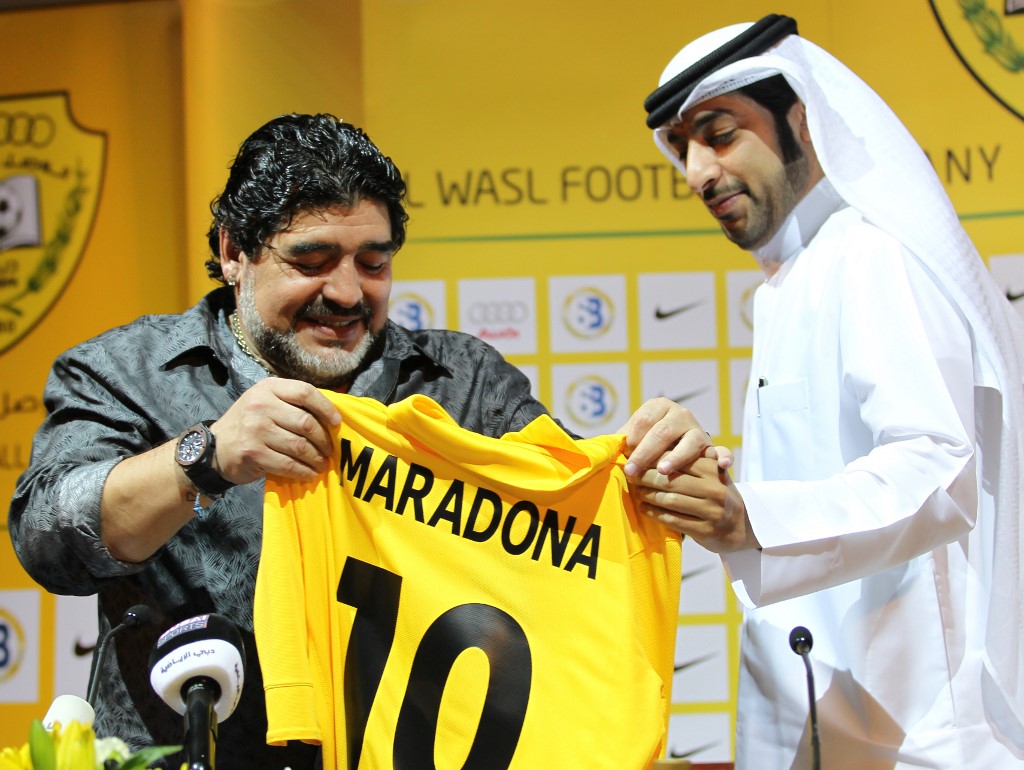
He did coach the Argentine squad, taking them to the last eight of the 2010 World Cup and a chastening 4-0 loss to Germany. Less than a year later, however, the then 50-year-old shocked the football world and thrilled those in the UAE and the wider region by taking over Al-Wasl. West Asia had seen better coaches with better records but there had never been a bigger football name to come and ply their trade.
I remember the buzz around the stadium in Abu Dhabi for his first game in charge at Al Jazira in September 2011. The bigger than usual crowd was swelled by media from all over the world all trying to get a word with the legend. The sheer number of microphones placed in front of the smiling South American as he talked to the press has rarely been seen in Asian football.
Diego Maradona played an exhibition match for Al-Ahli in Jeddah in 1987. (Twitter)
In truth, he was a success even before he started. The club put itself in headlines around the world.
“From a business perspective it’s a feasible decision that makes absolute sense,” said Marwan bin Beyat, the club chairman. “The name of Al-Wasl has exploded on the worldwide radar. The publicity we are getting can be compared to the largest clubs in the world.”
On the pitch, that first game was an entertaining one but ended in a 4-3 loss for the visitors, setting the tone for the rest of the season. There was rarely a dull moment but it ended in disappointment. He was fired in July 2012 after a turbulent 14 months in charge with Al-Wasl ending the season in eighth place.
Maradona looks at his new shirt with Marwan Bin Bayat, chairman of the Emirati Al-Wasl Football Company, during a press conference in Dubai, in 2011. (AFP/FIle)
Gabriel Calderon, the former Argentine international who played with Maradona at the 1982 and 1990 World Cup, and coached in the UAE at the same time as Maradona, said his compatriot was the best player in the world.
“With him in your team then you knew that anything was possible,” Calderon, who coached Bani Yas and followed Maradona at Al-Wasl, as well as coaching in Saudi Arabia. “As a coach in UAE, he knew that it would not be easy but although he was the center of attention with the media, he just loved football, he loved being around the players and trying to help them as much as possible. He had many happy memories of his time in UAE and I know that the fans there loved him too.”
After Al-Wasl, Maradona wasn’t done with the UAE and took over Fujairah in the second division in 2017 but left the following year after failing to secure promotion.
That will, rightly, be a footnote as the world mourns the passing of a legend but the Arab world has its own special memories of Diego Maradona, a player who briefly shone so brightly in Saudi Arabia in 1987.