

Big revamp for Saudi Arabia electricity sector

Shake up involves the world’s largest ever Islamic bond. (File/Shutterstock)
Short Url
Updated 17 November 2020
Follow

Big revamp for Saudi Arabia electricity sector

  • Shake up involves the world’s largest ever Islamic bond
  • The reforms include the setting up of a working group, including the Ministry of Energy and the Ministry of Finance, and utilities regulatory authorities

DUBAI: Saudi Electricity Company, which runs the Kingdom’s power generation and distribution, has unveiled a far-reaching restructuring of its finances and regulatory set-up to “to provide its services with higher levels of efficiency and reliability.”

As part of the shake-up, the government will turn its liabilities from SEC - amounting to $44.77bn (SAR167.92bn) - into an Islamic bond. “The transaction is considered the world’s largest Islamic transaction ever to be executed, demonstrating the Kingdom’s leadership and global pre-eminence in Islamic finance,” according to a statement posted by SEC on the Tadawul stock exchange, where its shares are traded.

While SEC’s debts are reclassified in this way, the government will also cancel fees owed to it, and set up a new operating revenue cap model to cover SEC’s total operating and financing costs, and the distribution of dividends to all its shareholders, including the Public Investment Fund (PIF), the majority shareholder with 74 percent.

The sweeping reform of the SEC corporate and financial structure will also involve the establishment of a new regulatory asset-based model to oversee and regulate SEC’s cash inflows.
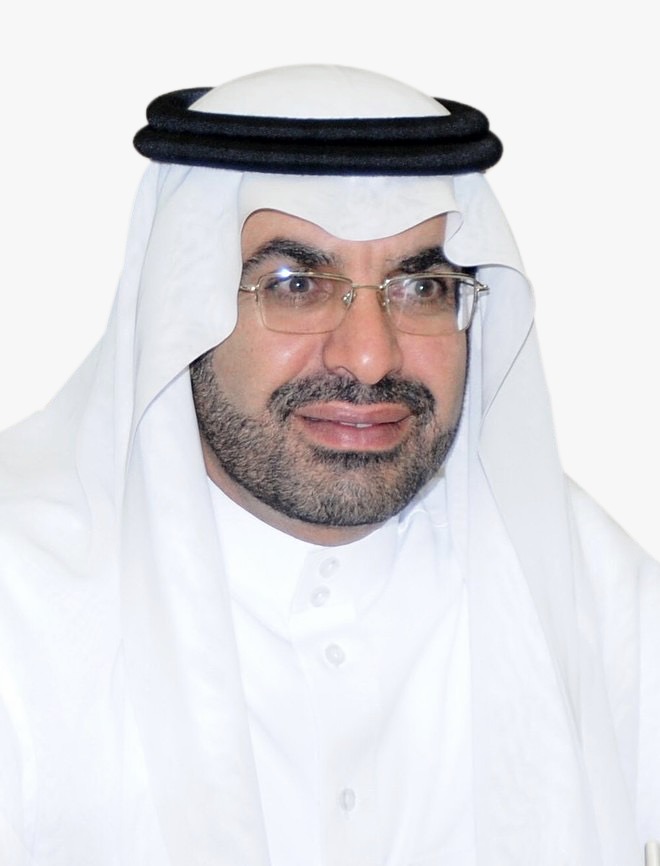


Khaled Bin Saleh Al Sultan, chairman of SEC

Khaled Bin Saleh Al Sultan, chairman of SEC, said: “The reforms will help the sector and SEC overcome several financial and structural challenges faced in the past, and will ultimately improve the quality of service to customers and enhance the sector’s reliability.”

The reforms include the setting up of a working group, including the Ministry of Energy and the Ministry of Finance, and utilities regulatory authorities, who will study some $2.747 bn in dispute between SEC and the finance ministry, arising from “technical differences in quantities, prices and handling costs of fuel and electric power,” the statement added.

Prince Abdulaziz Bin Salman, the energy minister who chaired the committee charged with the long-planned restructuring plan, said: “The goal of these comprehensive reforms is to enhance the sustainability and efficiency of the Kingdom’s electricity sector, in line with the goals set out in Saudi Vision 2030.”

The new Islamic bond is classified under shareholders’ equity and considered non-dilutive to existing shareholders’ stakes, the Tadawul statement said.

“The financial instrument represents about 33.4 percent of SEC’s total assets as at end of the third quarter of 2020, and includes government loans and net government payables and accruals, after offsetting for outstanding amounts owed to SEC by the Government,” it added.

Saudi Aramco also has a near 7 percent stake in SEC. The Shariah compliant bond “includes an amount of SAR3.35bn total dividends owed to Saudi Aramco since SEC’s inception until 2017, the book value of which was previously transferred to the Ministry of Finance. SEC will be seeking General Assembly approval to recognize the dividends owed to Saudi Aramco as being part of the financial instrument,” SEC said.

SEC shares, which have been performing strongly on the Riyadh exchange in recent weeks along with the overall Saudi index, rose 0.5 percent to SAR22.18.


First EU–Saudi roundtable on critical raw materials reflects shared policy commitment

Updated 16 January 2026
Follow

First EU–Saudi roundtable on critical raw materials reflects shared policy commitment

RIYADH: The EU–Saudi Arabia Business and Investment Dialogue on Advancing Critical Raw Materials Value Chains, held in Riyadh as part of the Future Minerals Forum, brought together senior policymakers, industry leaders, and investors to advance strategic cooperation across critical raw materials value chains.

Organized under a Team Europe approach by the EU–GCC Cooperation on Green Transition Project, in coordination with the EU Delegation to Saudi Arabia, the European Chamber of Commerce in the Kingdom and in close cooperation with FMF, the dialogue provided a high-level platform to explore European actions under the EU Critical Raw Materials Act and ResourceEU alongside the Kingdom’s aspirations for minerals, industrial, and investment priorities.

This is in line with Saudi Vision 2030 and broader regional ambitions across the GCC, MENA, and Africa.

ResourceEU is the EU’s new strategic action plan, launched in late 2025, to secure a reliable supply of critical raw materials like lithium, rare earths, and cobalt, reducing dependency on single suppliers, such as China, by boosting domestic extraction, processing, recycling, stockpiling, and strategic partnerships with resource-rich nations.

The first ever EU–Saudi roundtable on critical raw materials was opened by the bloc’s Ambassador to the Kingdom, Christophe Farnaud, together with Saudi Deputy Minister for Mining Development Turki Al-Babtain, turning policy alignment into concrete cooperation.

Farnaud underlined the central role of international cooperation in the implementation of the EU’s critical raw materials policy framework.

“As the European Union advances the implementation of its Critical Raw Materials policy, international cooperation is indispensable to building secure, diversified, and sustainable value chains. Saudi Arabia is a key partner in this effort. This dialogue reflects our shared commitment to translate policy alignment into concrete business and investment cooperation that supports the green and digital transitions,” said the ambassador.

Discussions focused on strengthening resilient, diversified, and responsible CRM supply chains that are essential to the green and digital transitions.

Participants explored concrete opportunities for EU–Saudi cooperation across the full value chain, including exploration, mining, and processing and refining, as well as recycling, downstream manufacturing, and the mobilization of private investment and sustainable finance, underpinned by high environmental, social, and governance standards.

From the Saudi side, the dialogue was framed as a key contribution to the Kingdom’s industrial transformation and long-term economic diversification agenda under Vision 2030, with a strong focus on responsible resource development and global market integration.

“Developing globally competitive mineral hubs and sustainable value chains is a central pillar of Saudi Vision 2030 and the Kingdom’s industrial transformation. Our engagement with the European Union through this dialogue to strengthen upstream and downstream integration, attract high-quality investment, and advance responsible mining and processing. Enhanced cooperation with the EU, capitalizing on the demand dynamics of the EU Critical Raw Materials Act, will be key to delivering long-term value for both sides,” said Al-Babtain.

Valere Moutarlier, deputy director-general for European industry decarbonization, and directorate-general for the internal market, industry, entrepreneurship and SMEs at European Commission, said the EU Critical Raw Materials Act and ResourceEU provided a clear framework to strengthen Europe’s resilience while deepening its cooperation with international partners.

“Cooperation with Saudi Arabia is essential to advancing secure, sustainable, and diversified critical raw materials value chains. Dialogues such as this play a key role in translating policy ambitions into concrete industrial and investment cooperation,” she added.