

Algeria to inaugurate Bouteflika-era mega mosque

1 / 4
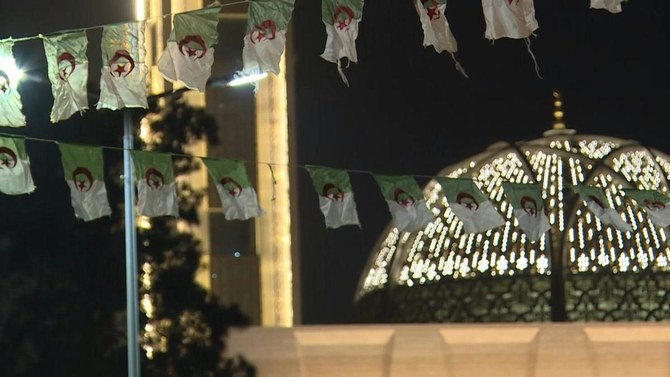
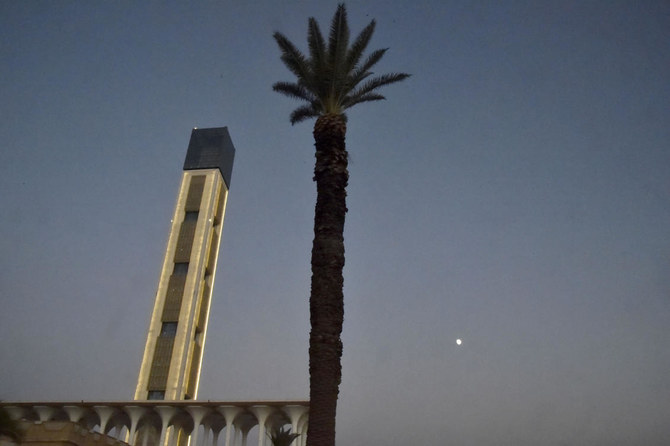
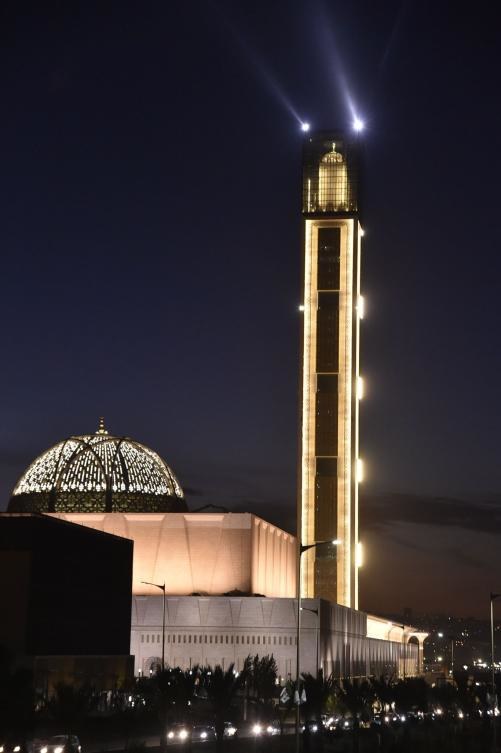
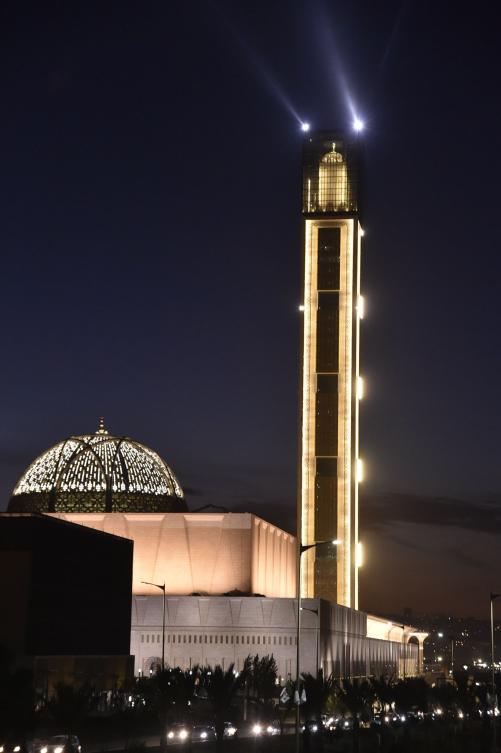
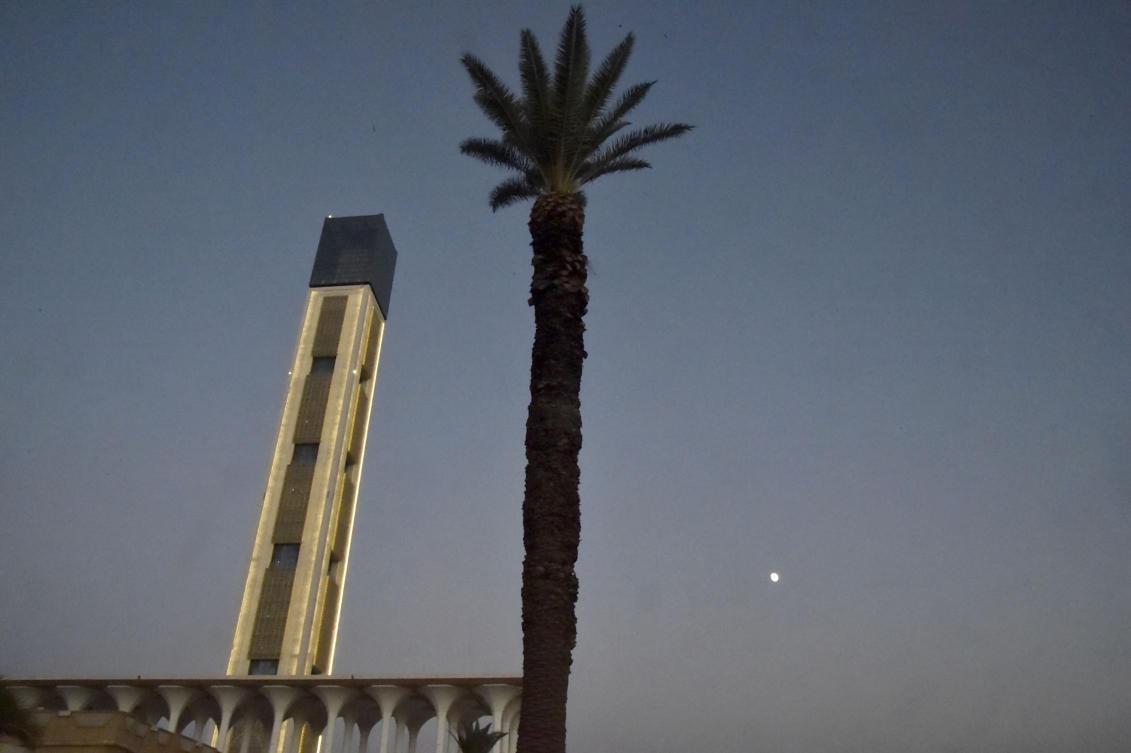
The great mosque of Algiers, the third largest in the world and the most monumental in Africa, will be inaugurated on Wednesday during a first collective prayer. (AFP)
2 / 4
This picture shows the Great Mosque of Algiers, also known as Djamaa el Djazair, in Algiers on October 27, 2020. (AFP)
3 / 4
The Great Mosque of Algiers, also known as Djamaa el-Djazair, on the eve of its inauguration in the Algerian capital. (AFP)
4 / 4
This picture shows the Great Mosque of Algiers, also known as Djamaa el Djazair, in Algiers on October 27, 2020. (AFP)
Short Url
Updated 28 October 2020
Follow

Algeria to inaugurate Bouteflika-era mega mosque

  • Known locally as the Djamaa El-Djazair, it is smaller only than the two holy mosques in Makkah and Madinah
  • To its critics, the mosque is a vanity project and a symbol of the megalomania of former autocrat Bouteflika

ALGIERS: Algeria’s Grand Mosque, the world’s third-biggest and Africa’s largest, will host its first public prayers on Wednesday, a year and a half after construction was completed.
Known locally as the Djamaa El-Djazair, the modernist structure extends across 27.75 hectares (almost 70 acres), and is smaller only than the two mosques in Makkah and Madinah, Islam’s holiest sites, in Saudi Arabia.
To its critics, the mosque is a vanity project and a symbol of the megalomania of former autocrat Abdelaziz Bouteflika, who was forced out in April last year after mass street protests against his two-decade-long rule.
President Abdelmadjid Tebboune had been expected to inaugurate the mosque’s prayer hall — whose maximum capacity is 120,000 — at the event on Wednesday, the eve of the birthday of the Prophet Muhammad.
But his presence was in doubt after his office announced the day before that he had been hospitalized.

Tebboune had gone into self-isolation last week following suspected coronavirus cases among his aides, but the presidency said Tuesday that Tebboune’s “state of health does not raise any concern.”
It was unclear how many people would be allowed to attend the prayers amid the novel coronavirus pandemic.
The mosque’s interior, in Andalusian style, is decorated in wood, marble and alabaster.
It features six kilometers (3.7 miles) of Qur'anic text in Arabic calligraphy, along with turquoise prayer mats.
The mosque aims to be an important theological, cultural and research center, and the complex includes a library that can host a million books.
Featuring geometric architecture, it also boasts the world’s tallest minaret — 267 meters (875 feet) — fitted with elevators and a viewing platform that looks out over the capital and the Bay of Algiers.
The tallest such structure had previously been a 210-meter minaret in the Moroccan city of Casablanca.

But it has all come at a cost of over $1 billion in public money, according to finance ministry figures.
The seven-year construction work was completed in April 2019, three years behind schedule, and the company in charge, China State Construction Engineering (CSCEC), brought in laborers from China.
“There is a mosque in almost every neighborhood,” said Said Benmehdi, an Algiers resident in his seventies, whose two children are both unemployed.
He told AFP bitterly that he would have preferred for the “state to build factories and let young people work.”
Five imams preside over the mosques and five muezzins are responsible for conducting the call to prayer, said Kamel Chekkat, a member of Algeria’s ulema association of Muslim scholars.
He told AFP that the mosque would be tasked with “regulating and harmonizing fatwas with Algerian life.”
A multidisciplinary study and research group will examine the Qur'anic text and “its keeping with the times and above all, with science,” he added.
“The idea is that the Grand Mosque will be a place for combatting all types of radicalism, religious and secular,” Chekkat said.
But sociologist Belakhdar Mezouar said the mosque “was not built for the people.”
It is the “work of a man (Bouteflika) who wanted to compete with neighboring Morocco, make his name eternal and put this construction on his CV, so he could get into paradise on judgment day,” he said, adding that his opinion was widely shared.
Nadir Djermoune, who teaches town planning, criticized the “ostentatious choice” of such mega projects at a time when he said Algeria needed new health, education, sporting and recreational facilities.
The mosque is “isolated from the real needs of the city in terms of infrastructure,” he said.
The most positive point, he said, was its modernist concept, which “will serve as a model for future architectural projects.”

Ceasefire with Kurdish-led force extended for another 15 days, Syrian army says

Updated 25 January 2026
Follow

Ceasefire with Kurdish-led force extended for another 15 days, Syrian army says

  • The defense ministry said the extension was in support of an operation by US forces to transfer accused Daesh militants to Iraq
  • The Kurdish-led Syrian Democratic Forces confirmed the ceasefire extension

RAQQA, Syria: Hours after the expiration of a four-day truce between the Syrian government and Kurdish-led fighters Saturday, Syria’s defense ministry announced the ceasefire had been extended by another 15 days.
The defense ministry said in a statement that the extension was in support of an operation by US forces to transfer accused Daesh militants who had been held in prisons in northeastern Syria to detention centers in Iraq.
The Kurdish-led Syrian Democratic Forces confirmed the ceasefire extension.
“Our forces affirm their commitment to the agreement and their dedication to respecting it, which contributes to de-escalation, the protection of civilians, and the creation of the necessary conditions for stability,” the group said in a statement.
Over the past three weeks, there have been intense clashes between government forces and the SDF, in which the SDF lost large parts of the area they once controlled.
Earlier in the day, the Kurdish-led force called on the international community to prevent any escalation.
The end of the truce came as government forces have been sending reinforcements to Syria’s northeast.
Syria’s interim government signed an agreement last March with the SDF for it to hand over territory and to eventually merge its fighters with government forces. In early January, a new round of talks failed to make progress over the merger, leading to renewed fighting between the two sides.
A new version of the accord was signed last weekend, and a four-day ceasefire was declared Tuesday. Part of the new deal is that SDF members will have to merge into the army and police forces as individuals.
The SDF said in a statement Saturday that military buildups and logistical movements by government forces have been observed, “clearly indicating an intent to escalate and push the region toward a new confrontation.” The SDF said it will continue to abide by the truce.
On Saturday, state TV said authorities on Saturday released 126 boys under the age of 18 who were held at the Al-Aqtan prison near the northern city of Raqqa that was taken by government forces Friday. The teenagers were taken to the city of Raqqa where they were handed over to their families, the TV station said.
The prison is also home to some of the 9,000 members of the Daesh group who are held in northeastern Syria. Most of them remain held in jails run by the SDF. Government forces have so far taken control of two prisons while the rest are still run by the SDF.
Earlier this week, the US military said that some 7,000 Daesh detainees will be transferred to detention centers in neighboring Iraq.
On Wednesday, the US military said that 150 prisoners have been taken to Iraq.