

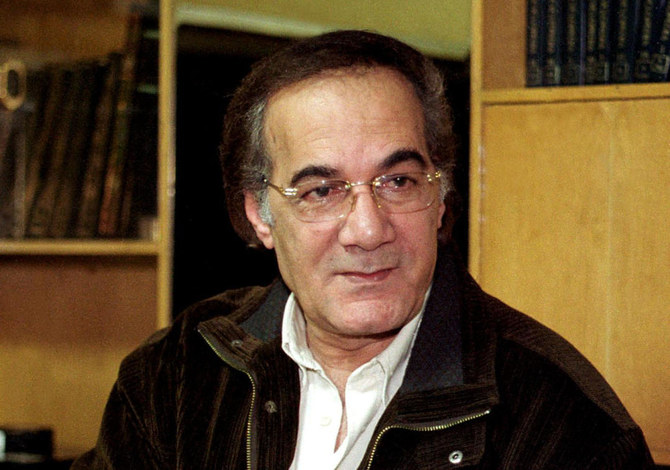
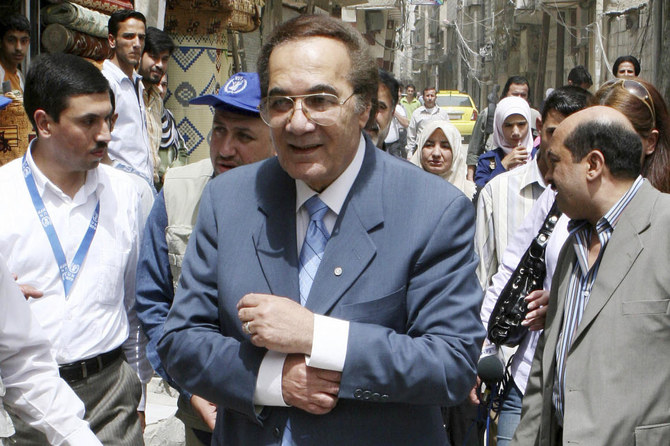

CAIRO: Iconic actor Mahmoud Yassin, one of the stars of Egypt’s golden age of cinema, has died aged 79.
A pillar of the country’s film industry during the second half of the 20th century, Yassin was involved in more than 250 productions over a period of four decades.
Yassin’s son and artist, Amr, on Wednesday posted a picture of his father on Facebook, and said: “He passed away, to the mercy of God, the father of the artist Mahmoud Yassin. I ask for your prayers.”
Yassin had been suffering from age-related health problems that had prevented him from working and appearing on screen for eight years.
His last movie appearance was in the 2012 comedy drama “Geddo Habibi” (“Grandpa, My Darling”) and he had been scheduled to participate in the Egyptian comedy series “Sahebat Al-Saada” with Adel Imam in 2014, but was unable due to illness and the onset of Alzheimer’s disease.
Egyptians and the Arab world knew Yassin through a number of important roles in cinema and television, particularly during the 1960s, 1970s, and 1980s. These included the films “The Thin Thread” with Faten Hamama, “A Nose and Three Eyes” with Magda Al-Sabahi, “Bottom of the City” with Nadia Lutfi, “Mawlid Ya Dunya” with singer Afaf Rady, and “Remember Me” with Naglaa Fathi.
Among his most notable cinematic works was the movie “The Bullet is Still in My Pocket,” which told stories from the 1973 Arab-Israeli October War, and “Something from Fear,” an Egyptian cinema classic.
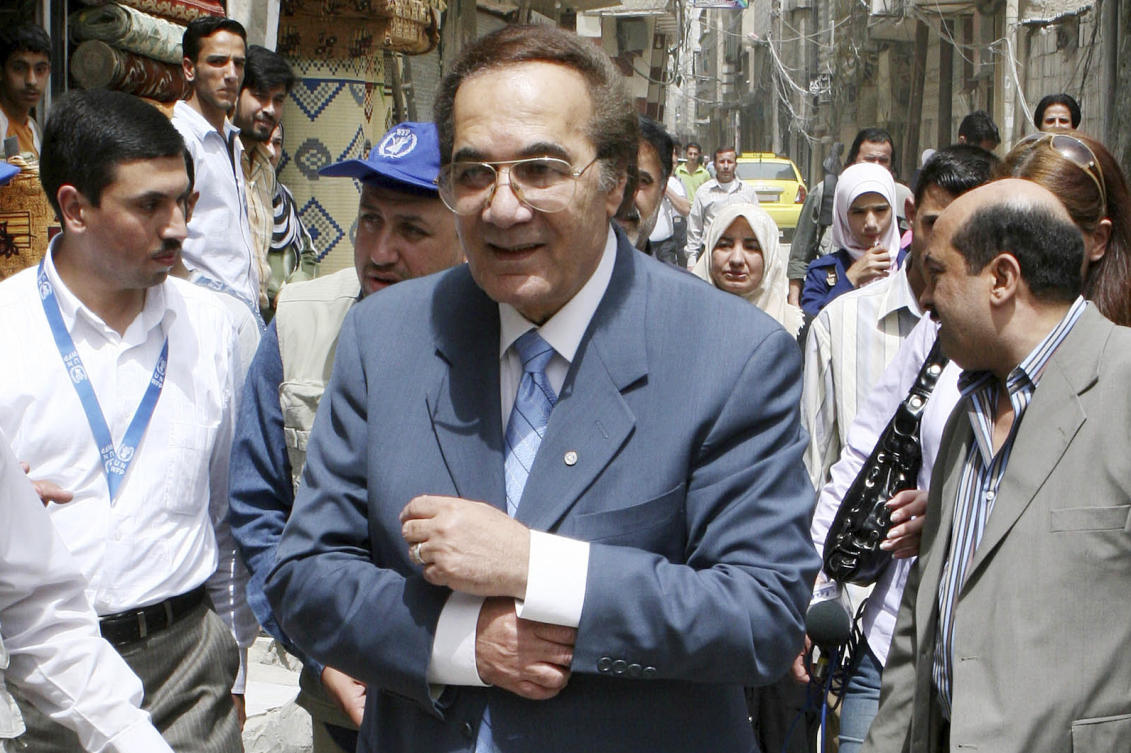
Yassin was distinguished by his melodious voice and performances in the Arabic language. He also commented on national and official events and played powerful roles in religious and historical soap operas.
He was married to the Egyptian actress Shahira, and together they had Amr and actress daughter Rania, who married Egyptian actor Mohamed Riad.
In a statement, Shahira said her husband had been in pain as a result of a fracture to his pelvis and had blockages in some of his brain arteries which affected his memory, speech, and movement and had led to his Alzheimer’s disease.
She said that the last thing he had remembered was the death of his colleague artist Nour El-Sherif in 2015.
Yassin was born in Port Said in 1941 and was attached to the theater through the preparatory stage at the Theater Club in the city. His dream at that time was to appear on stage at the National Theater.
He moved to the Egyptian capital Cairo to attend university and graduated from the faculty of law, later fulfilling his dream of joining the National Theater where he performed in prominent plays such as “Leila and Majnun,” “Khedive,” and “Happened in October.”
He took small roles in the cinema at the end of the 1960s until his big break in the movie “We Do Not Sow Thorns” with Shadia in 1970.
On television, he took part in dozens of series, including “The Dawah,” “Tomorrow Flowers Bloom,” and "Husband's Memoirs."


