

Philippine Airlines to cut up to 2,700 jobs due to COVID impact

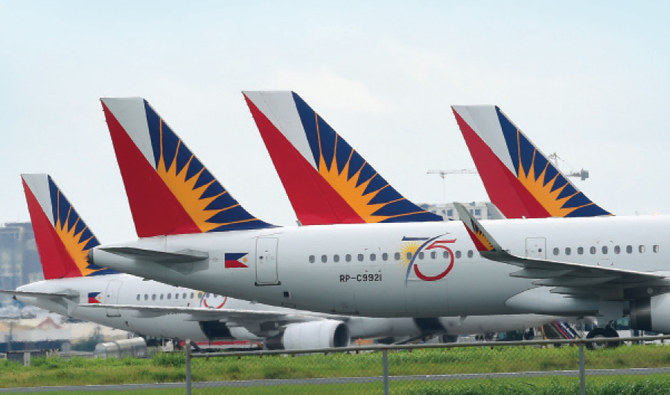
PAL is running less than 15 percent of its normal number of daily flights. (AFP)
Short Url
Updated 06 October 2020
Follow

Philippine Airlines to cut up to 2,700 jobs due to COVID impact

  • Travel remains at very low levels compared with before the pandemic

MANILA: Philippine Airlines Inc. (PAL) said on Monday it is cutting up to a third of its workforce, or around 2,700 jobs, as the aviation sector continues to suffer from pandemic-driven travel curbs.
The Southeast Asian nation’s carriers, which halted operations in mid-March as President Rodrigo Duterte imposed one of the world’s strictest and longest coronavirus lockdowns, are slowly ramping up operations.
“The collapse in travel demand and persistent travel restrictions on most global and domestic routes have made retrenchment inevitable,” PAL said in a statement.
The retrenchment program this quarter could cover up to 35 percent of its roughly 7,800 personnel, it added.
PAL is running less than 15 percent of its normal number of daily flights eight months after the Philippine government imposed travel curbs.
The loss-making carrier, partly owned by Japan’s ANA Holdings Inc, lost roughly $1 billion in revenues in March to May when the company suspended its operations because of a travel ban.
Elsewhere in the world, Virgin Atlantic started testing cabin crew and pilots for COVID-19 on some flights, as industry hopes grow the British government is close to allowing more widespread airport testing that could help the country’s travel sector recover.
Virgin Atlantic, which needed a rescue deal to help it survive the pandemic, said it would offer pilots and crew a test before they depart from Heathrow Airport with results provided in 30 minutes, to help give passengers confidence about flying.
Virgin and other UK-based Airlines including British Airways and easyJet are desperate for passenger numbers to rise but say demand is being held back by Britain’s 14-day quarantine rules for arrivals from most countries.
They have been calling for COVID-19 tests at airports as an alternative.
Stephen Barclay, Britain’s deputy finance minister, suggested on Saturday that an announcement from Transport Minister Grant Shapps and Health Minister Matt Hancock on airport testing could come “in the coming days.”
But Prime Minister Boris Johnson’s spokesman did not confirm this timeline when asked on Monday.

BACKGROUND

The Southeast Asian nation’s carriers, which halted operations in mid-March as President Rodrigo Duterte imposed one of the world’s strictest and longest coronavirus lockdowns, are slowly ramping up operations.

“Work is ongoing with clinicians and health experts on the practicalities on using testing to reduce the self isolation period for international arrivals and we remain in regular contact with the sector,” the spokesman told reporters.
Travel remains at very low levels compared with before the pandemic. In August, Britain’s busiest airport, Heathrow, saw fewer than a fifth of the number of passengers it usually does.
Barclay told the discussion at the Conservative Party’s annual conference that the government had been looking at airport testing in Germany, where a negative test allows travelers to be released early from quarantine restrictions.
Virgin said it would start the testing on pilots and crews on flights to Shanghai and Hong Kong first.


Indonesia and Thailand join Saudi-led Global Halal Mark alliance

Updated 6 sec ago
Follow

Indonesia and Thailand join Saudi-led Global Halal Mark alliance

RIYADH: Four countries have joined the Global Halal Mark alliance, a new initiative launched by the Saudi Halal Center, following the signing of two agreements with Indonesia and Thailand.

Speaking to Al-Eqtisadiah on the sidelines of the Makkah Halal Forum,  Abdulaziz Al-Rushodi, CEO of the Saudi Halal Center, said the number of countries participating in the alliance is expected to reach 10 by the end of this year. 

He said the initiative aims to unify “Halal” marks around the world and achieve the highest standards of reliability in the sector.

A second initiative announced at the forum is the Halal Academy, established in cooperation with the Islamic University of Madinah, to serve as a global scientific reference contributing to the development of competencies and the halal ecosystem in a comprehensive manner. 

Al-Rushodi also stated that the center is planning to launch the Global Halal Hub initiative, an integrated digital system aimed at unifying halal certifications and facilitating cross-border trade procedures among various countries. 

As part of efforts to support the local industry, the center — according to Al-Rushodi — signed a memorandum of understanding with the Food Manufacturers Association, which includes thousands of national factories, with the aim of empowering Saudi products and qualifying them for export to countries in the Islamic world by granting them the halal mark. 

He said the partnership seeks to encourage local manufacturers to adopt the mark as a core standard for their products, opening broad prospects for global marketing and strengthening the presence of Saudi products in international markets. 

The Saudi Halal Center was established in 2018 and operates under the Saudi Food and Drug Authority. The center grants halal certificates after verifying compliance with Shariah and technical standards and requirements to ensure the reliability of products bearing the “Halal” mark in local and international markets, in addition to issuing the Saudi halal mark. 

The center grants the right to use its trademark, a logo placed on products to indicate that they are subject to oversight and auditing and are compliant with Islamic law. 

The size of the global halal market in 2025 was estimated at approximately $7 trillion, with Saudi Arabia topping the list of the largest investing countries in the sector at a value of SR5.5 billion ($1.4 billion), Yousef Khalawi, Secretary-General of the Islamic Chamber of Commerce and Development, told Al-Eqtisadiah. 

According to Khalawi, the size of the halal market is expected to reach $10 trillion by 2030, amid accelerating growth in global consumer demand and expanding investments in value chains linked to halal industries. 

Saudi Arabia ranks first globally among the most invested countries in the halal sector, having injected investments valued at SR5.5 billion. Malaysia comes second with investments reaching SR4.7 billion, benefiting from its advanced ecosystem of global halal standards, followed by Kuwait in third place with investments amounting to SR4.1 billion. 

The UAE ranked fourth, investing approximately SR3.7 billion in value chains related to food, tourism, and consumer products, while Indonesia placed fifth with investments estimated at SR1.5 billion.