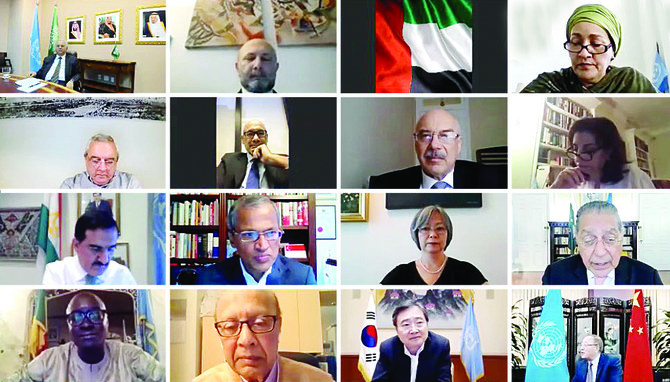
Saudi permanent representative to the UN, Abdallah Al-Mouallimi, held a virtual reception to mark the celebration of Eid Al-Adha.
Attendees included UN Deputy Secretary-General Amina Mohammed, President of the UN General Assembly’s 74th session Tijjani Muhammad-Bande, Under-Secretary-General of the UN Office of Counter-Terrorism Vladimir Voronkov, Chef de Cabinet to the UN secretary-general Maria Luiza Ribeiro Viotti, and a number of permanent representatives of different UN member countries.
The delegates congratulated Saudi Arabia on its success in organizing Hajj despite the exceptional circumstances caused by the coronavirus disease (COVID-19) pandemic and expressed their admiration for the precautionary measures taken by the Kingdom to ensure the safety of pilgrims.
Exchanging Eid wishes with Al-Mouallimi, the attendees thanked the Kingdom’s delegation for bringing together ambassadors and senior UN officials from different religions and cultures on the occasion of Eid which was celebrated by Muslims around the world.
Al-Mouallimi thanked the envoys, UN officials, and state representatives for joining the virtual reception which he hoped would contribute toward further strengthening communication and solidarity between nations.
He pointed out that Eid Al-Adha marked the culmination of the Hajj season, bringing together millions of Muslims from all over the world in expressing their feelings of unity, solidarity, and humanity.


Saudi UN envoy hosts virtual international reception to mark Eid
https://arab.news/285f7
Saudi UN envoy hosts virtual international reception to mark Eid


‘Cake not hate’ campaign becomes ‘Dates not hate’ in Madinah
- Dan said he was very impressed by Saudi hospitality and that his family was warmly welcomed
- He said being in Madinah exposed him to the true diversity of Islam
LONDON: A British autistic and non-verbal boy who has been visiting UK mosques and distributing cakes to promote solidarity amid an increase in far-right support in the country has taken his message of love to Madinah.
Joshua Harris, or “The Joshie-Man” as the 12-year-old is known to his social media fans, has handed out hundreds of his baked goods to worshipers at mosques in major British cities over the last few months.
The “Cake not hate” campaign came about after an Islamophobic attack on a mosque in his home city of Peterborough in October 2025.
Harris and his father visited Masjid Darassalaam, the mosque that was targeted, with cakes that the boy had baked and distributed them to the congregation soon after the attack. Since then, Harris has visited dozens of mosques in the UK.
On a recent trip to the Middle East, he and his father visited Madinah. In a local twist that pays tribute to the holy city’s famous date varieties including ajwa and ambar, Harris handed out dates to people in the courtyard of the Prophet’s Mosque. The “Cake not hate” campaign became “Dates not hate” for Saudi Arabia.
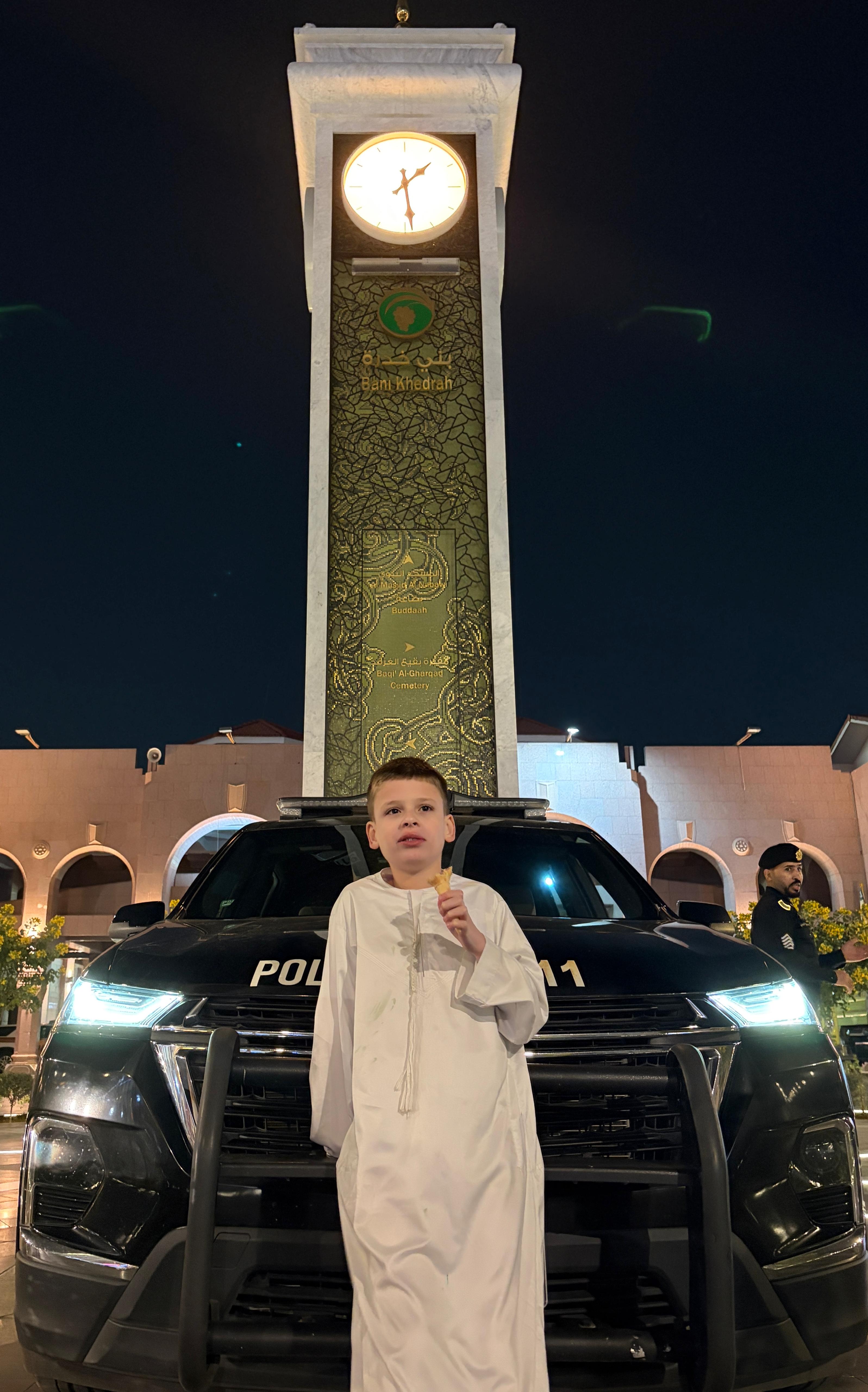
“He was greeted really, really warmly. There were some really touching moments where people were kissing his hands and his head. It was really lovely,” his father, Dan Harris, said.
Dan, the founder of global charity Neurodiversity in Business, said being in Madinah exposed him to the true diversity of Islam.
“We met people from all around the world. It was amazing. It’s like the United Nations there, you get people from different countries and it just goes to show you that the Muslim community, or the Ummah more generally, is not a homogeneous group,” he said.
“We saw people from Tajikistan and Uzbekistan and it was really interesting for us.”

Dan said his visit to Madinah, considered the second holiest city in Islam after Makkah for Muslims, was “profound and life-changing.”
He added: “I would say it’s my favourite city in the world due to the peace and tranquillity I felt there.”
Dan added that he was very impressed by Saudi hospitality: “Everywhere we went, people were taking down my number and insisting that we come for dinner, insisting they pick us up from the location. They were extremely attentive to Joshie as well, making sure his needs were met. We felt a great sense of welcome, something Saudi Arabia is known for.”


