

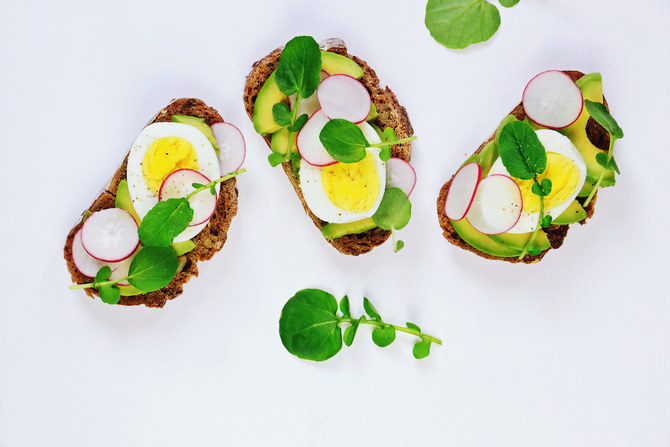

BEIRUT: In a vicious cycle, the food that we choose can affect how we feel and our feelings can affect the food that we choose.
It is important to note that feeling good comes from eating healthily, taking all the vitamins and minerals needed by your body, and eating enough carbohydrates (remember brown color means the presence of fibers), lean protein and healthy fats.
It is advised that you divide your meals in such a way that you do not deprive yourself of any food intake for long periods of time. This is to avoid a drop in your blood sugar, which in turn will provide little energy to the brain, leading to an uncomfortable feeling.
It is also worth mentioning that eating and snacking on high-sugar food — which you may crave when you are feeling down — will lead to a sugar rush that will then cause a drop in blood sugar as the body uses it quickly, also leading to a bad mood.
Don’t forget that sunshine is a therapy against feeling sad because it helps your body to get the vitamin D it needs and increases your serotonin level. So get to the balcony for at least half an hour a day and take advantage of this gift. Add to that regular exercise, and you have a real remedy against bad mood.
Certain foods have been shown to improve brain health because of the nutrients they contain. These include:
1. Avocados
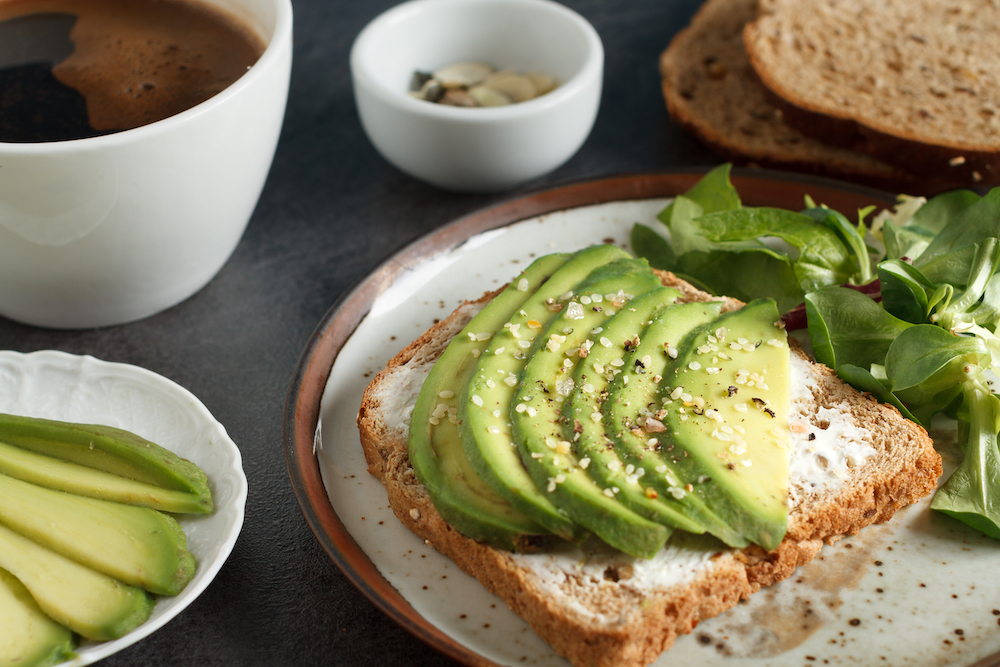
Avocados are super foods when it comes to your mood. They contain the amino acid tryptophan that increases the feel-happy hormone serotonin in the brain. Avocados also contain choline, folate and omega-3 — an ideal combination for a healthy brain.
Foods that contain omega-3 are fatty fish such as salmon and sardines, walnuts, chia seed, flax seed and hemp seed.
Randa’s Tip: Include avocados in your food by adding it to salads and sandwiches, having it with eggs for breakfast, or simply taking half an avocado as a snack or in your smoothie.
2. Bananas
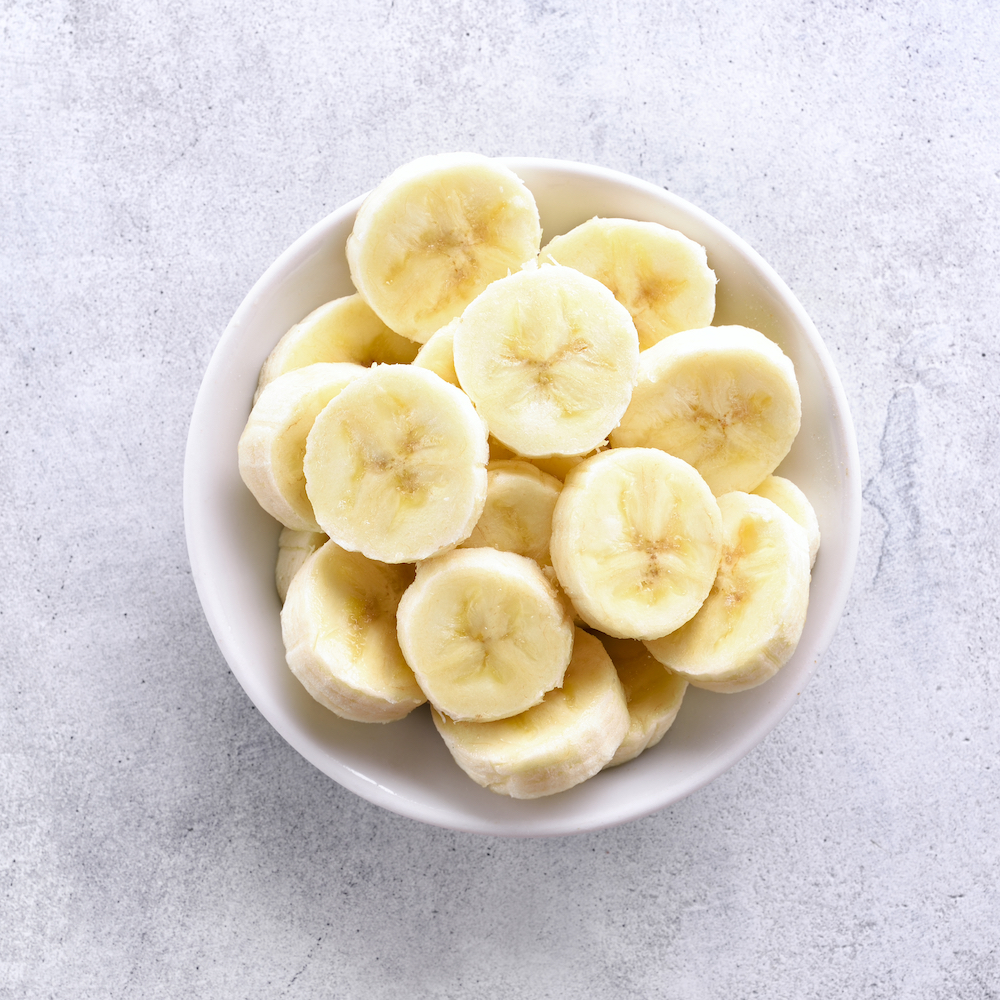
Bananas are high in vitamin B6, which helps in the formation of the feel-good hormones serotonin and dopamine. Vitamin B6, combined with the magnesium in banana, gives this fruit royalty status when it comes to good mood. Also, bananas contain fiber that will allow a slow release of sugar for continuous brain energy, as well as prebiotics responsible for growth of the healthy bacteria probiotics in the gut. As we now know, healthy guts lead to healthy brains.
Vitamin B6 is also found in whole-wheat cereals, pulses and soy products, as well as lean meats.
Randa’s Tip: Though unripe bananas are used to treat diarrhea, ripe ones help against constipation.
3. Pumpkin seeds
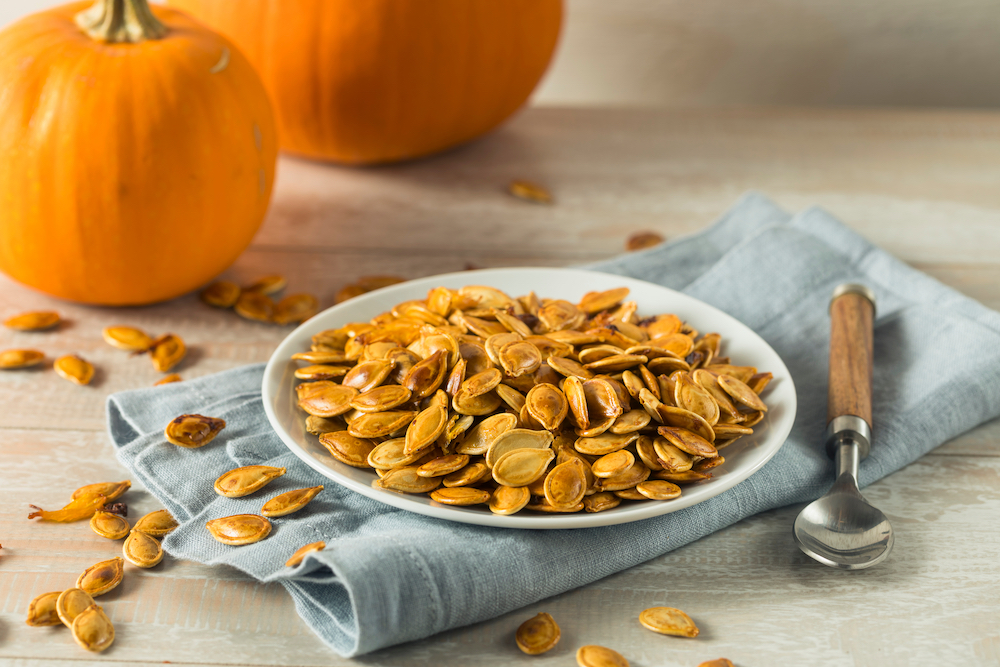
Pumpkin seeds are a good source of magnesium as well as tryptophan. It is a very good food to fight insomnia since tryptophan is needed for the production of the sleep hormone melatonin.
Other foods high in magnesium are almonds, cashew nuts, edamame, black beans and, of course, dark chocolate.
Pumpkin seeds are also rich in potassium, vitamin E, polyunsaturated fats and antioxidants, making it an excellent food product for bones, blood sugar control and a healthy heart.
Randa’s Tip:
Buy your pumpkin seeds with the hull. Take ¼ of a cup at night. The time and effort it takes you to open the hull has a soothing as well as a relaxing effect.
As I always say, there is not one food that cures all; the key is to practice what we know about healthy eating and to avoid what might cause distress to the body.
Stay safe, stay healthy.


