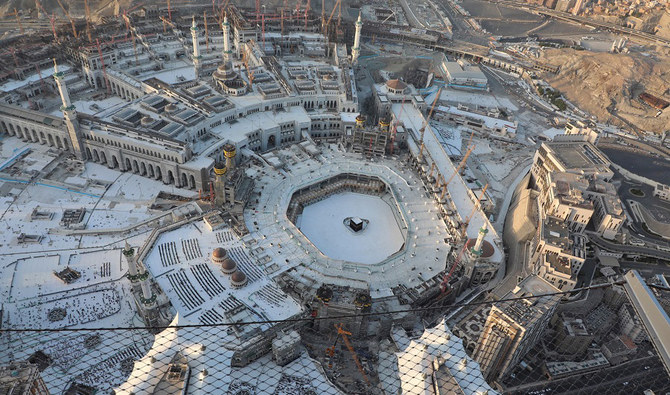
DUBAI: Saudi Arabia’s Ministry of Interior implemented a 24-hour curfew in the holy cities of Makkah and Madinah on Thursday to limit the spread of coronavirus, Saudi Press Agency (SPA) reported.
Under the curfew, which will be enforced until further notice, residents will be allowed to leave their houses for medical care and to obtain food supplies in their respective neighborhoods from 6 a.m. until 3 p.m.
A maximum of two people will be allowed to travel in one car at a time - the driver and the person going out to buy food or obtain medical care.
The ministries of health and interior will work with the Saudi Arabian Monetary Authority to set up procedures for the use of banking services and ATMs.
Groups which were previously excluded from the curfew, such as workers in the health industry, will still be allowed to leave for work.
All commercial activities in the two cities – apart from pharmacies, supermarkets, banks and petrol stations – will be stopped.
Authorities called on residents to protect children and only allow adults to leave the house, and advised them to use delivery services for groceries and food as much as possible.


![]()

Holy cities of Makkah, Madinah under 24-hour curfew in virus clampdown
Short Url
https://arab.news/rcvgj
Holy cities of Makkah, Madinah under 24-hour curfew in virus clampdown
- Residents can leave houses for medical care and food supplies in their neighborhoods from 6 a.m. until 3 p.m.
- Authorities asked residents to protect children and only let adults leave the house
Latest updates


© 2026 SAUDI RESEARCH & PUBLISHING COMPANY, All Rights Reserved And subject to Terms of Use Agreement.