

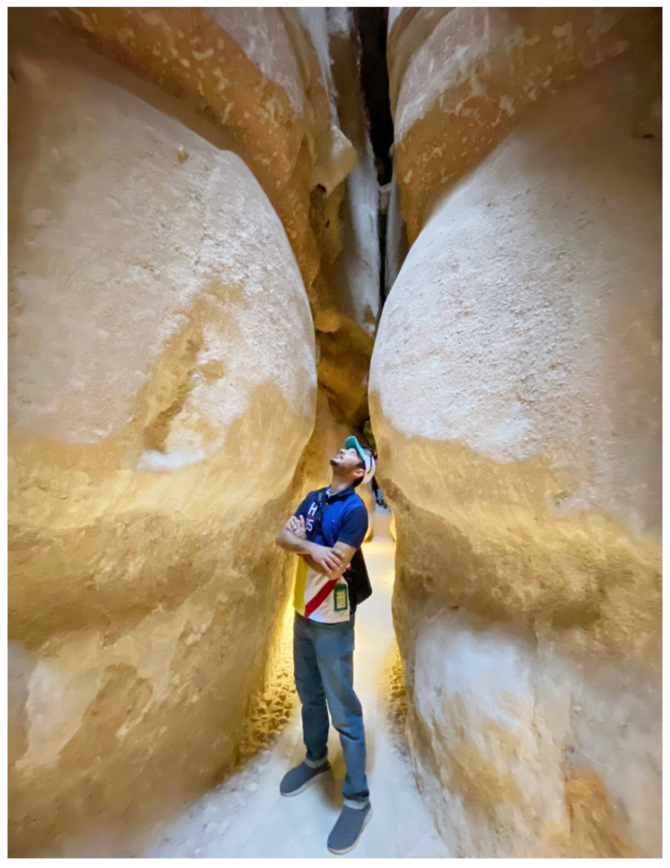

MAKKAH: Tareq Mohammed, a specialist in cave tourism from Madinah, is opening the door to a new world of geotourism in Saudi Arabia.
Tourism guidance is Mohammed’s life, and the Kingdom’s caves and their geological structures are his field of specialization as a guide for foreign and Saudi tourists.
“When we talk about geotourism, the first thing that comes to mind are beaches, forests, deserts, mountains, underground wells, hot springs and areas of dormant volcanoes. But Saudi Arabia is also full of monuments and caves,” Mohammed told Arab News.
Geotourism is starting to revive in the Kingdom, and travelers of all ages are discovering that caves are a safe and enjoyable source of adventure.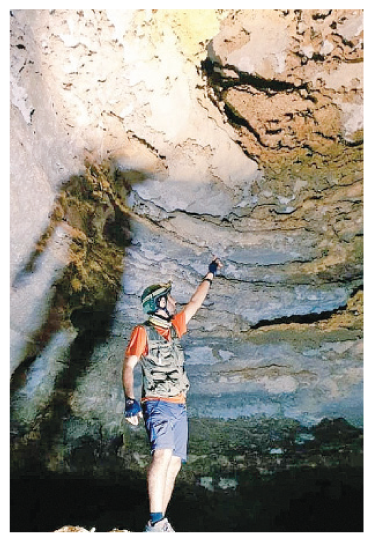
According to the guide, caves in Saudi Arabia are divided into five basic types according to their geological division: Ice caves, which are formed in ice in cold regions; marine caves formed by waves, oceans or rivers flowing into large rocks or mountains, creating large cavities over thousands of years; basaltic caves, known as volcanic caves; limestone caves; and sand caves that form inside sandy mountains.
“An example of basaltic caves is the Maker Al-Shaiheen cave, which is classified as the longest basaltic cave in the Middle East with a length of about 3,700 meters,” he said.
The cave, a long tunnel formed by volcanic lava, was formed when the surface of the volcanic lava began to freeze, with the lava below ground remaining as liquid due to the high temperature.
“The lava continues to flow until it reaches the end of the tube. The dimensions of the cave vary between 4-12 meters in width and 1.5-12 meters in length,” he said. The Maker Al-Shaiheen cave is located in the west of the Kingdom in Harrat Khaybar, Madinah region.
A sand cave in Al-Qarah Mountain in the eastern region is an excellent example of this type, Mohammed said.
Limestone caves are formed below the Earth’s surface. Over millions of years, acidic groundwater or underground rivers eat away the limestone, leaving cavities that grow over time.
HIGHLIGHT
According to Tareq Mohammed, caves in Saudi Arabia are divided into five basic types according to their geological division: Ice caves, which are formed in ice in cold regions; marine caves formed by waves, oceans or rivers flowing into large rocks or mountains, creating large cavities over thousands of years; basaltic caves, known as volcanic caves; limestone caves; and sand caves that form inside sandy mountains.
“Al-Murabba (square) cave and the Tahaleb (algae) cave are examples of limestone caves. The Tahaleb (algae) cave is characterized by moisture and the presence of some types of algae at its entrance, hence the name,” he said.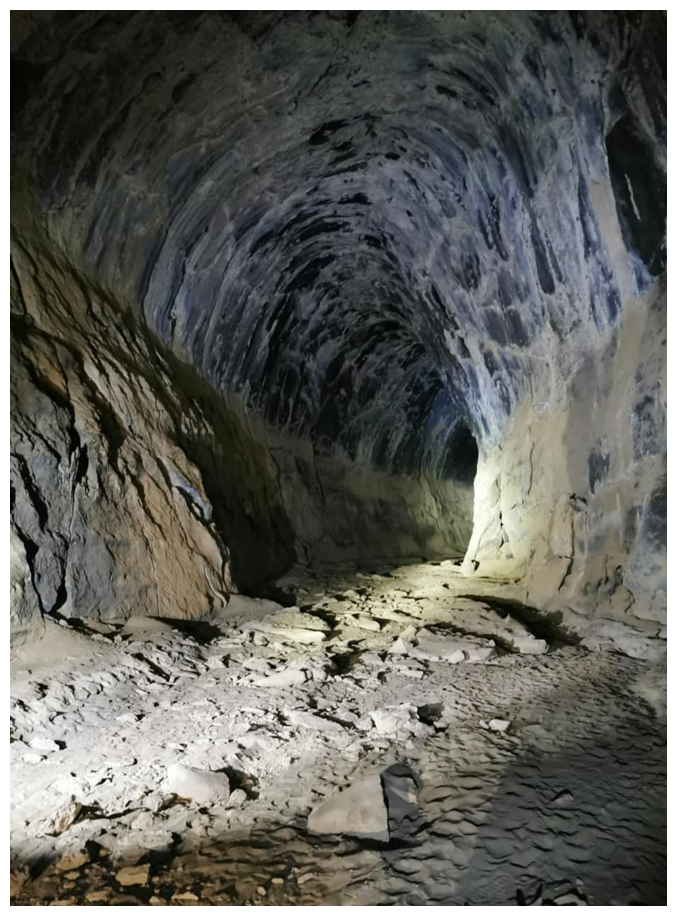
“I think these caves are the most beautiful in terms of their different formations and shapes, such as the different limestone stalactites and stalagmites.”
According to Mohammed, the central region of the Kingdom is characterized by these types of caves.
These cavities are called either “cave” or “dehl,” terms that have much the same meaning, he explained. But one difference is that the entrance of the cave is a horizontal cavity, while the entrance of the dehl is a vertical cavity.
The tour guide said that cave tourism is available throughout the year since the caves’ temperature is constant between 24-26 degrees Celsius, whether morning or evening, winter or summer.
He said that any visit should be led by a specialized guide, who will reveal the characteristics of the caves.


