

ICESCO announces prizes in Remote Culture initiative 

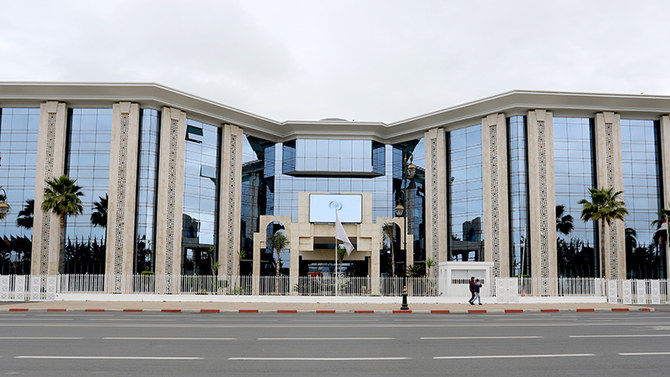
The head office of the Islamic World Educational, Scientific and Cultural Organization (ICESCO) in Rabat, Morocco. (ICESCO photo via Twitter)
Short Url
Updated 02 April 2020
Follow

ICESCO announces prizes in Remote Culture initiative 

  • Remote Culture is part of the “ICESCO Digital Home” initiative launched to support member states' efforts in fighting COVID-19

RIYADH: The Islamic World Educational, Scientific and Cultural Organization (ICESCO) has announced the creation of three awards for students in three cultural areas as part of its Remote Culture initiative.

The first prize is $6,000, the second is $4,000 and the third is $2,000, in addition to certificates of appreciation, in the fields of short story writing and painting, the organization said.

National committees in member states will communicate with educational institutions to invite students to take part in competitions, and will select three works of each category to be sent to ICESCO by the end of June 2020.

The organization then will form a specialized international jury to choose the best three works in each branch.

The initiative is part of the “ICESCO Digital Home” initiative launched to support member states' efforts in combating the coronavirus disease (COVID-19) and to find alternative solutions to ensure the sustainability of its educational, scientific and cultural work.

The new ICESCO initiative includes remote training and capacity-building for heritage frameworks, where the organization will be preparing and broadcasting a series of videos through its website as of April 15.

The videos include training programs in physical and intangible heritage, and documentation of cultural heritage using artificial intelligence techniques and risk-, crisis- and disaster-management in heritage sites and museums.

They will also introduce techniques for registering heritage sites on the lists of Islamic world heritage and world heritage, rehabilitating endangered crafts, promoting the general principles of managing museums in the Islamic world and protecting underwater cultural heritage.

The initiative also offers an invitation for remote reading to take advantage of ICESCO's digital libraries and other sites available.


Sotheby’s Abu Dhabi Collectors’ Week achieves $133 million

Updated 06 December 2025
Follow

Sotheby’s Abu Dhabi Collectors’ Week achieves $133 million

DUBAI: Auction house Sotheby’s Abu Dhabi Collectors’ Week, which wrapped up on Friday night, achieved $133 million in sales, according to the auction house.

The series of auctions included jewelry, rare timepieces, collectors’ cars and real estate from RM Sotheby’s, and Sotheby’s Concierge Auctions, alongside a museum-quality exhibition of international fine art.

A waterfront estate in Saint-Jean-Cap-Ferrat was sold for $20.1 million. (Supplied)

Sotheby’s Concierge Auctions opened the final evening, with a waterfront estate in Saint-Jean-Cap-Ferrat achieving $20.1 million. The sale of Jane Birkin’s Le Voyageur, a one-of-a-kind black Hermes Birkin owned by the actress, soared to $2.9 million (est. $240,000-$440,000) after a bidding battle lasting more than 10 minutes. It is now the second most valuable handbag sold at auction, surpassed by the original Hermes Birkin created for Birkin in 1985, which achieved a record-breaking $10.1 million earlier this year.

Jane Birkin with her Le Voyageur bag. (Supplied)

Leading the sale of jewellery and watches was the first complete set of the Patek Philippe Star Caliber 2000, which achieved $11.9 million, becoming the second most valuable watch sold at Sotheby’s. Meanwhile, The Desert Rose, the largest Fancy Vivid Orangy Pink diamond in the world, climbed to $8.8 million (est. $5-$7 million) following an almost 20-minute bidding battle among five collectors.

The Desert Rose is the largest Fancy Vivid Orangy Pink diamond in the world. (Supplied)

Participants hailed from 35 countries, with nearly a quarter of buyers from the UAE, according to Sotheby’s.