Focus: Investors' Safe Havens Amid Turbulent Markets

Updated 31 March 2020
Follow

Focus: Investors' Safe Havens Amid Turbulent Markets

What happened:

Markets were moderately up yesterday, and the risk sentiment continued for European stock markets into Tuesday.

The WHO said that the coronavirus disease (COVID-19) outbreak may be nearing its peak in Europe. This shifted the conversation from stimulus packages to where the global economy will be headed after the impact of the pandemic abates.

President of the St. Louis Federal Reserve James Bullard told Bloomberg that the US had debt capacity beyond the stimulus. He also cautioned that the US might see unemployment rise to 30 percent.

As China returns to work, the Purchasing Manager’s Index (PMI) rose to 52 in March. It is too early to be jubilant because the March PMI follows on that of February, which stood at 35.7. January and February also saw a 17 percent decline of exports year on year. Expect that number to worsen, as most of China’s export markets halted economic activity. The GDP of the world’s second largest economy is expected to fall for the first time since 1976.
Why it happened:

Black Rock’s Larry Fink thinks that markets have seen their lows, but that after the worst is over the global economy will look different. Investor sentiment, business practices and consumer sentiments will be reshaped substantially. This will have an impact on interconnectivity and supply chains. Morgan Stanley and JPMorgan also estimate that markets have reached their lows. Many disagree.

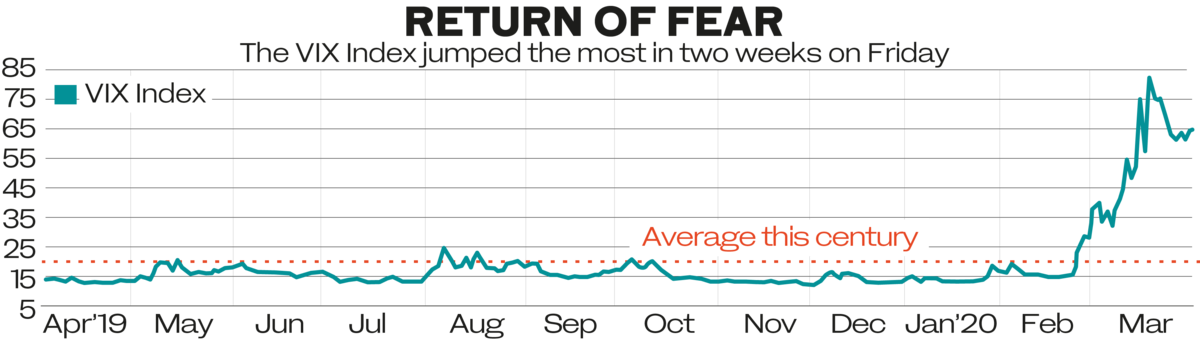
Volatility was immense since the outbreak. At the beginning of the month, the volatility index reached 85 — the highest in history. While oscillating, it came down, but it still stands above 65. When volatility is up, investors flock to safe havens.

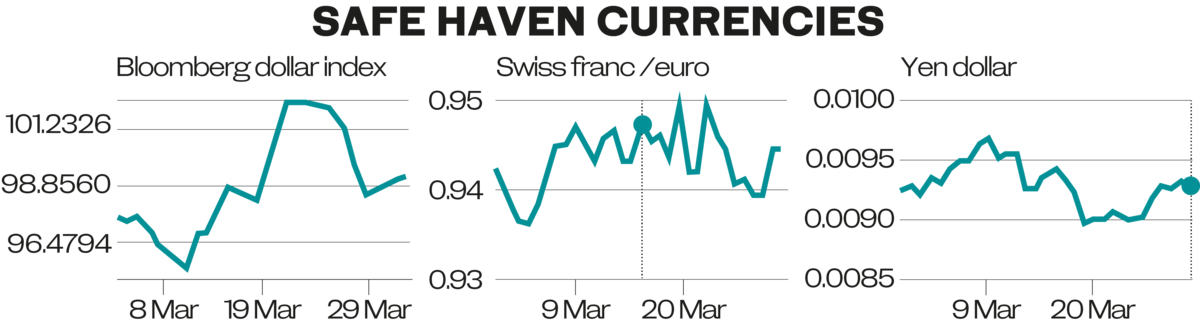
The dollar saw big inflows, which abated somewhat when the $2 trillion package was announced. The Swiss franc and the yen, which are traditional safe havens, also saw big inflows. CNBC reported that the Swiss National Bank doubled its open market operations for 2020 to SFr 12 billion.
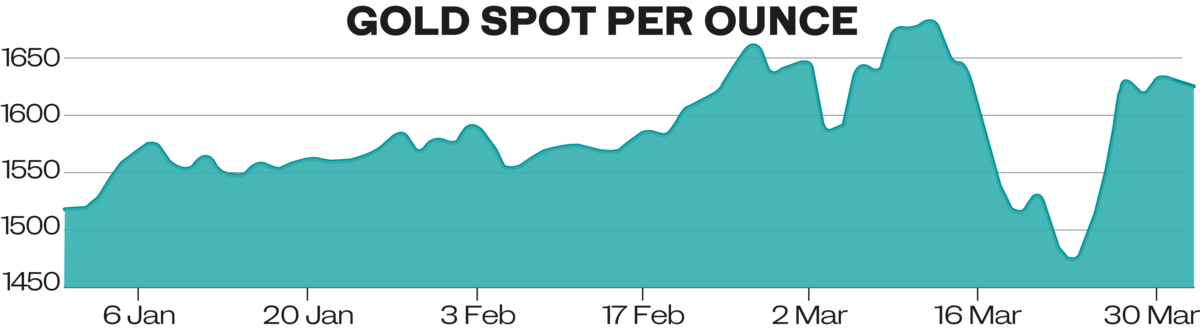
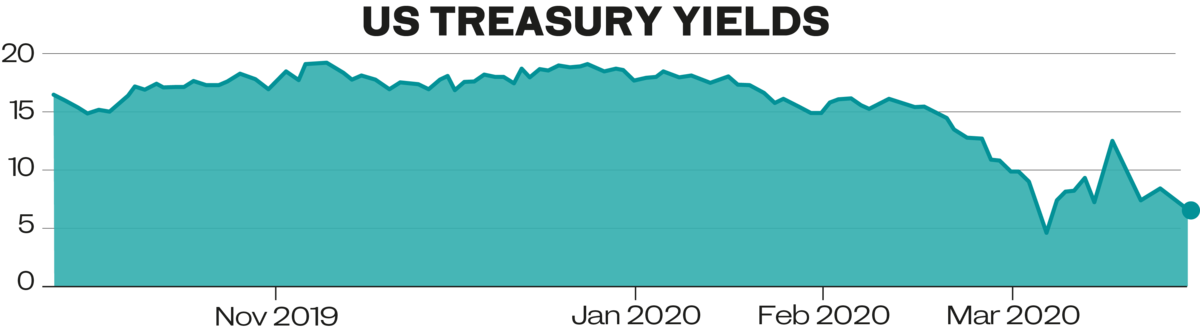
Ten-year US treasury yields fluctuated on a downward trajectory. Gold surged at the beginning of the month and dipped later because investors were in securities, such as exchange-traded funds. Access to the physical commodity was restricted amid the lockdown. It has recovered since then, standing at $1,640.65 per ounce mid-morning in Europe.
Where we go from here:

There is discussion on the shape of the recovery: V, U or L. Recovery may look different country to country depending on how strong the economy was going into the crisis and how well equipped its private and public sectors were at dealing with the impact. In all probability, U-shaped recoveries will be most prevalent, the question being the depth of the valley.
On a different note, as oil had its worst quarter in history, Saudi Aramco vouched to stand behind its $75 billion dividend commitment. The first instalment for its $70 billion purchase of SABIC is also due. Bloomberg reported that Aramco is considering to raise $10 billion by selling a stake in its pipeline unit.


— Cornelia Meyer is a Ph.D.-level economist with 30 years of experience in investment banking and industry. She is chairman and CEO of business consultancy Meyer Resources.

Twitter: @MeyerResources

WHO chief says reasons US gave for withdrawing ‘untrue’

Updated 25 January 2026
Follow

WHO chief says reasons US gave for withdrawing ‘untrue’

  • US Secretary of State Marco Rubio and US Health Secretary Robert F. Kennedy Jr. announced in a joint statement Thursday that Washington had formally withdrawn from the WHO
  • And in a post on X, Tedros added: “Unfortunately, the reasons cited for the US decision to withdraw from WHO are untrue”

GENEVA: The head of the UN’s health agency on Saturday pushed back against Washington’s stated reasons for withdrawing from the World Health Organization, dismissing US criticism of the WHO as “untrue.”
Tedros Adhanom Ghebreyesus warned that US announcement this week that it had formally withdrawn from the WHO “makes both the US and the world less safe.”
And in a post on X, he added: “Unfortunately, the reasons cited for the US decision to withdraw from WHO are untrue.”
He insisted: “WHO has always engaged with the US, and all Member States, with full respect for their sovereignty.”
US Secretary of State Marco Rubio and US Health Secretary Robert F. Kennedy Jr. announced in a joint statement Thursday that Washington had formally withdrawn from the WHO.
They accused the agency, of numerous “failures during the Covid-19 pandemic” and of acting “repeatedly against the interests of the United States.”
The WHO has not yet confirmed that the US withdrawal has taken effect.

- ‘Trashed and tarnished’ -

The two US officials said the WHO had “trashed and tarnished” the United States, and had compromised its independence.
“The reverse is true,” the WHO said in a statement.
“As we do with every Member State, WHO has always sought to engage with the United States in good faith.”
The agency strenuously rejected the accusation from Rubio and Kennedy that its Covid response had “obstructed the timely and accurate sharing of critical information that could have saved American lives and then concealed those failures.”
Kennedy also suggested in a video posted to X Friday that the WHO was responsible for “the Americans who died alone in nursing homes (and) the small businesses that were destroyed by reckless mandates” to wear masks and get vaccinated.
The US withdrawal, he insisted, was about “protecting American sovereignty, and putting US public health back in the hands of the American people.”
Tedros warned on X that the statement “contains inaccurate information.”
“Throughout the pandemic, WHO acted quickly, shared all information it had rapidly and transparently with the world, and advised Member States on the basis of the best available evidence,” the agency said.
“WHO recommended the use of masks, vaccines and physical distancing, but at no stage recommended mask mandates, vaccine mandates or lockdowns,” it added.
“We supported sovereign governments to make decisions they believed were in the best interests of their people, but the decisions were theirs.”

- Withdrawal ‘raises issues’ -

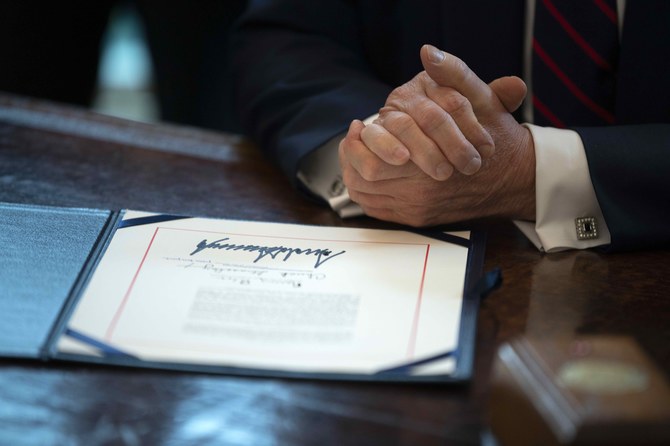
The row came as Washington struggled to dislodge itself from the WHO, a year after US President Donald Trump signed an executive order to that effect.
The one-year withdrawal process reached completion on Thursday, but Kennedy and Rubio regretted in their statement that the UN health agency had “not approved our withdrawal and, in fact, claims that we owe it compensation.”
WHO has highlighted that when Washington joined the organization in 1948, it reserved the right to withdraw, as long as it gave one year’s notice and had met “its financial obligations to the organization in full for the current fiscal year.”
But Washington has not paid its 2024 or 2025 dues, and is behind around $260 million.
“The notification of withdrawal raises issues,” WHO said Saturday, adding that the topic would be examined during WHO’s Executive Board meeting next month and by the annual World Health Assembly meeting in May.
“We hope the US will return to active participation in WHO in the future,” Tedros said Saturday.
“Meanwhile, WHO remains steadfastly committed to working with all countries in pursuit of its core mission and constitutional mandate: the highest attainable standard of health as a fundamental right for all people.”