

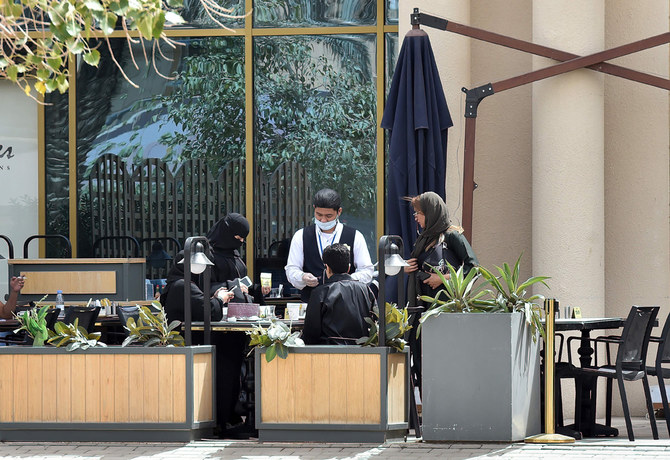

RIYADH: The Saudi Public Prosecution has warned businesses against jacking up the prices of products or services amid increasing demand for health and hygiene products over coronavirus fears.
“Enterprises engaged in commercial, agricultural, industrial or service businesses are prohibited from exploiting temporary repercussions, global events or exceptional situations to carry out contrived practices that create a false and misleading impression that suggests an unrealistic shortage of goods or services in order to control prices,” said the public protection in a tweet.
According to Article 6 of the Saudi Competition Law, an entity or entities having a dominant position in the market shall be prohibited from exploiting this position to undermine or limit competition.
Article 19 of the same law stipulates: “Whoever violates any of the provisions of Article 6 of this law shall be punished by a fine not exceeding 10 percent of the total annual sales value subject of the violation. When it is impossible to estimate the annual sales, the fine shall not exceed SR10 million.
The Committee may, at its discretion, impose a fine not exceeding three times the gains made by the violator as a result of the violation.”
The law also listed examples of practices that are considered monopolistic practices, such as selling products or services at a price lower than its total cost, manipulating the supply of products to control the prices and imply unreal abundance or deficit.
“The competition Law existed for many years. It prevents the practices of monopoly and exploitation of markets to breach competition,” said Dr. Majed Garoub, a Saudi lawyer and chairman of the Law Firm of Majed M. Garoub, adding that the Public Prosecution’s announcement is just an assurance and a reminder of the law and its articles.
Pharmacies or hypermarkets that raise prices of face masks or hand sanitizers amid fears of coronavirus are exposed to the penalties mentioned in the Coopetition Law, Garoub explained.
“Definitely it’s exploitation. One of the worst shapes of abuse is that related to abusing people’s health in critical times such as pandemics or wars. Those crises traders are the worst traders ever,” he said.
The measures that aim to protect consumers in critical times do not contradict with the concept of free market, the lawyer said.
“Free market doesn’t mean that you have the right to commit monopolistic practices. It’s your right to compete in the market, but it’s not your right to conspire against the consumer,” he added. “This is a crime against the nation, and has nothing to do with the free market.”


