

Coronavirus impact on oil demand limited, says Saudi energy minister

Saudi Arabia's Minister of Energy, Prince Abdulaziz bin Salman Al-Saud. (Reuters)
Short Url
Updated 28 January 2020
Follow

Coronavirus impact on oil demand limited, says Saudi energy minister

  • Minister recalls 2003 outbreak of Severe Acute Respiratory Syndrome did not push down oil demand

DUBAI: Saudi Arabia has urged caution against “gloomy expectations” regarding the possible impact of the spread of the coronavirus on the global economy and oil demand.
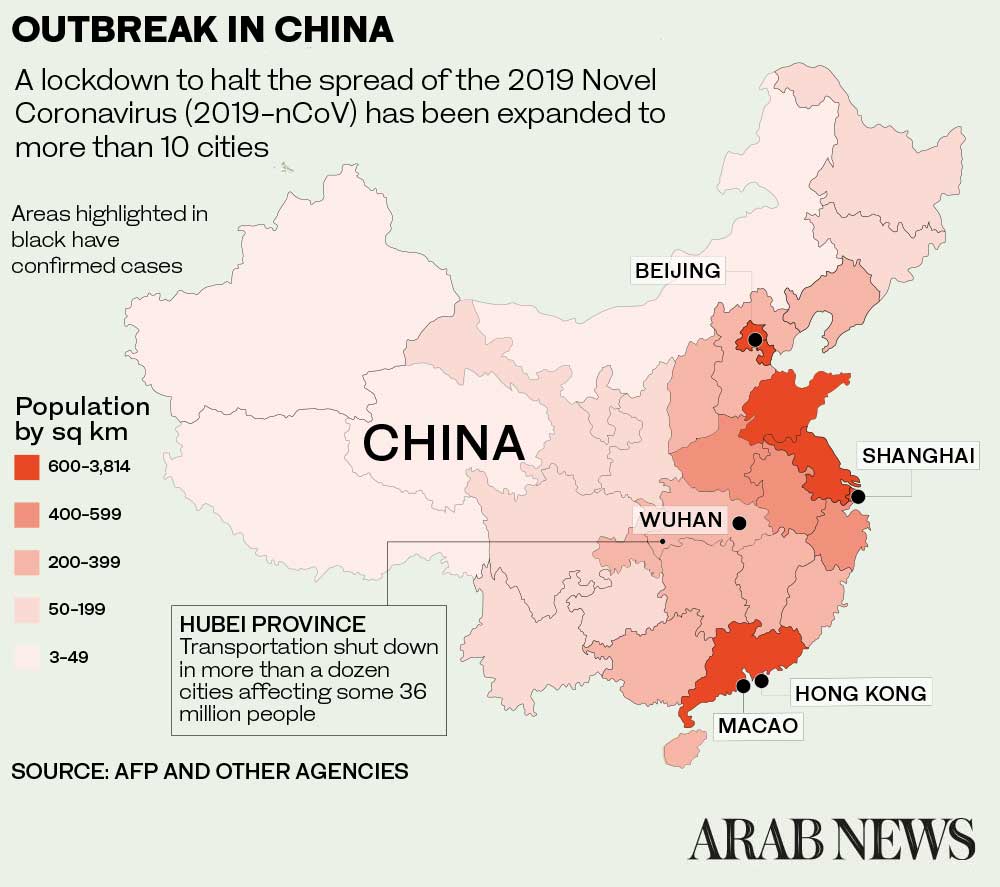
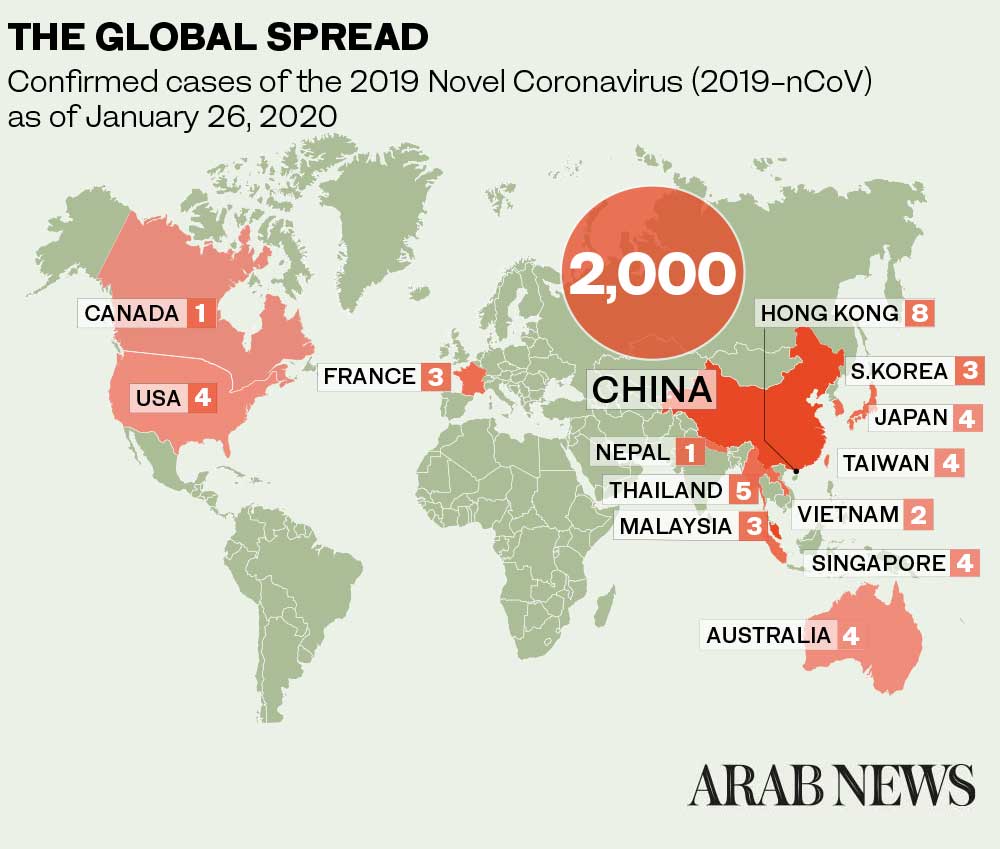
The death toll from a coronavirus outbreak in China rose to 81 on Monday with more than 2,700 infected as health authorities around the world stepped up screening of passengers from China.
Crude prices fell about 3 percent on Monday as the rising number of cases of the coronavirus and China’s city lockdowns and extension of its Lunar New Year holiday deepened concerns over oil demand.
But Saudi Energy Minister Prince Abdul Aziz bin Salman said the impact being seen on oil and other markets was “primarily driven by psychological factors and extremely negative expectations adopted by some market participants despite its very limited impact on global oil demand.”
“Such extreme pessimism occurred back in 2003 during the SARS outbreak, though it did not cause a significant reduction in oil demand,” the minister said in a statement.

Fellow Gulf OPEC oil producer UAE echoed the Saudi minister’s comments.
“It is important that we do not exaggerate projections related to future decreases in oil demand due to events in China,” UAE Minister of Energy Suhail Al-Mazrouei said.
In March “OPEC and OPEC+ member countries will discuss market conditions and, if required, all options to ensure continued market balance,” he said.
The Saudi minister said OPEC and its allies could respond to any impact on the oil market, adding he was confident the Chinese and international authorities could contain the virus.
Brent crude slid $1.37 a barrel to settle down at $59.32, its lowest since late October and the biggest intra-day fall since Jan. 8.
US crude fell $1.05 to settle at $53.14 a barrel.
Prince Abdul Aziz said he was confident the Organization of the Petroleum Exporting Countries (OPEC) and other producers, a group known as OPEC+, “have the capability and flexibility needed to respond to any developments.”
Oman’s oil minister told Reuters on Monday that he fully supported Saudi Arabia’s readiness to react to any impact the virus has on the market.

OPEC+, which includes Russia, has been reducing oil supply to support prices and has agreed to hold back 1.7 million barrels per day (bpd) of output until the end of March.
Prince Abdul Aziz said all options were open when OPEC+ meets in Vienna in March.
An OPEC source said on Monday that there were “preliminary discussions” among OPEC+ for an extension of the current oil supply cuts beyond March, and a possible deeper cut was also an option, if there was a need, and if the China virus spread impacted oil demand.


First EU–Saudi roundtable on critical raw materials reflects shared policy commitment

Updated 16 January 2026
Follow

First EU–Saudi roundtable on critical raw materials reflects shared policy commitment

RIYADH: The EU–Saudi Arabia Business and Investment Dialogue on Advancing Critical Raw Materials Value Chains, held in Riyadh as part of the Future Minerals Forum, brought together senior policymakers, industry leaders, and investors to advance strategic cooperation across critical raw materials value chains.

Organized under a Team Europe approach by the EU–GCC Cooperation on Green Transition Project, in coordination with the EU Delegation to Saudi Arabia, the European Chamber of Commerce in the Kingdom and in close cooperation with FMF, the dialogue provided a high-level platform to explore European actions under the EU Critical Raw Materials Act and ResourceEU alongside the Kingdom’s aspirations for minerals, industrial, and investment priorities.

This is in line with Saudi Vision 2030 and broader regional ambitions across the GCC, MENA, and Africa.

ResourceEU is the EU’s new strategic action plan, launched in late 2025, to secure a reliable supply of critical raw materials like lithium, rare earths, and cobalt, reducing dependency on single suppliers, such as China, by boosting domestic extraction, processing, recycling, stockpiling, and strategic partnerships with resource-rich nations.

The first ever EU–Saudi roundtable on critical raw materials was opened by the bloc’s Ambassador to the Kingdom, Christophe Farnaud, together with Saudi Deputy Minister for Mining Development Turki Al-Babtain, turning policy alignment into concrete cooperation.

Farnaud underlined the central role of international cooperation in the implementation of the EU’s critical raw materials policy framework.

“As the European Union advances the implementation of its Critical Raw Materials policy, international cooperation is indispensable to building secure, diversified, and sustainable value chains. Saudi Arabia is a key partner in this effort. This dialogue reflects our shared commitment to translate policy alignment into concrete business and investment cooperation that supports the green and digital transitions,” said the ambassador.

Discussions focused on strengthening resilient, diversified, and responsible CRM supply chains that are essential to the green and digital transitions.

Participants explored concrete opportunities for EU–Saudi cooperation across the full value chain, including exploration, mining, and processing and refining, as well as recycling, downstream manufacturing, and the mobilization of private investment and sustainable finance, underpinned by high environmental, social, and governance standards.

From the Saudi side, the dialogue was framed as a key contribution to the Kingdom’s industrial transformation and long-term economic diversification agenda under Vision 2030, with a strong focus on responsible resource development and global market integration.

“Developing globally competitive mineral hubs and sustainable value chains is a central pillar of Saudi Vision 2030 and the Kingdom’s industrial transformation. Our engagement with the European Union through this dialogue to strengthen upstream and downstream integration, attract high-quality investment, and advance responsible mining and processing. Enhanced cooperation with the EU, capitalizing on the demand dynamics of the EU Critical Raw Materials Act, will be key to delivering long-term value for both sides,” said Al-Babtain.

Valere Moutarlier, deputy director-general for European industry decarbonization, and directorate-general for the internal market, industry, entrepreneurship and SMEs at European Commission, said the EU Critical Raw Materials Act and ResourceEU provided a clear framework to strengthen Europe’s resilience while deepening its cooperation with international partners.

“Cooperation with Saudi Arabia is essential to advancing secure, sustainable, and diversified critical raw materials value chains. Dialogues such as this play a key role in translating policy ambitions into concrete industrial and investment cooperation,” she added.