DHAKA: Bangladesh has sought a more effective role from ASEAN (Association of Southeast Asian Nations) to increase pressure on Myanmar to find a sustainable solution to the Rohingya repatriation issue.
The call came during a four-day summit which began in Thailand on Saturday.
It follows a visit by a high-powered delegation from Dhaka — led by senior parliamentarian Faruk Khan, chair of the parliamentary standing committee at the Foreign Ministry — to Thailand and Singapore, to convince ASEAN member countries to have a stronger voice on the topic.
Thailand is the current chair of ASEAN while Singapore is also an influential member of the regional bloc. Both countries enjoy good trade relations with Myanmar.
Diplomats and experts on international affairs expressed optimism about Dhaka’s latest move.
Munshi Faiz Ahmad, chairman of the Bangladesh Institute of International and Strategic Studies (BIISS), said that as a regional platform, ASEAN had the scope to play a vital role in convincing Myanmar on the topic.
“Since the Rohingya issue is causing a security threat for this region, ASEAN can move forward for a sustainable solution of the Rohingya refugee crisis,” he told Arab News, adding that it was also important for international bodies to monitor the situation.
“Different civil authorities have a huge scope to get engaged in the repatriation process and for this ASEAN can be named as one of the best options since Myanmar is also an important member state of the regional platform,” he said.
During the last session of the UN General Assembly (UNGA), China proposed a tripartite engagement — involving Bangladesh, Myanmar and China — to resolve the crisis.
However, Ahmad said that the only solution to resolving the crisis was to include the Rohingya in all discussions.
“The image of China as a superpower is very much involved with the sustainable solution of the Rohingya crisis since the country was involved in these diplomatic negotiations from the very beginning. To secure the Chinese investment in Rakhine, the country may push Myanmar in a stronger way in preparing a conducive environment for the Rohingya repatriation,” said Ahmad, who is also a former Bangladeshi ambassador to China.
Meanwhile, Professor Amena Mohsin of Dhaka University said that “the genocide which took place in Rakhine can’t be considered as an internal issue as it has become an international concern.”
Mohsin told Arab News: “At this stage, China should accelerate its diplomatic moves regarding the Rohingya issues since the country has blatantly supported Myanmar in the UN Security Council in recent months. But I am not sure how much China would play its role as there is an upcoming general election in Myanmar.”
On the ground, however, Bangladeshi authorities seem to be paying heed to Beijing’s advice, with foreign ministry officials holding talks with ambassadors from China and Myanmar in the last week of October.
“We have discussed all the aspects concerning the Rohingya repatriation and there was no immediate outcome or decision as the ambassadors were needed to consult the issues with their authorities. We will have the second meeting in next week,” Delwar Hossain, director general of the Southeast Asia desk of the Bangladesh Foreign Ministry, told Arab News.
“It was a good confidence-building initiative among the parties,” Hossain said.
However, during an address to the media on Thursday, Bangladesh’s Foreign Minister A.K. Abdul Momen said that the Rohingya issue was “Myanmar’s failure.”
“With two failed attempts of repatriation, it is now clear that Myanmar could not build trust among the Rohingya. That is Myanmar’s failure,” he said.
Momen said that the situation in Rakhine needed to be verified by independent observers to determine whether the Myanmar authorities have succeeded in creating a conducive environment for the refugees.
He suggested that Bangladesh wants ASEAN involved in the whole repatriation process, which includes sending its civilian observers to Rakhine and monitoring the wellbeing of the Rohingya after repatriation.
Bangladesh currently hosts more than 1,150,000 Rohingya at Cox’s Bazar refugee camp, most of whom fled from Rakhine following a brutal military crackdown by the Myanmar army in August 2017.


Dhaka urges ASEAN to step up on Rohingya issue
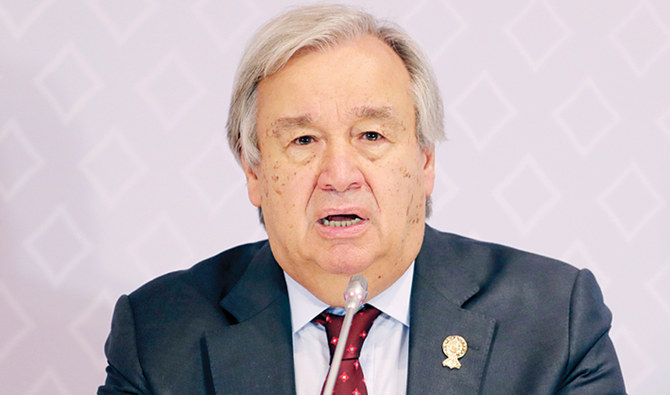
Dhaka urges ASEAN to step up on Rohingya issue
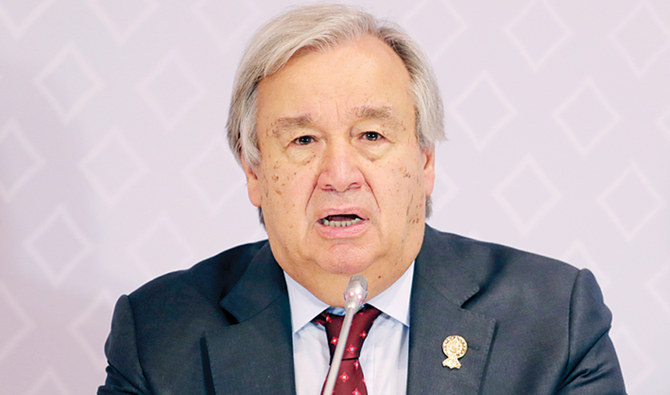
- Diplomats and experts on international affairs expressed optimism about Dhaka’s latest move


India hosts global leaders, tech moguls at AI Impact Summit
- 20 heads of state scheduled to attend event which runs until Feb. 20
- Summit expected to speed up adoption of AI in India’s governance, expert says
NEW DELHI: A global artificial intelligence summit opened in New Delhi on Monday, with representatives of more than 60 countries scheduled to discuss the use and regulation of AI with the industry’s leaders and investors.
The India AI Impact Summit 2026 is hosted by the Indian government’s IndiaAI Mission — an initiative worth in excess of $1 billion and launched by the Ministry of Electronics and Information Technology in 2024 to develop the AI ecosystem in the country.
After five days of sessions and an accompanying exhibition of 300 companies at Bharat Mandapam — the venue of the 2023 G20 summit — participating leaders are expected to sign a declaration which, according to the organizer, will outline a “shared road map for global AI governance and collaboration.”
Prime Minister Narendra Modi, who will attend the summit on Friday with French President Emmanuel Macron, said on X it was a “matter of great pride for us that people from around the world are coming to India” for the event, which is evidence that the country is “rapidly advancing in the fields of science and technology and is making a significant contribution to global development.”
Among the 20 heads of state that the Indian Ministry of External Affairs has announced as scheduled to attend are Macron, Brazilian President Luiz Inacio Lula da Silva, Spanish Prime Minister Pedro Sanchez, Finnish Prime Minister Petteri Orpo, and Sheikh Khaled bin Mohamed bin Zayed Al-Nahyan, Abu Dhabi’s crown prince.
Also expected are tech moguls such as OpenAI CEO Sam Altman and Google’s chief Sundar Pichai.
The summit will give India, the world’s most populous country, a platform to try to steer cooperation and AI regulation between the West and the Global South, and to present to the global audience its own technological development.
“India is leveraging its position as a bridge between emerging and developed economies to bring together not just country leaders and technologists, but also delegates, policy analysts, media, and others … to explore the facets of AI, multilateral collaborations, and the direction that large-scale development of AI should take,” said Anwesha Sen, assistant program manager for technology and policy at Takshashila Institution.
“India is trying to do three things through the AI Impact Summit. One, India is advocating for sovereign AI and the development of inclusive, population-scale solutions. Two, establishing international collaborations that prioritize AI diffusion in sectors like healthcare and agriculture. And three, showcasing how Indian startups and organizations are using frameworks such as that of digital public infrastructure as a model to bridge the two.”
It is the fourth such gathering dedicated to the development of AI. The first one was held in the UK in 2023, a year after the debut of ChatGPT; the 2024 meeting in South Korea; and last year’s event took place in France.
The summit is likely to help the Indian government in speeding up the adoption of AI, according to Nikhil Pahwa, digital rights activist and founder of MediaNama, a mobile and digital news portal, who likened it to the Digital India initiative launched in 2015 to provide digital government services.
“A summit like this, with this much bandwidth allocated to it by the government, even if the agenda is flat, ends up making AI a priority focus for ministries and state governments,” Pahwa told Arab News.
“It encourages diffusion of AI execution-specific thinking and ends up increasing adoption of AI in governance and by both central and state-level ministries. That reduces time for adoption of AI.
“We saw this play out with the government’s Digital India focus: it increased digitization and the adoption of digital technology. The agenda and India’s role in AI globally is less important than speeding up adoption.”


