

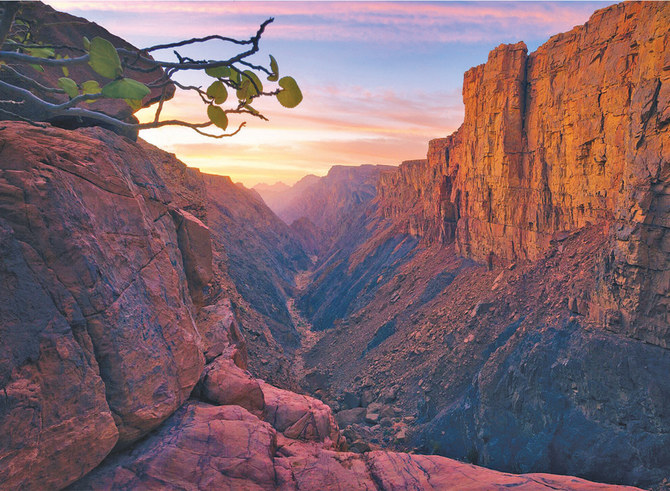
All-female Saudi tourist group explores wonders of Tabuk

A wealth of natural wonders make Tabuk a perfect tourist spot. (Saudi Tourism)
Updated 21 October 2019
Follow

All-female Saudi tourist group explores wonders of Tabuk

  • About 20 women from different parts of the Kingdom took part in the sightseeing trip to the province bordering the Red Sea

JEDDAH: Saudi Arabia’s first all-female tourist group has explored the environmental and archaeological wonders of Tabuk in the northwest of the Kingdom.

About 20 women from different parts of the Kingdom took part in the sightseeing trip to the province bordering the Red Sea.

“They were astonished to see such sights in their country, especially the area of Ras Al-Sheikh Humaid,” said Heba Al-Aidai, a tour guide in Tabuk who organized the trip.

“They did not expect to see such a place in Saudi Arabia. They looked speechless while standing close to the turquoise water of the sea. It is a truly breathtaking view.”

Al-Aidai and her colleague Nafla Al-Anazi promoted the trip on social media and attracted a group of homemakers, teachers and staff workers from all over the Kingdom, aged from 22 to over 50.

The tour was educational, too, and the women were told about the history of the places they visited. “They were taken to the Caves of Shuaib (Magha’er Shuaib), the place where Prophet Moses fled after leaving Egypt, and where he got married to one of the daughters of Prophet Shuaib, according to some historians. It was really a positive experience,” Al-Aidai said.

The visitors also explored Tayeb Ism, a small town in northwestern Tabuk, where there is a well-known gap in the towering mountains through which water runs throughout the year.

Al-Aidai said such trips aim to encourage tourism in Tabuk, and introduce Saudi tourists and other visitors to the landmarks of the region.


Families in Taif embrace Ramadan customs early

Updated 7 sec ago
Follow

Families in Taif embrace Ramadan customs early

TAIF: Residents of Taif are engaging in early preparations for the holy month of Ramadan, upholding deeply rooted customs that blend religious devotion with social tradition.

Families are meticulously organizing their homes and stocking up on supplies in anticipation of the communal meals and gatherings that define the month’s spirit of kinship, the Saudi Press Agency reports.

The city’s neighborhoods have taken on a festive character, adorned with traditional lanterns, crescent-shaped lights and star-shaped illuminations.

Historian Dhaifallah Al-Radwani said that these preparations — primarily led by women and children — include the use of traditional fabrics, incense burners and henna.

These rituals serve as a vital link to Saudi cultural heritage, ensuring that authentic community values and aesthetic traditions are passed down to new generations.

On Sunday, the last quarter moon of Shaban was visible across the Kingdom. Half of the moon was illuminated, while the other half remained in shadow, completing roughly three-quarters of its orbit around the Earth.

The last quarter moon draws the attention of amateur astronomers and astrophotographers, offering an ideal angle to observe surface features such as craters, volcanic plains and mountains, with shadows along the terminator enhancing their detail.

Jeddah Astronomy Society Director Majed Abu Zahra said that the last quarter moon marks a key transitional phase. Its visible light gradually decreases, becoming a waning crescent before sunrise, until the new moon on Feb. 17 signals the upcoming sighting of Ramadan’s crescent.