AlUla mesmerises Paris as ‘Wonder of Arabia’ exhibition opens in French capital

1 / 8
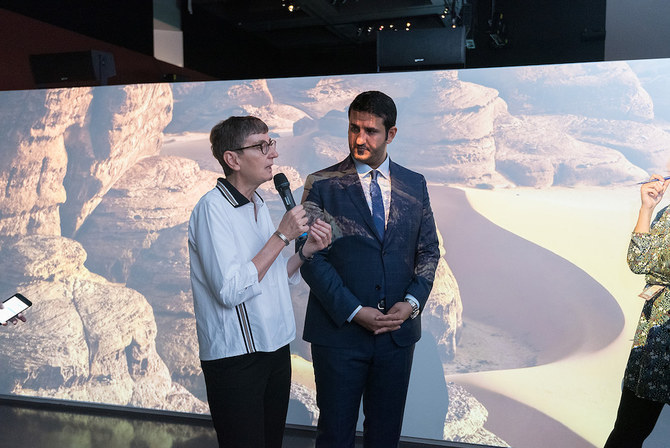
A unique exhibition - ‘Wonder of Arabia’ - opened its doors to art and history lovers on Monday evening on the banks of the river Seine in Paris. The event was attended by Saudi Culture Minister Prince Badr bin Abdullah. (Nicolas Kalogeropoulos)
2 / 8
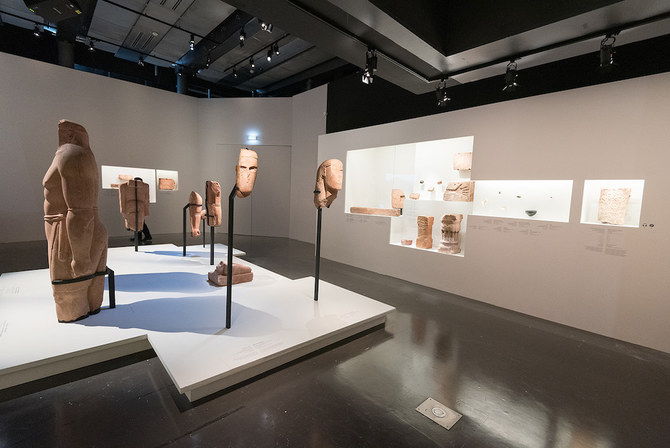
A unique exhibition - ‘Wonder of Arabia’ - opened its doors to art and history lovers on Monday evening on the banks of the river Seine in Paris. (Nicolas Kalogeropoulos)
3 / 8
A unique exhibition - ‘Wonder of Arabia’ - opened its doors to art and history lovers on Monday evening on the banks of the river Seine in Paris. (Nicolas Kalogeropoulos)
4 / 8
A unique exhibition - ‘Wonder of Arabia’ - opened its doors to art and history lovers on Monday evening on the banks of the river Seine in Paris. (Nicolas Kalogeropoulos)
5 / 8
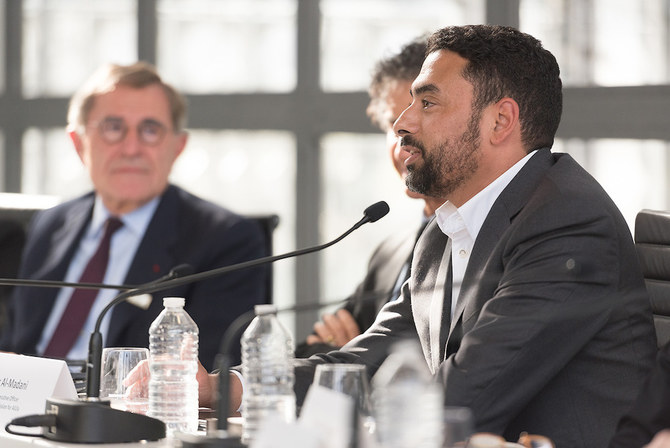
Jack Lang and Amr Al-Madani at the event. (Nicolas Kalogeropoulos)
6 / 8
Amr Al-Madani at the event. (Nicolas Kalogeropoulos)
7 / 8
A unique exhibition - ‘Wonder of Arabia’ - opened its doors to art and history lovers on Monday evening on the banks of the river Seine in Paris. (Nicolas Kalogeropoulos)
8 / 8
A unique exhibition - ‘Wonder of Arabia’ - opened its doors to art and history lovers on Monday evening on the banks of the river Seine in Paris. (Nicolas Kalogeropoulos)
Updated 07 October 2019
Follow

AlUla mesmerises Paris as ‘Wonder of Arabia’ exhibition opens in French capital

  • Unique exhibition ‘Wonder of Arabia’ opens in Paris
  • The exhibition presents the treasures of the ancient cultural centre of the region

PARIS: A unique exhibition opened its doors to art and history lovers on Monday evening on the banks of the river Seine in Paris.

The ‘Wonder of Arabia’ exhibition will present the treasures of the ancient cultural centre of the Saudi Aarabian region of the AlUla valley.

It was opened at the Institut du Monde Arabe (Institute of the Arab World) by the Saudi Culture Minister Prince Badr bin Abdullah and his French counterpart, Franck Riester, in a lavish ceremony. 

Also present at the event were the director general of UNESCO Irina Bokova, IMA president Jack Lang and noted architect Jean Nouvel, as well as other guests hailing from the fields of archaeology, arts, history, culture, environmental and natural sciences.

The exhibition, occupying three floors in the Institute, takes the visitor through the valley — its nature, history, culture and the work being done by leading archaeologists from all over the world, but notably Saudis and the French.

Addressing a press conference about the exhibition and  the AlUla region, Amr Al-Madani, chief executive officer of the Royal Commission for AlUla, said the first phase of the project, covering dozens of sites and spread over a large area, would be completed by the end of 2023. 

‘’But from October 2020, visitors from all over the world will be able to see for themselves this cradle of civilization that has been at the historic crossroads connecting Europe, Africa, the Arabian Peninsula and Asia,’’ he added.

Talking about the importance of the site, Al-Madani said that AlUla represented an important piece of the history for the entire region and due to its strategic location and continuous inhabitation, saying it could unlock some of the mysteries that still surround the history of parts of the Middle East.

Lang, a former French Minister, said he was captivated when he discovered AlUla for himself the first time five years ago.

He said that it was then when he decided to enhance cooperation between French and Saudi researchers, historians and archaeologists to jointly present the jewel of AlUla to the rest of the world.

Visitors to the exhibition can also see impressive immersive photography shot by renowned photographer Yann Arthus-Bertrand.

The exhibition in Paris will formally open its doors to the public on Wednesday October 9 and will run until January 19 next year. It has been jointly curated by Laila Nehmé and Abdulrahman Alsuhaibani.


Rare sighting of critically endangered leatherback turtle in Red Sea

Updated 05 February 2026
Follow

Rare sighting of critically endangered leatherback turtle in Red Sea

  • Turtles travel thousands of kilometers to Red Sea
  • Nesting 6,500km away in India’s Andaman Islands

RIYADH: Saudi Arabia’s National Center for Wildlife has documented a rare sighting of a leatherback sea turtle in the Red Sea, marking a significant biological record for one of the planet’s most critically endangered marine species.

The sighting occurred approximately 30 km off the coast of Al-Qunfudhah within the Blue Holes Protected Area, a newly established marine reserve, according to a recent report from the Saudi Press Agency.

The NCW said the presence of a leatherback in these waters was an exceptional event.

Recognized as the largest turtle species on Earth, the leatherback can weigh up to 900 kilograms. It has a unique leathery, black carapace — distinguished by five longitudinal ridges rather than a hard bony shell — and able to dive to depths exceeding 1,000 meters.

Shutterstock image

Noting the species’ migratory nature, the center explained that leatherbacks travel thousands of kilometers foraging for jellyfish. The specimen likely navigated through the Bab Al-Mandeb Strait in search of food.

This is considered a remarkable journey, the NCW said, noting that the nearest known populations reside in the Indian Ocean, spanning waters from South Africa to Sri Lanka (roughly 7,000 to 8,000 km away).

The closest known nesting grounds are located in India’s Andaman Islands, approximately 6,500 kilometers away. No nesting activity has been recorded in the Red Sea.

According to the Red List of the International Union for Conservation of Nature, the leatherback is Critically Endangered in the Indian Ocean.

While data for the Red Sea and Arabian Gulf is scarce, recent isolated sightings include a juvenile recorded in Jordan in December 2025 and another off Djibouti in 2019.

The NCW emphasized that these rare appearances highlight the ecological importance of the Kingdom's marine conservation efforts in the Red Sea.

The center pointed to the Farasan Islands Marine Protected Area, along with the new Blue Holes and Ras Hatiba reserves, as critical sanctuaries that could support the expansion in range of such endangered species.