

Saudi keeps top China crude spot as Iran plunges

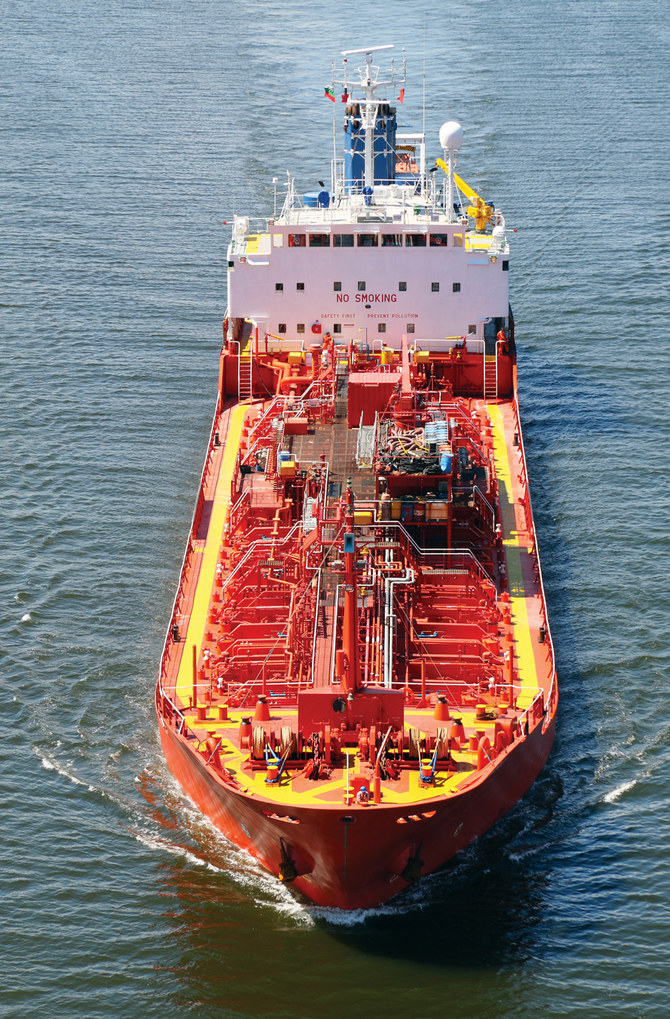
Despite attacks in the Strait of Hormuz and on the Kingdom, tankers continue to supply China with record amounts of Saudi crude. (Shutterstock)
Updated 26 September 2019
Follow

Saudi keeps top China crude spot as Iran plunges

  • Despite attacks on Gulf refineries, Riyadh to Beijing oil flows continue to grow

BEIJING: Saudi Arabia held on to its spot as China’s largest supplier of crude in August for the second straight month, official customs data showed on Wednesday, although this month’s attack on Saudi oil processing facilities may end the run. 

Saudi oil arrivals in August in China, the world’s biggest oil importer, reached 7.79 million tons, or 1.83 million barrels per day (bpd), data from the General Administration of Customs showed, compared with 6.99 million tons in July and nearly double the previous year. 

Amid sanctions by the US on Tehran and rising Middle East tensions, China’s oil imports from Iran were 787,657 tons, down from July’s 926,119 tons and far below 3.28 million tons of a year ago. 

Most of the August arrivals were discharged at Jinzhou and Tianjin ports in China’s northeast, where it has state reserve and commercial tanks, indicating volumes continuing to flow into the country’s strategic storage sites, according to Refinitiv Oil Research. 

China said days after the drone attack on Saudi oil facilities that knocked out half the output of the world’s top oil exporter that the nation’s crude reserves, including stocks held at strategic petroleum storage sites and commercial inventories, were sufficient to cover 80 days. 

Imports of US crude oil reached 1.01 million tons last month, versus 1.5 million tons in July, with volumes likely to more than halve in September as Beijing started levying a 5 percent tariff as the trade war with the US escalated.

Imports from Russia, China’s second largest supplier for August, reached 6.02 million tons, up from 5.673 million tons in July and 5.7 million tons in August last year. 

Oil prices fell for a second day on Wednesday amid worries fuel demand could fall after US President Donald Trump doused recent optimism over China-US trade talks.

Brent crude futures were down by more than a dollar in early London trade on Wednesday. Nevertheless, the benchmark remains on track for its first monthly gain since June.

“Focus will return to faltering oil demand concerns as there is unlikely to be any quick resolution to US-China trade differences to positively shift economic expectations,” global oil strategist at BNP Paribas Harry Tchilinguirian told the Reuters Global Oil Forum.

Trump criticized China’s trade practices at the UN General Assembly on Tuesday and said he would not accept a “bad deal” in US-China trade negotiations.

BYD Americas CEO hails Middle East as ‘homeland for innovation’

Updated 7 sec ago
Follow

BYD Americas CEO hails Middle East as ‘homeland for innovation’

  • In an interview on the sidelines of Davos, Stella Li highlighted the region’s openness to new technologies and opportunities for growth

DAVOS: BYD Americas CEO Stella Li described the Middle East as a “homeland for innovation” during an interview with Arab News on the sidelines of the World Economic Forum.

The executive of the Chinese electric vehicle giant highlighted the region’s openness to new technologies and opportunities for growth.

“The people (are) very open. And then from the government, from everybody there, they are open to enjoy the technology,” she said.

BYD has accelerated its expansion of battery electric vehicles and plug-in hybrids across the Middle East and North Africa region, with a strong focus on Gulf Cooperation Council countries like the UAE and Saudi Arabia.

GCC EV markets, led by the UAE and Saudi Arabia, rank among the world’s fastest-growing. Saudi Arabia’s Public Investment Fund has been aggressively investing in the EV sector, backing Lucid Motors, launching its brand Ceer, and supporting charging infrastructure development.

However, EVs still account for just over 1 percent of total car sales, as high costs, limited charging infrastructure, and extreme weather remain challenges.

In summer 2025, BYD announced it was aiming to triple its Saudi footprint following Tesla’s entry, targeting 5,000 EV sales and 10 showrooms by late 2026.

“We commit a lot of investment there (in the region),” Li noted, adding that the company is building a robust dealer network and introducing cutting-edge technology.

Discussing growth plans, she envisioned Saudi Arabia and the wider Middle East as a potential “dreamland” for innovation — what she described as a regional “Silicon Valley.” 

Talking about the EV ambitions of the Saudi government, she said: “If they set up (a) target, they will make (it) happen. Then they need a technology company like us to support their … 2030 Vision.”