RIYADH: The National Anti-Corruption Commission (Nazaha) okf Saudi Arabia and the UN Development Programme (UNDP) on Tuesday signed a memorandum of understanding (MoU) to cooperate against corruption.
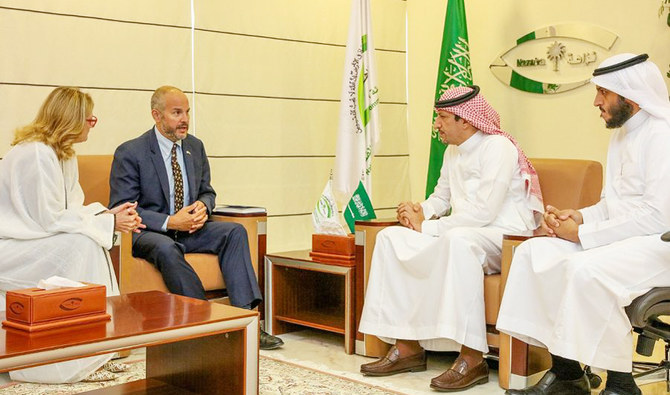
Nazaha President Mazen bin Ibrahim Al-Kahmous received in his office in Riyadh the UNDP’s resident representative in the Kingdom, Adam Bouloukos, and his delegation.
They reviewed both sides’ efforts, and explored ways to enhance cooperation against corruption.
The aim of the MoU is to establish a strategic partnership against corruption, and to support relevant initiatives, programs, projects and activities.
The meeting and the signing of the MoU were attended by Nazaha’s vice president for combatting corruption, Abdulmohsen bin Mohammed Al-Mehaisen, and its vice president for protecting integrity, Bandar bin Ahmed Aba Al-Khail.
Nazaha aims to create a work environment of integrity, transparency, honesty, justice and equality in the bodies that fall within its jurisdiction or specialization.

Saudi Arabia’s Nazaha, UNDP sign MoU to fight corruption
- The aim of the MoU is to establish a strategic partnership against corruption, and to support relevant initiatives, programs, projects and activities
‘Masterpieces of Saudi Orchestra’ shine at Maraya in AlUla
- The concert on its opening night presented a seamless artistic journey, where orchestral works met Saudi musical identity
- It underlined the Music Commission’s aim to present Saudi artistry at a high professional level
RIYADH: The “Masterpieces of Saudi Orchestra” concert opened at Maraya Concert Hall in AlUla on Thursday under the patronage of the Kingdom’s Minister of Culture and Chairman of the board of the Music Commission Prince Bader bin Abdullah.
Organized by the Music Commission, the concert on its opening night presented a seamless artistic journey, where orchestral works met Saudi musical identity.
The Saudi National Orchestra and Choir, conducted by Maestro Hani Farhat, led audiences through carefully curated pieces reflecting heritage and modern creativity.
The repertoire combined traditional influences with orchestral scoring, offering listeners heritage-based compositions alongside recent arrangements.
Regional rhythms and layered musical textures were used to echo the Kingdom’s history, while pieces rooted in Saudi classical music tradition connected audiences with familiar cultural references in a fresh format.
The concert underlined the Music Commission’s aim to present Saudi artistry at a high professional level.
The series seeks to honor national heritage while encouraging contemporary artistic engagement, and its growing local and international presence was highlighted throughout the evening.
The program also featured a visual dimension led by the Theater and Performing Arts Commission, which staged live performances of Saudi folk arts.
Audiences saw presentations of Samri, Dahha, Rafeihi, Yanbawi, Zair and Khabeeti, synchronized with the orchestra to create one integrated artistic experience.
These folk elements were arranged to complement the orchestral sound, reinforcing the richness and variety of Saudi cultural identity. The combination of music and movement aimed to show how traditional forms can engage with large-scale concert settings while retaining their historical character and community roots.
This performance is an extension of the series of successes achieved by the Saudi Orchestra’s masterpieces both locally and internationally, and reaffirms the Music Commission’s commitment to showcasing Saudi music in its finest form.