JEDDAH: Saudi Arabia’s Janadriyah Festival has emerged as a creative project that is wholly Saudi. It reflects the leadership’s care for the history of the Kingdom and its keenness to introduce the Islamic civilization and shed light on folk arts, culture and heritage.
Visitors to the Janadriyah festival can explore the great cultures and heritage of its small villages, with participants who have come from across the Kingdom to play a part in this national event. The festival captures the great history and heroism of the Saudi people since the unification of Saudi Arabia by King Abdul Aziz bin Abdulrahman Al-Saud.
Since it was first held in 1985 (1405 AH), the Janadriyah festival has offered a variety of activities and programs, including the establishment of a heritage village that presents the cultural history of all provinces in the Kingdom, and includes a commercial market and exhibitions of objects and tools used by Saudis in the past.
The second Janadriyah Festival in 1986 (1406 AH) was even more ambitious and attracted more than 500,000 visitors in 14 days. During the festival the Cultural Committee organized a number of seminars, lectures and poetry evenings, in which more than 100 Arab intellectuals and writers were invited to participate.
The success of the event motivated its organizers to hold the third festival between March 19 and April 2, 1987. They also decided to organize an annual symposium to discuss the festival’s Arabic literary subjects.
The fourth festival opened on March 31, 1988, and over the following fortnight other GCC countries also took part in a number of events and activities. Sixty professions and folk trades were displayed from across the Kingdom, and the first Saudi book fair was held with the participation of 16 government and regional bodies and 22 Saudi publishing houses.
During the fifth Janadriyah National Festival for Heritage and Culture, which opened on March 9, 1989, an exhibition presented a number of political, social and historical documents that highlight important milestones in the history of Saudi Arabia and the struggle of the founding king, King Abdul Aziz Al Saud. Six seminars were also held on topics that included the global phenomenon of rediscovering heritage, the Palestinian Intifada, and drugs.
The 10th festival, which kicked off on Oct. 26, 1994, saw the participation of Saudi women in cultural activities, in addition to a book fair and an exhibition that included about 300 documents and over 120 photos.
The 11th Janadriyah was held on March 1, 1996 with an agenda that included camel and horse racing, operetta, folklore performances, folk dances and plastic arts. The festival also saw the largest seminar on “Islam and the West,” in which Western intellectuals and Muslim scholars participated.
The 14th festival, which was launched on Feb. 22, 1999, coincided with the centenary of the founding of the Kingdom. Its activities had a different organizational theme that befitted the importance of the occasion. In addition to the Saudi Ardha dance, the festival’s programs included the “Fares Al-Tawheed” (The Knight of Unification), a poetic drama that captured the struggle, the unification and the construction of Saudi Arabia in a show of creative poetry and unrivalled innovation.
The 15th Janadriyah Festival, which kicked off on Feb. 2, 2000, attracted more than 1.6 million visitors.
The 16th festival was launched on Jan. 18, 2001 with cultural and heritage activities that reflected the identity of Saudi Arabia. The festival saw the participation of Bahrain in a museum in the souq, as well as a book fair.
On Jan. 23, 2002, the 17th edition of the festival was launched, and the most prominent cultural activity was a lecture delivered by Prince Salman bin Abdul Aziz under the title “The Custodian of the Two Holy Mosques and the Palestinian Cause.” Several seminars were also held, including Palestine: Man and Land, Globalization: An Islamic Vision, The Question of Palestine: Palestine and the Western Media, Creativity in Literature, and Islam’s Position on Terrorism.
The 19th edition kicked off on Dec. 17, 2003 with many cultural and heritage activities, including the “Areen Assad” (The Lion’s Den) operetta, which showed the stages of the Saudi state’s establishment and the accompanying political and social transformations. The number of guests invited to the festival was 114 from the Kingdom and 90 from other countries.
On March 10, 2010, the 25th Janadriyah Festival was launched and attended by King Abdullah and King Hamad bin Isa Al Khalifa of Bahrain. To mark the occasion, a photography exhibition, in which France participated as a guest of honor, was organized.
The 26th Janadriyah Festival was inaugurated on April 29, 2011, at which Japan was the guest of honor. More than 350 intellectuals and writers from across the world attended seminars that included topics such as the Information Society and the Knowledge Economy, the Axis of the West and Islamophobia, and the Kingdom and Science: A Strategic Vision for the Future.
The 27th Janadriyah Festival kicked off on Feb. 9, 2012 with South Korea as a guest of honor, along with the participation of all Saudi provinces and other GCC countries. The entertainment events were canceled upon the directives of King Abdullah bin Abdul Aziz out of sympathy for the tragic events that had taken place in some Arab countries.
China was the guest of honor at the 28th Janadriyah Festival, which kicked off on April 3, 2013 and attracted more than 5 million visitors. The festival also saw the development of the Bedouin display, where the inclusion of many small details from the past helped to foster a great sense of realism and break many stereotypes.
The United Arab Emirates was the guest of honor at the 29th Janadriyah Festival, which was launched on Feb. 13, 2014.
The Federal Republic of Germany was the guest of honor at the 30th Janadriyah, which kicked off on Feb. 4, 2016 to introduce the festival’s visitors to the cultures and heritage of other countries.
In the 31st edition of the festival, which was held on Feb. 2, 2017, Egypt was the guest of honor and the Janadriyah smartphone app was launched to introduce users to the festival and provide them with a map for the Janadriyah’s pavilions and corners.


![]()
![]()
![]()
![]()
![]()
![]()

Janadriyah festival celebrates the best of Saudi heritage


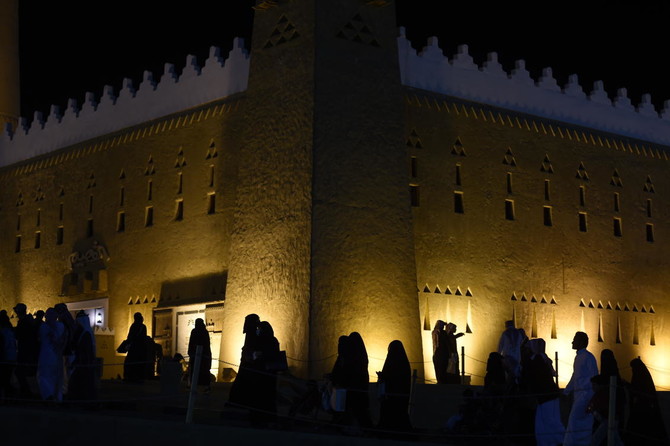
Janadriyah festival celebrates the best of Saudi heritage
- Since it was first held in 1985, the Janadriyah festival has offered a variety of activities and programs, including the establishment of a heritage village
- The annual Janadriyah festival opened on Thursday


Latest updates


© 2026 SAUDI RESEARCH & PUBLISHING COMPANY, All Rights Reserved And subject to Terms of Use Agreement.