KARACHI: The Pakistan Telecom Authority (PTA) said on Friday that it will soon begin blocking unregistered mobile phones as part of efforts to curb the illegal import and usage of counterfeit devices.
Implementation of the second phase of PTA’s Device Identification Registration & Blocking System (DIRBS) is set to begin from October 20.
The system, introduced in summer this year, will register all mobile phones in the country by matching the devices with their IMEI numbers — a unique identification code accorded to all cellphones by their manufacturers. During the first phase, the PTA had sourced data — such as the number of cell phones currently in use — while also requesting users to register their numbers.
“We sent an SMS to more than 24 million subscribers to get their handsets registered with the PTA ,” Muhammad Talib Dogar, Director General of the PTA, told Arab News on Friday – a day after information minister Fawad Chaudhary announced plans to block the illegal imports of mobile phones.
“We are going to start the second phase of the DIRBS program from October 20, after which the handsets cannot be used without registration. However, the cell-phones which are already in use till October 20 will be considered legal,” Dogar said.
Reasoning that the theft of mobile phones – which the program intends to address — is not just a financial loss, but also a threat to the privacy of citizens as well as national security, Dogar said that tax evasion, use of fake and duplicate devices and a loss of revenue for legal importers was a result of illegal imports. He added that program also aimed to eliminate the use of handsets with duplicate IMEIs that are currently sold in the market in the form of low-cost, copy-cat versions of branded mobile phones.
Dogar said that the PTA would soon begin an active awareness campaign to address the problem, as some consumers said they were caught unawares by the directive, despite the first phase being launched four months ago.
Farhan Shah, a 26-year-old resident of Keemari, said that his older brother who works in Perth, Australia, gifted him an iPhone 8, something he was very happy with until he was apprised of the new law requiring the registration of all devices. “Since, I haven’t bought my set from the local market and it was gifted to me, I don’t know in what category my handset will fall,” he told Arab News.
His concerns were echoed by many, including Muhammad Yasir, a Karachi-based telecom expert.
“Millions of illegal mobile handsets are at the risk of being blocked as the PTA has set a close deadline of October 20 for its massive drive,” Yasir told Arab News.
“Even though the procedure of getting your IMEI verified is simple, it might not work for people belonging to rural and far-flung areas, given the low literacy rates there. Even some senior citizens in cities might not understand the procedure until their relatives and friends guide them within the given period,” he added.
Dogar says the apprehensions are misplaced.
“One can still use a handset gifted by friends and relatives working abroad. However, the cell phone should be sent through courier or the person carrying the handset will need to fill a form at the immigration counter and fulfill the registration formalities within 15 days. He will have to pay nothing for that, but more than one set can’t be used as a gift item,” he clarified.
Saeed Azfar, an IT and telecom expert, approved PTA’s move, reasoning that it would not only curb the smuggling of handsets but also help the country improve its telecom security, which is directly linked to maintaining the law and order in the country. “The unregistered handsets are being used in different crimes, so the DIRBS system will bring all users under the radar of our security and law enforcement agencies,” Azfar told Arab News.
He added that while the project may face initial criticism, especially from those earning millions from the illegal import of handsets, ultimately it will work in the interest of the country.
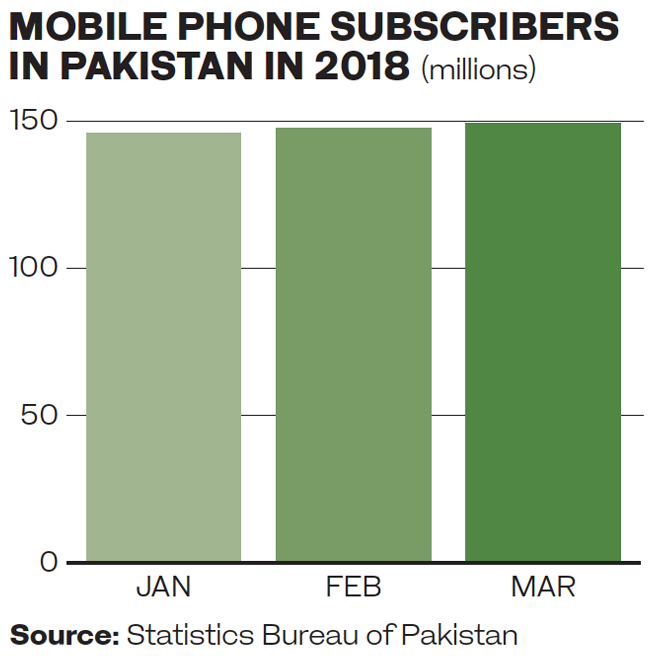
According to the PTA, the number of mobile phone users in the country reached 151 million by July this year, while the number of mobile broadband subscribers was around 60 million during the same period.