LONDON: The Saudi House continued its showcase of Saudi Arabian culture in the Indonesian capital, Jakarta on Friday.
Organized by the Saudi Arabian Olympic Committee, in cooperation with the General Authority for Culture, the event aims to show authentic cultural heritage — the Arabic calligraphy section attracted many visitors — and has been impressing visitors, who expressed admiration for the Kingdom’s great cultural and civilizational heritage.
Calligrapher Abdelaziz Al-Naghmush, a participant in the pavilion of visual arts, explained that the section includes several paintings that represent the characteristics and beauty of calligraphy.
He said it aims to introduce Arabic calligraphy and its various types to visitors, such as Diwani, Thuluth, Riq’ah and Naskh.
The exhibition also includes a photography corner containing a number of images that dazzled Indonesian audiences and showcased the Kingdom’s beauty caught by the lens of the creative Saudis. The exhibiotion was held under the supervision of Abdulrahman Al-Barih along with Musician and artist Ahad Hussein.
The handicraft pavilion witnessed a great demand from all ages, where visitors lined up for engravings in Henna on their hands.
Participating craftsperson Jumana Hajjlas said: “All visitors are asking for the inscription of their hands with Henna, and the inscription is usually written in Arabic,” referring to the large number of visitors from the Indonesian public.
The folk arts teams performed and danced and entertained the Indonesian public.
The General Authority for Culture, through the participation of the Saudi Arabian Olympic Committee in Indonesia, aims to introduce Saudi culture to Indonesian society and enhance cultural communication between the two countries, in addition to conveying the true picture of the Saudi cultural scene and its progress in all fields under the Kingdom’s Vision 2030.


![]()
![]()
![]()
![]()
![]()
![]()
![]()

Saudi Arabian culture, heritage showcase continues in Jakarta


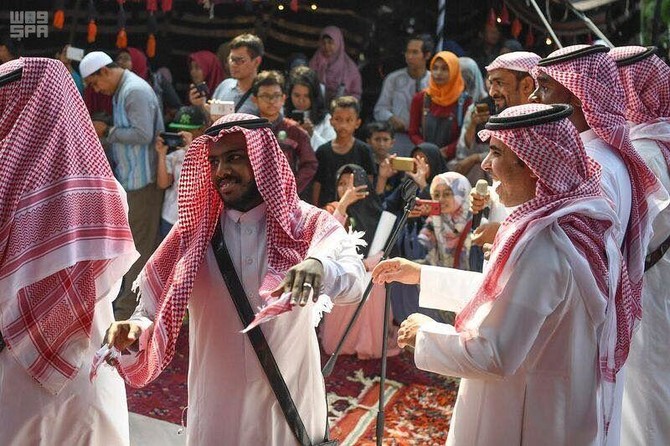


Saudi Arabian culture, heritage showcase continues in Jakarta
- The Saudi House continued its showcase of Saudi Arabian culture in the Indonesian capital, Jakarta
- The event aims to show authentic cultural heritage and has been impressing visitors


Latest updates


© 2026 SAUDI RESEARCH & PUBLISHING COMPANY, All Rights Reserved And subject to Terms of Use Agreement.