

A journey to Hajj that changed Islam in America

A rare picture of Malcolm X meeting with then Crown Prince Faisal Al-Saud in Jeddah in April, 1964.
Updated 20 August 2018
Follow

A journey to Hajj that changed Islam in America

  • “I don’t believe that motion picture cameras ever have filmed a human spectacle more colorful than my eyes took in”
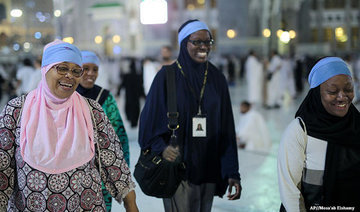
  • “During the past 11 days here in the Muslim world, I have eaten from the same plate, drunk from the same glass, and slept on the same rug — while praying to the same God — with fellow Muslims”

MAKKAH: Malcolm X was an American Muslim minister and human rights activist. To his admirers he was a courageous advocate for the rights of blacks, a man who indicted white America in the harshest terms for its crimes against black Americans. But his detractors accused him of preaching racism and violence.
He has been called one of the greatest and most influential African Americans in history. Malcolm was a member of the Nation of Islam, an African American politico-religious movement founded by Wallace D. Fard Muhammad in the 1930s.Their goals were to improve the spiritual, mental, social, and economic conditions of African Americans in the US. Critics have described the organization as black supremacist.
Malcolm formally left the organization and made a Muslim pilgrimage to Makkah, where he was profoundly affected by the lack of racial discord among orthodox Muslims. He returned to America as Al-Hajj Malik El-Shabazz and founded the Organization of Afro-American Unity, which advocated black identity and held that racism, not the white race, was the greatest foe of the African American. Malcolm’s new movement steadily gained followers, and his more moderate philosophy became increasingly influential in the civil rights movement, especially among the leaders of the Student Non-Violent Coordinating Committee. This organization was founded after Malcolm’s awakening from his pilgrimage to Makkah.


“Never have I witnessed such sincere hospitality and overwhelming spirit of true brotherhood as is practiced by people of all colors and races here in this ancient Holy Land, the home of Abraham, Mohammad and all the other Prophets of the Holy Scriptures,” Malcolm X wrote in his letter from Makkah, a letter that he spent the night duplicating while staying there. He sent a copy to his wife and his older sister Ella. He also asked for a copy to be sent to the press in the US.
He also wrote: “During the past 11 days here in the Muslim world, I have eaten from the same plate, drunk from the same glass, and slept on the same rug — while praying to the same God — with fellow Muslims.” He ends his letter: “Never have I been so highly honored. Never have I been made to feel more humble and unworthy.”
He signed his name with his new title Al-Hajj Malik El-Shabazz. “Al-Hajj” is a title given to those who performed the pilgrimage.
When Malcolm first arrived at Jeddah Airport, he noticed that the people there were pilgrims from Ghana, Indonesia, Japan and Russia. He then explained in his biography: “I don’t believe that motion picture cameras ever have filmed a human spectacle more colorful than my eyes took in.” He concluded “Chinese, Indonesians, Afghans. Many, not yet changed into the Ihram garb, still wore their international dresses. It was like pages out of the National Geographic magazine.”
On Feb. 21, 1965, one week after his home was firebombed, Malcolm X was shot dead by Nation of Islam members while speaking at a rally of his organization in New York City.
Decoder

Al-Hajj

is a title given to those who performed the pilgrimage.


Swedish king awards American Saudi scientist, Omar Yaghi, Nobel Prize in Chemistry 2025

Nobel Prize in Chemistry 2025 laureate US-Saudi chemist Omar M. Yaghi poses with award during the award ceremony in Stockholm.
Updated 10 December 2025
Follow

Swedish king awards American Saudi scientist, Omar Yaghi, Nobel Prize in Chemistry 2025

  • Yaghi will share $1.2m prize with British Australian and Japanese scientists Richard Robson and Susumu Kitagawa
  • He is the 1st Saudi national to be awarded the Nobel Prize and 2nd Arab-born to win in the chemistry category since 1999

STOCKHOLM: King Carl XVI Gustaf of Sweden on Wednesday awarded American Saudi scientist Omar Yaghi the Nobel Prize in Chemistry for his breakthrough development of metal-organic frameworks, a sponge-like structure that could store CO2 or harvest water from the air, alongside the British Australian and Japanese scientists Richard Robson and Susumu Kitagawa.

Yaghi, Robson and Kitagawa have each contributed over the past 50 years to developing scalable, reliable MOF models that can be deployed in industry to address climate-related issues and deliver clean air and water. They will share the $1.2 million prize.

Yaghi, 60, who grew up in a refugee camp in Jordan to a Palestinian family expelled from their property by Zionist militias in 1948, is the second Arab-born laureate to be awarded the Nobel Prize in Chemistry by the Royal Swedish Academy of Sciences.

The Nobel Foundation said that MOFs, which are structures with large internal spaces, “can be used to harvest water from desert air, capture carbon dioxide, store toxic gases or catalyze chemical reactions.”

In 2015, Yaghi received the King Faisal International Prize for Chemistry, and in 2021, King Salman granted him Saudi citizenship for his scientific achievements. He holds the James and Neeltje Tretter Chair in Chemistry at UC Berkeley and is the founding director of the Berkeley Global Science Institute. In addition, Yaghi has branched into entrepreneurial activity since 2018, founding Atoco, which works on water harvesting and carbon capture, and co-founding H2MOF for hydrogen storage and WaHa Inc. for water harvesting with projects in the Middle East.

His focus on harvesting water from the air in arid conditions stems from his upbringing in Jordan, where water reached homes every 14 days. He began field tests in the Arizona desert in the 1990s to capture water from the air using the MOF-303 model he had developed.

Yaghi is the first Saudi national to be awarded the Nobel Prize and the second Arab-born to win in the chemistry category since the Egyptian American chemist and scientist Ahmed Zewail was honored in 1999.

Zewail’s model of the “femtochemistry apparatus” is on display at the Nobel Prize Museum. He used the apparatus to demonstrate the principle behind his method of studying chemical reactions using laser technology, capturing it in a femtosecond, which is to a second what a second is to 32 million years.

He is one of dozens of laureates who donated objects to the museum since its foundation in 2001 to mark the 100th anniversary of the Nobel Prize, which began in 1901, five years after the death of the Swedish chemist Alfred Nobel. Since 2001, it has become tradition that each December the winners of that year bring an item to be displayed that reflects their work, personal life or inspiration, Karl Johan, a curator at the museum, told Arab News.

“Zewail wanted to donate an object that could visualize his work and his experiment. He constructed (the interactive apparatus) specifically for the museum. As one of the first objects to be displayed after 2001, it got lots of attention,” Johan said.

The award ceremony in the Swedish capital is the latest event to wrap up Nobel Week, which, since Friday, has featured Nobel laureates in the fields of literature, chemistry, physics, medicine and economic sciences engaging in public events. The Nobel Peace Prize was awarded in the Norwegian capital of Oslo on Wednesday, where the daughter of the Venezuelan opposition leader, Maria Corina Machado, accepted it in her mother’s name after authorities prevented her from leaving early to attend the ceremony.