DUBAI: The US Federal Reserve Bank is expected to hike interest rates this week, forcing dollar-pegged Gulf countries to do the same, but citizens will be shielded from steeper borrowing costs as higher oil prices allow governments to turn on the spending taps, experts told Arab News.
In recent days, Abu Dhabi has unveiled a $13.6 billion stimulus package that involves infrastructure investment, creating new jobs, while Kuwait has postponed plans to introduce VAT.
Jason Turvey, GCC economist at Capital Economics, told Arab News: “I think any fiscal loosening will more than offset any hit from higher rates. Fiscal policy has more often than not been the main driver of these economies.”
Abu Dhabi’s plans involve creating 10,000 jobs for Emiratis in the private and public sectors over the next five years, as well as measures to lift the competitiveness of SMEs via a hugely streamlined commercial licensing system.
Saudi Arabia has already unveiled additional bonus payments to citizens to compensate for austerity.
But the news is not good across the board with the Dubai property market badly exposed.
Faisal Durrani, head of research at UAE property agency, Cluttons, told Arab News that mortgage holders in Dubai would be hit by higher rates, “especially those operating on thin margins.”
Rate rises would also impact Dubai project financing as developers might not be able to push through schemes as quickly as they wanted to, he added.
There have been discussions in Dubai about curbing offplan sales until projects are at least 50 percent completed.
“There has been a sort of ‘build it and they will come’ type of attitude recently in Dubai, “and that’s left us with the danger of the market being tremendously oversupplied in two or three years time," said Durrani.
Prices for many Dubai apartments have fallen by double digits in some cases, and borrowers have already been slammed by higher mortgage repayments - thanks to Fed tightening in 2017.
Cluttons estimates that about 77,000 new households will be created by end of by 2020, but in excess of 100,000 completions were expected .
“So we will still be in a significant oversupplied situation," he said.
Turvey said higher rates would weigh on credit growth, but he dismissed the idea that the GCC should ditch the dollar peg.
“Unless there is a significant diversification of exports, it’s highly unlikely they would unpeg their currencies,” he said.
Turvey added: “You could argue that weaker currencies are what is needed to drive diversification, by bringing down the local value of production, thereby boosting competitiveness.”
But dollar pegging was a sign of “macro strength” and underlined the point that for Gulf countries, fiscal policy is their main policy weapon.
“That makes it easier to insulate winners and losers from the economic cycles - which helps ensure social stability,” said Turvey.
If the GCC had floating currencies during the oil price slump, they would have been sold off sharply, he added.
“The Russian example holds here: During the crash, there was a big sell-off of the rouble, a sharp rise in inflation that hit households hard, and the government only had only so much control. OK, the dollar peg means you are ceding control over monetary policy but with fiscal policy, it means you can make choices.”
Households, he said, were not hit to the same extent in the GCC. “Yes, there have been subsidy cuts and tax rises, but by and large, governments can find ways to cushion these blows.”
Looking at Dubai, Durrani said with interest rate rises and controls planned around off-plan sales, there may be something good to come out of current weak market conditions. For instance, developers could be forced to rethink their development strategies.
“We may see more phased developments and less of the ultra-sized projects. A slowdown in development could allow land values to pause or come down slightly. High land prices are often the reason why we see developers opting for luxury or high-end property, to make schemes work mathematically,” he said.
“With lower land prices, we could look at things that aren't necessarily ultra luxurious… which would benefit the more typical consumer.”
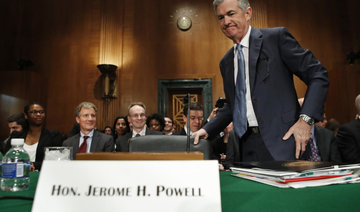
The Fed has forecast a total of three rate increases for 2018, with the first of these pushed through in March. Some economists think chairman Jay Powell and his colleagues will opt for a total of four rises, given robust US economic data and the need to prevent the economy from overheating as unemployment hovers at just 4.1 per cent.
One big hazard, however, is the risk that President Donald Trump’s more aggressive trade policies might trigger a degeneration in trade relations between the US and its partners pushing the world into a downturn.
After the expected June increase, the US rate will be 2 percent, roughly in-line with the latest inflation data. That translates to a real interest rate of zero.
How far the Fed is willing to push the real rate into positive territory this year is anyone’s guess, and may depend more on geopolitics and US-Chinese bilateral trade relations than anything else.