

Saudi’s SABIC eyes 50 pct stake in ONGC’s west India petchem plant: Sources

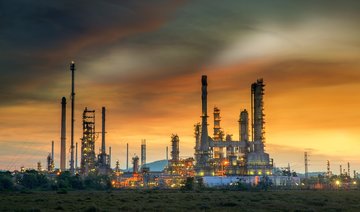
Saudi Basic Industries Corp. (SABIC), the world’s No. 4 petrochemical company, wants to buy about half of the $4.6-billion Indian petchem project backed by Oil and Natural Gas Corp. (AFP)
Updated 09 May 2018
Follow

Saudi’s SABIC eyes 50 pct stake in ONGC’s west India petchem plant: Sources

  • Saudi Basic Industries Corp (SABIC) wants to buy about half of the $4.6-billion Indian petchem project backed by Oil and Natural Gas Corp
  • India and Saudi Arabia want to strengthen their trade ties

NEW DELHI: Saudi Basic Industries Corp. (SABIC), the world’s No. 4 petrochemical company, wants to buy about half of the $4.6-billion Indian petchem project backed by Oil and Natural Gas Corp. (ONGC), two sources familiar with the matter said.
ONGC is a majority shareholder in ONGC Petro Additions Ltd. (OPaL), which operates India’s biggest petrochemical plant in western Gujarat state.
“They (SABIC) want to have a significant stake in OPaL, around 50 percent,” said one of the sources.
Previously, ONGC had held talks about selling a stake in the project with Saudi Aramco and Petrochemical Industries Co, a unit of Kuwait Petroleum Corp, a second source said.
“SABIC is the latest entrant. Recently SABIC has held talks with ONGC officials about a stake purchase,” the second source said.
ONGC and SABIC did not respond to requests for comment.
India and Saudi Arabia want to strengthen their trade ties. Saudi Aramco recently signed an initial deal with India to buy a 50 percent stake in a planned 1.2 million barrels per day west coast refinery and petrochemical project.

SABIC representatives recently attended a conference in Houston where they highlighted their invitation to investors from around the world to take advantage of the frameworks provided in the Kingdom as part of Vision 2030.

SABIC, as the Diamond Sponsor of the conference, also highlighted their long-term objectives of the tapping into a local business development unit established by the company, which seeks to make the company a key player in enabling Vision 2030.

To expand its footprint in the world’s third-biggest oil importer, Saudi Arabia is also scouting for a stake in existing major refineries, its energy minister Khalid Al-Falih has said.
The first source said OPaL made an operating profit for the first time in 2017/18, increasing its appeal to prospective investors. “There are enough green shoots in the company,” the source said.
India’s per capita consumption of synthetic polymers, used to make various grades of plastics, is just 10 kg (22 lbs) a year, compared with a global average of about 32 kg.
The country’s per capita consumption of petrochemicals will rise with its expanding middle class, growing income levels and increasing urbanization, Prime Minister Narendra Modi said in March last year.
The second source said OPaL operated the project at about 65 percent capacity in the March quarter and it aimed to operate the plant at about 80 percent capacity in 2018/19.
Global trade isn’t deglobalizing — it’s reshuffling, Harvard economist says 

Updated 5 sec ago
Follow

Global trade isn’t deglobalizing — it’s reshuffling, Harvard economist says 

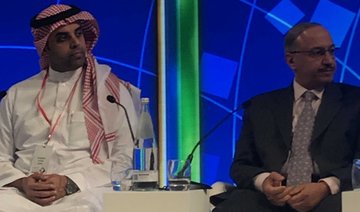
ALULA: Global trade is not retreating into deglobalization despite geopolitical shocks, but is instead undergoing a structural reshuffling led by US-China tensions, according to Harvard University economist Pol Antras. 

Presenting research at the AlUla Emerging Market Economies Conference, Antras said there is no evidence that countries are systematically turning inward. Instead, trade flows are being redirected across markets, creating winners and losers depending on export structure and exposure to Chinese competition. 

This comes as debate intensifies over whether supply-chain disruptions, industrial policy and rising trade barriers signal the end of globalization after decades of expansion. 

Speaking to Arab News on the sidelines of the event, Antras said: “I think the right way to view it is more a reorganization, where things are moving from some countries to others rather than a general trend where countries are becoming more inward looking, in a sense of producers selling more of their stuff domestically than internationally, or consumers buying more domestic products than foreign products.”  

He said a change of that scale has not yet happened, which is important to recognize when navigating the reshuffling — a shift his research shows is driven by Chinese producers redirecting sales away from the US toward other economies. 

He added that countries are affected differently, but highlighted that the Kingdom’s position is relatively positive, stating: “In the case of Saudi Arabia, for instance, its export structure, what it exports, is very different than what China exports, so in that sense it’s better positioned so suffer less negative consequences of recent events.” 

He went on to say that economies likely to be more negatively impacted than the Kingdom would be those with more producers in sectors exposed to Chinese competition. He added that while many countries may feel inclined to follow the United States’ footsteps by implementing their own tariffs, he would advise against such a move.  

Instead, he pointed to supporting producers facing the shock as a better way to protect and prepare economies, describing it as a key step toward building resilience — a view Professor Antras underscored as fundamental. 

Elaborating on the Kingdom’s position amid rising tensions and structural reorganization, he said Saudi Arabia holds a relative advantage in its economic framework. 

“Saudi Arabia should not be too worried about facing increased competitive pressures in selling its exports to other markets, by its nature. On the other hand, there is a benefit of the current situation, which is when Chinese producers find it hard to sell in US market, they naturally pivot to other markets.” 

He said that pivot could benefit importing economies, including Saudi Arabia, by lowering Chinese export prices. The shift could increase the Kingdom’s import volumes from China while easing cost pressures for domestic producers.