

Work on ancient Buddhist residences under way in northwest Pakistan

1 / 8
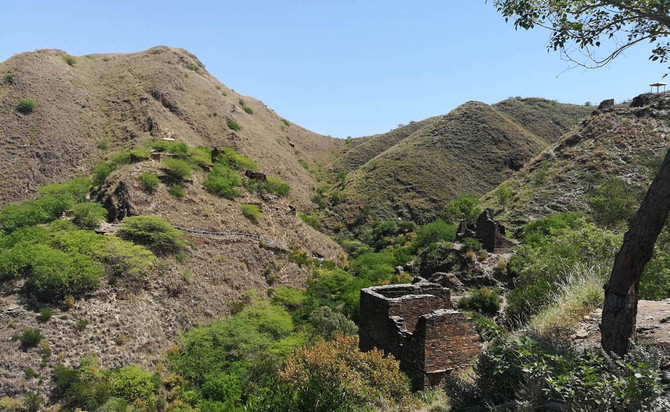
The Stupa Chamber at the heritage site. (AN photo)
2 / 8
The Stupa Chamber at the heritage site. (AN photo)
3 / 8
Construction work under way at the residential portion of the heritage site. (AN photo)
4 / 8
Spaces for niches for lighting in rooms. (AN photo)
5 / 8
Entrance to the World Heritage Site of Takht Bhai in Mardan district. (AN photo)
6 / 8
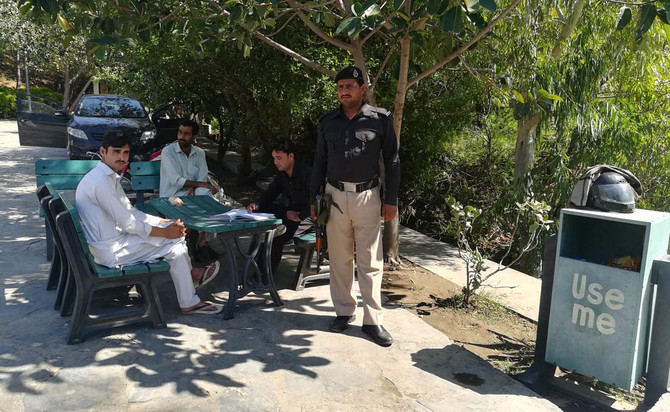
Staff checking identity of the visitors before entry to the site. (AN photo)
7 / 8
Construction work under way at the residential portion of the heritage site. (AN photo)
8 / 8
Construction work under way at the residential portion of the heritage site. (AN photo)
Updated 22 April 2018
Follow

Work on ancient Buddhist residences under way in northwest Pakistan

  • Conservation of the site, discovered in 1836 by a French army officer, will ‘promote a soft image of Pakistan’
  • This famous archaeological site at Takht Bhai was included in the World Heritage List in 1980 by the UN

TAKHT BHAI, Pakistan: Conservation work has begun on an important 2,000-year-old Buddhist monastic site which will be a popular spot for families and tourists as well as historians and Buddhists from around the world.
At an altitude of 500 meters, the Takht Bhai archaeological site not only offers visitors a glimpse into the ancient times but also serves as a popular picnic and tourist spot.
The site is located about 2 kilometers east of the Takht Bhai bazaar in Mardan district of Khyber Pakhtunkhwa (KP) province, once known as the heart of the Gandhara civilization.

It is about 65 km to the north of Peshawar, the capital of KP.

People from different walks of life, including historians, archaeologists and tourists, arrive here while Buddhists from across the world visit it as part of their religious beliefs.

The visitors have to ascend about 300 steps on a hill to reach the archaeological “wonder.”

The Khyber Pakhtunkhwa Directorate of Archaeology has started work on Zone B of the famous archaeological site at Takht Bhai, which the United Nations included in the World Heritage List in 1980.
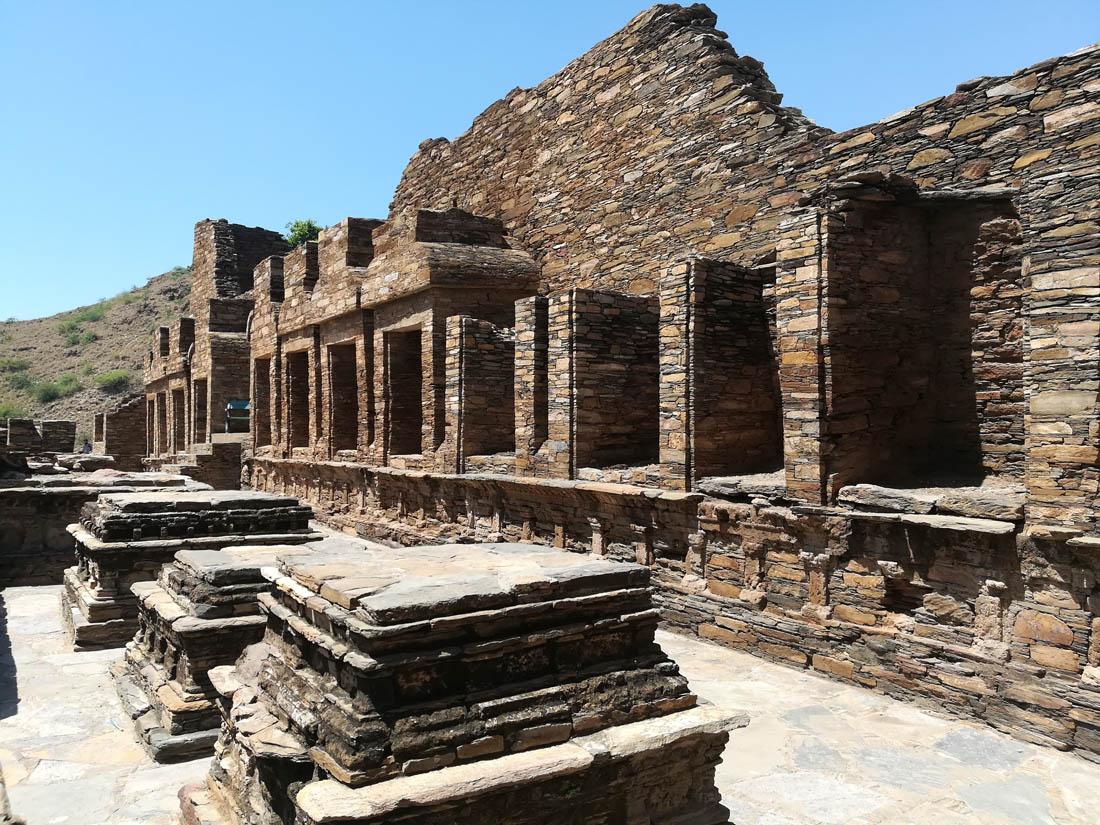


The United Nations declared the venue a World Heritage Site in 1980. (AN photo)

“Zone A was a 2,000-year old Buddhist monastery while Zone B was their residential area,” said senior archaeologist of the directorate Habibullah Khattak.

He added that the coins discovered from the area were from the period of Parthian king Gondophares in the 1st century AD.

He said that Buddhist civilization had spread to other parts of the world from Gandhara state.

Takht Bhai site is an ancient land and is very important for research purposes, said Khattak.

“Through conservation of this site, we also promote a soft image of Pakistan,” he said. “People from our country are known as people of Gandhara in the modern world.”

He said the Buddhist civilization was destroyed by Hindus in the 7th century.

Qaiser Khan, project director of the site’s Zone B, said that the project commenced on July 1, 2017, and will conclude by the end of this year.
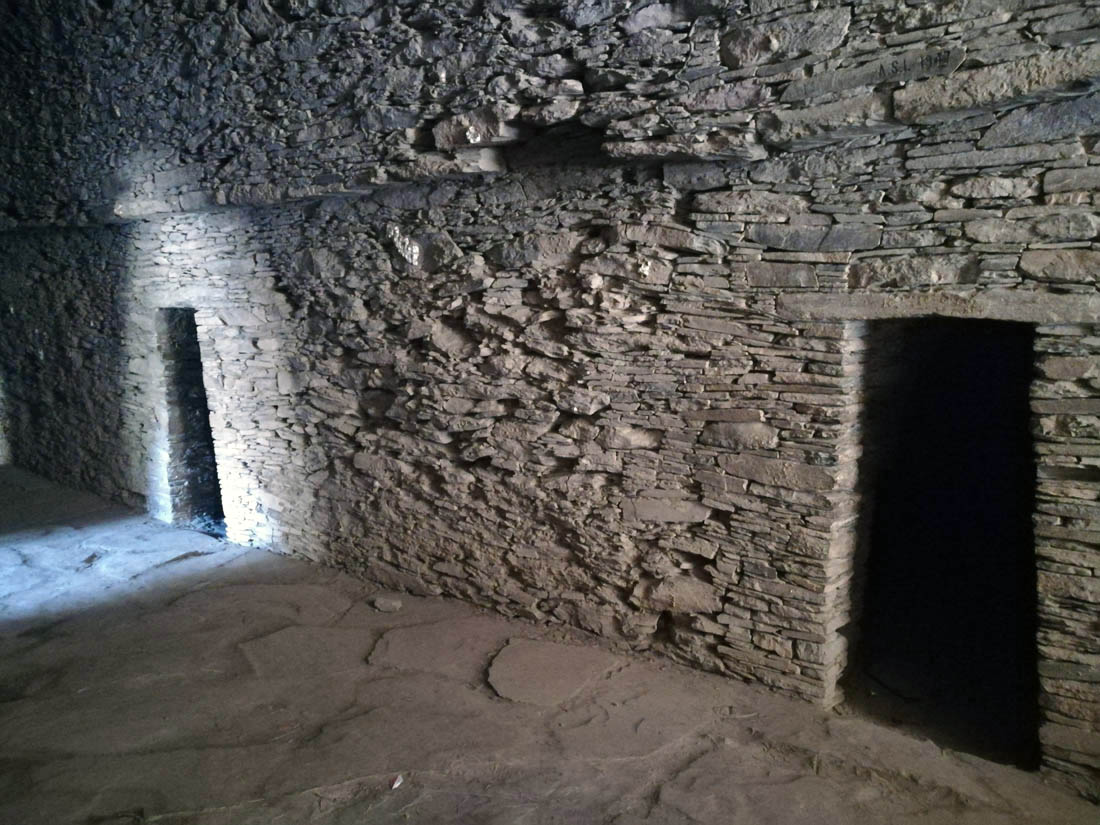


Entrance to the meditation centers of monks.​ (AN photo)

The project has different components such as conservation, archaeological work, cleaning and awareness, for which separate budgets are released.


“The budget is released quarterly. During the past nine months, Rs6 million ($51,903) has been spent on conservation alone,” he added.
Research officer of the KP Archaeology Directorate Nawazud Din told Arab News that the ancient site of Gandhara civilization was discovered in 1836 by a French army officer named General Cort. Excavation work on the site started in 1872 during the British rule in the subcontinent.

“Each visitor is charged Rs20 for an entry ticket. For photographs at the site, a visitor can be charged Rs300, while bridal photography and commercial videography can cost up to Rs30,000 each,” he said.
Pakistan voices support for Saudi diplomatic efforts for peace, stability in Yemen

Updated 5 sec ago
Follow

Pakistan voices support for Saudi diplomatic efforts for peace, stability in Yemen

  • The development comes days after a deal between Yemen’s Houthis, government to exchange nearly 3,000 prisoners
  • Islamabad underscores the need to uphold Yemen’s unity, hoping that the stakeholders will avoid any unilateral steps

ISLAMABAD: Pakistan fully supports diplomatic efforts being undertaken by the Kingdom of Saudi Arabia for ensuring peace and stability in Yemen, the Pakistani foreign office said on Friday.

The development comes days after an agreement between Yemen’s Houthi group and its internationally recognized government to exchange nearly 3,000 prisoners, which Riyadh hailed as a crucial humanitarian measure to help alleviate human suffering and foster confidence-building in Yemen.

The deal came after nearly a fortnight of discussions between Yemeni officials from both sides in Muscat, the capital of neighboring Oman, a key mediator in the conflict that has lasted for more than a decade.

The Pakistani foreign office underscored the need to uphold unity and territorial integrity of Yemen, expressing hope that Yemeni stakeholders will avoid any unilateral steps and urging all parties to engage constructively toward an inclusive, negotiated political solution of the conflict.

“Pakistan expresses its hope that the ongoing diplomatic efforts will result in concrete steps toward achieving lasting peace in the country, and in bringing an end to the suffering of the Yemeni people,” it said in a statement.

“We also commend the efforts of the UAE in this regard.”

United Nations Special Envoy for Yemen Hans Grundberg in a statement welcomed the agreement as “a positive and meaningful step that will hopefully ease the suffering of detainees and their families across Yemen.”

On Thursday, Saudi Ambassador to Yemen Mohammed bin Saeed Al-Jaber met with a negotiating delegation concerned with detainees in the country and reaffirmed Saudi Arabia’s continued support for the complete release of all detainees, abductees and forcibly disappeared persons from all parties, the Saudi Press Agency reported.

During the meeting, he emphasized the importance of completing implementation procedures, exchanging lists and records, and expediting the execution of the agreed mechanism for the exchange process.