KARACHI: It was Friday, July 6, 2012. Ali, a chirographer, was enjoying morning tea on the balcony of his apartment when he spotted a group of men loading a truck with boxes.
This was not an unusual sight since he lived near a warehouse where this was a routine activity. However, Ali realized that something was not right when a worker dropped a box and it broke open: The men were moving ancient artifacts, and the accident had caused a degree of panic among them.
Ali quickly called a friend at Sindh Government’s Culture Department who instructed him to immediately inform the police. The truck had left by the time the police arrived but they managed to chase it down and seize the valuables, which had been illegally transported.
More than five years after the incident, Ali recounted the experience to Arab News. He also recalled how the police had arrested the driver and the owner of the warehouse. However, the area’s current Station House Officer (SHO), Nasir Mahmood, says he does not have any details of the case. An official of the Culture Department told Arab News on condition of anonymity that the warehouse belonged to a former inspector general of police and the consignment was booked by a well-known Lahore-based business figure.
In 2012, the former SHO of the area, Javed Brohi, had told the media that the artifacts were stolen from the historically rich Khyber Pakhtunkhwa (KP) province and were transported to Sialkot. He said that his department had received a tip-off from intelligence agencies, presumably to protect the identity of his real source. But his account had also raised a question: Why were the artifacts brought to Karachi if their real destination was Sialkot, an urban center in the province of Punjab that is relatively closer to KP?
National Museum of Pakistan Director Muhammad Shah Bukhari says that the smugglers might have wanted to transport the relics to Europe via Dubai.
“It is possible that they found it difficult to get clearance at the Karachi port,” he said. “Sialkot has its own dry port, and they might have found someone to help them over there.”
According to an official document obtained by Arab News and authenticated by Dr. Ghani-ur- Rahman, director of Taxila Institute of Asian Civilizations, the number of the relics seized was 319. The museum authorities believed that many of them were excavated from the archaeological sites of Gandhara. Most of these artifacts contained images of Buddhist eschatology. Despite being at the National Museum of Pakistan for more than five years, however, these historical objects are yet to be displayed to the public.
“We are expanding our building,” Bukhari said. “Once it is done, we will dedicate two galleries to KP’s heritage.”
Asked why these relics should not be returned to the province of their origin, he said that the National Museum had the authority to display the heritage of any federating unit.
“Apart from that,” he added, “no one from KP has officially contacted us for them. Once they do that, we will respond with our claim over these artifacts, relics and sculptures.”
When Arab News contacted KP’s Director of Archaeology Dr. Abdul Samad, he claimed that the relics were fake.
“They are not original,” he said. “There is no need for us to fight over fake objects that were made in a Karachi factory. Why should we bring them to KP?”
Samad said that people of Sindh rarely visit the Peshawar Museum. “This will give them a glimpse into our province’s rich heritage,” he said. “Ultimately, our province will get some promotion.”
KP’s former minister for sports, tourism and culture, Aqil Shah, had held a news conference shortly after the relics were seized in Karachi, demanding that Sindh hand back the riches of Pakhtunkhwa to his administration.
“The artifacts belong to KP,” he said while talking to Arab News on telephone, “but the current administration of the province is not willing to do much about it.”
However, Dr. Samad criticized Shah for making such claims. He said that Shah had held the news conference without making verifications.
“Do you think the KP government would have remained silent if these objects were original,” he asked. “Do you think that the museum in Karachi would have kept them out in the open if they were genuine items?”
While the National Museum of Pakistan has displayed some of the seized objects in its lawn, Shah insists that his successor should take up the issue with Sindh’s provincial administration.
Meanwhile, Dr. Ghani-ur-Rehman, an expert in the field, has weighed in with Dr. Samad over the issue.
“Majority of these sculptural pieces seems to be fake,” he said. “The only ones that may be original or copies of originals are the broken ones.”
When Arab News asked the director of Pakistan National Museum why he was interested in displaying counterfeit objects at his facility, he said: “Our experts have confirmed that 161 items are genuine, though a majority of sculptures are not original.”
He added: “The museum wants to display both original and counterfeit objects along with other confiscated artifacts in its galleries. However, we have a system and can never declare a counterfeit object as a genuine relic.”


![]()
![]()
![]()
![]()
![]()
![]()
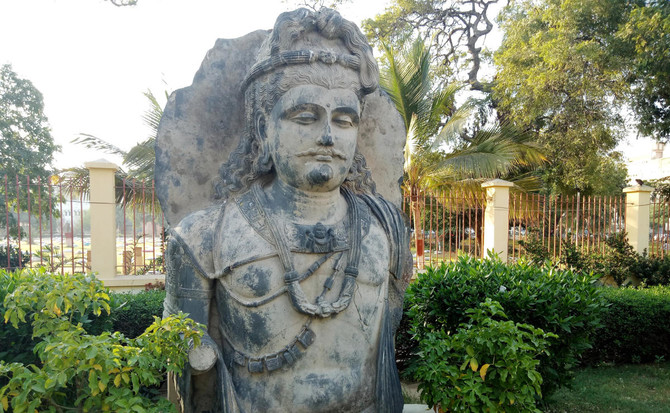
Real or fake: National Museum of Pakistan plans to display Pakhtunkhwa’s cultural riches

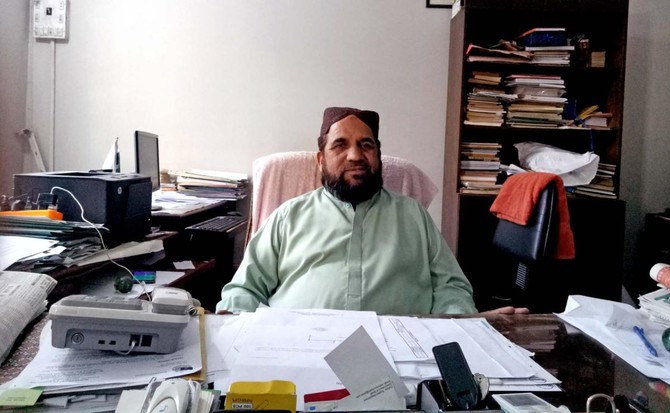
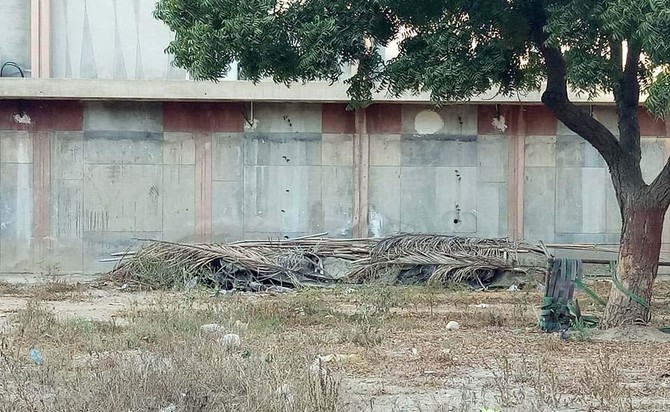

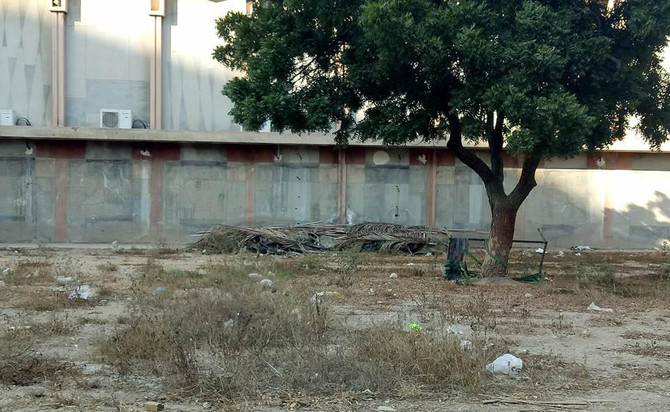
Real or fake: National Museum of Pakistan plans to display Pakhtunkhwa’s cultural riches
Latest updates




© 2026 SAUDI RESEARCH & PUBLISHING COMPANY, All Rights Reserved And subject to Terms of Use Agreement.