Malala makes first trip to Pakistan since Taliban attack

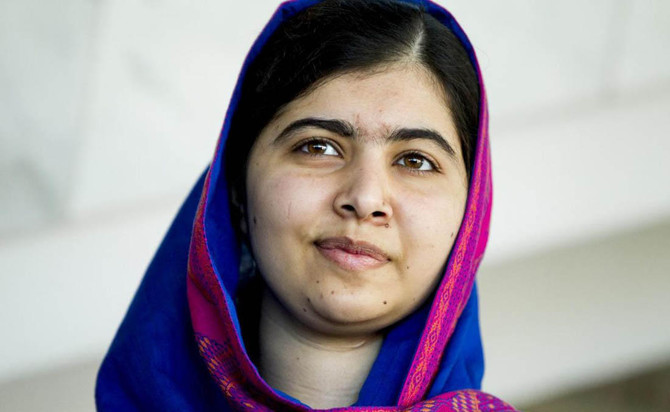
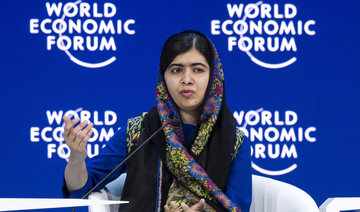
In this file photo, Nobel Peace Prize winner Malala Yousafzai participates in the Oslo Summit on Education for Development at Oslo Plaza, Norway July, 7, 2015. (REUTERS)
Updated 29 March 2018
Follow

Malala makes first trip to Pakistan since Taliban attack

ISLAMABAD: Nobel peace laureate Malala Yousafzai returned to Pakistan on Thursday, officials said, in her first visit to her native country since she was shot in the head by a Taliban gunman for advocating education for girls in 2012.
Precize details of her itinerary have been “kept secret in view of the sensitivity surrounding the visit,” a government official said of the trip, which is expected to last four days and include a meeting with Prime Minister Shahid Khaqan Abbasi.
Accompanied by her parents, the 20-year-old Yousafzai was escorted through Islamabad’s Benazir Bhutto International Airport under tight security, according to still photographs broadcast on local television.
Malala has become a global symbol for human rights and a vocal campaigner for girls’ education since a gunman boarded her school bus in the Swat valley on October 9, 2012, asked “Who is Malala?” and shot her.
She was treated for her injuries in the British city of Birmingham, where she completed her schooling.
Winner of the Nobel Peace Prize in 2014, she has continued her campaigning while pursuing her studies at Oxford University.


First urban cable car unveiled outside Paris

Updated 13 December 2025
Follow

First urban cable car unveiled outside Paris

  • The cable car will carry some 11,000 passengers per day in its 105 gondolas
  • The 138-million-euro project was cheaper to build than a subway, officials said

PARIS: Gondolas floated above a cityscape in the southeastern suburbs of Paris Saturday as the first urban cable car in the French capital’s region was unveiled.
Officials inaugurated the C1 line in the suburb of Limeil-Brevannes in the presence of Valerie Pecresse, the head of the Ile-de-France region, and the mayors of the towns served by the cable car.
The 4.5-kilometer route connects Creteil to Villeneuve-Saint-Georges and passes through Limeil-Brevannes and Valenton.
The cable car will carry some 11,000 passengers per day in its 105 gondolas, each able to accommodate ten seated passengers.
The total journey will take 18 minutes, including stops along the way, compared to around 40 minutes by bus or car, connecting the isolated neighborhoods to the Paris metro’s line 8.
The 138-million-euro project was cheaper to build than a subway, officials said.
“An underground metro would never have seen the light of day because the budget of more than billion euros could never have been financed,” said Gregoire de Lasteyrie, vice president of the Ile-de-France regional council in charge of transport.
It is France’s seventh urban cable car, with aerial tramways already operating in cities including Brest, Saint-Denis de La Reunion and Toulouse.
Historically used to cross rugged mountain terrain, such systems are increasingly being used to link up isolated neighborhoods.
France’s first urban cable car was built in Grenoble, nestled at the foot of the Alps, in 1934. The iconic “bubbles” have become one of the symbols of the southeastern city.