Jeddah’s Hafez Gallery showcases Arab talent at Art Dubai

1 / 4
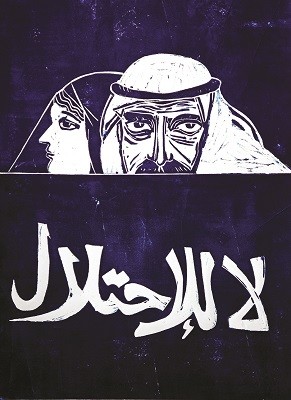
Thuraya Al-Baqsami’s “No to the Invasion” (1990).
2 / 4
Osama Esid’s “Mona” (2005 – 2007).
3 / 4
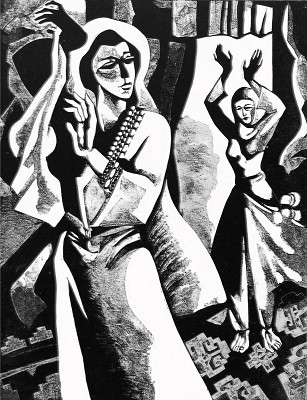
Abdulsattar Al-Mussa’s “Dancing” from the series “Wedding in Al-Refaa” (1986).
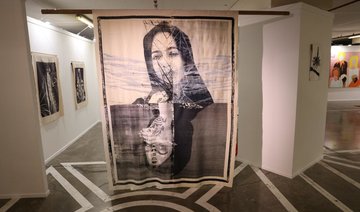
4 / 4
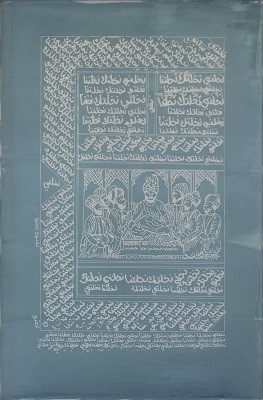
Ahaad Al-Amoudi’s “My Palm, Your Palm, Our Palm” (2017).
Updated 22 March 2018
Follow

Jeddah’s Hafez Gallery showcases Arab talent at Art Dubai

Hafez Gallery is one of the few Saudi Arabia-based galleries featured in the 12th edition of Art Dubai — arguably the region’s most influential art gathering.

Founded in Jeddah in 2014, Hafez Gallery claims to engage “the art community to visually converse and explore Saudi and Middle Eastern modern and contemporary art” and to “nurture the discovery of a Saudi visual identity and participate in the international art dialogue.”

Art Dubai 2018 is split into three main collections: Contemporary; Modern — devoted to masters from the Middle East, North Africa and South Asia; and Marker — a curated section of art spaces that focuses each year on a particular theme or geography.

This year, Hafez Gallery is participating in both Art Dubai Modern and Art Dubai Contemporary with a collection of works that includes photography, acrylics, etching and calligraphy.

In Art Dubai Modern, Hafez Gallery will present the work of two Russian-educated GCC artists: Saudi Abdulsattar Al-Mussa’s “Dancing” (from his series “Wedding in Al-Refaa”), and Kuwaiti Thuraya Al-Baqsami’s “No to the Invasion.”

Al-Mussa’s drawings examine daily social scenes, such as cafés and the energy of their employees. He is one of the few professional Saudi artists to have studied complex typography, carving and graphic art.

Al-Baqsami is a singular voice in the region. She does not bow in the face of societal and political pressure. Her exposure to a multitude of cultures shows in the mélange of history, concept and form presented in her work.

In the Contemporary section, Hafez will showcase artworks from several artists, including “My Palm, Your Palm, Our Palm” by multidisciplinary artist Ahaad Al-Amoudi, whose work intersects the past and present of Saudi Arabia. Al-Amoudi is interested in how communities measure and promote heritage through archiving and how different historical narratives weave through families and communities.

Damascus-born artist Osama Esid’s photography explores personal identity — he has lived in both the US and Egypt. Hafez will show Esid’s “Mona” at Art Dubai, as well as work from other regional artists including Nora Al-Issa, Filwa Nazer, Abdulrahman Al-Shahed and Ibrahim El-Dessouki.

Qaswara Hafez, founder of Hafez Gallery, spoke to Arab News about its participation in Art Dubai.

“Dubai has become a hub for museum directors, curators, and art-world professionals from all over the world,” he said. “Art Dubai commands the respect of the global art community and elicits the participation of galleries and artists from around the world. It is integral to the local art community, representing the state of the region’s art to define where our culture stands at the moment.”

He continued, “We focus on works that reflect the Middle East and discuss its rich culture and diverse standpoints. We don’t select art in isolation — I have to be able to establish a human connection with the artists before anything, after that comes our belief in their projects and the social contribution of their artworks.”

The difference between European and Gulf weddings — from a photographer’s point of view

Updated 21 January 2026
Follow

The difference between European and Gulf weddings — from a photographer’s point of view

DUBAI: From her early career in northeast France to working across the Gulf and Europe, wedding photographer Maddy Christina has observed many contrasts between such events in different parts of the world.

Her early years as a photographer were defined by variety; she worked across fashion, family portraits and weddings simultaneously before recognizing how wedding photography brings multiple genres together in a single day. 

Christina said weddings in the region required a shift in both perspective and technique. (Supplied)

“I actually fell into weddings by accident,” Christina told Arab News. “It blends every discipline at once — fashion for the couple session, sports for the reception, documentary work throughout the day, still life with details and jewelry.”

Christina’s connection to the Middle East began through Parisian clients who invited her to Dubai for a post-wedding session: “I instantly connected with the energy of the city,” she said.

Christina’s connection to the Middle East began through Parisian clients who invited her to Dubai for a post-wedding session. (Supplied)

A few years later, a wedding in Kuwait marked the start of her long-term relationship with the region.

Now working extensively across the Gulf Cooperation Council, Christina said weddings in the region required a shift in both perspective and technique.

For Christina, the most meaningful aspect extends beyond the wedding day itself. (Supplied)

“Working across the GCC has opened my mind in ways I didn’t expect,” she said, adding it felt like “resetting everything I thought I knew about weddings” — particularly compared to her experience in Europe.

She said there were clear distinctions between the two regions. “European weddings tend to be more demonstrative and expressive, while brides in the Gulf often place a deeper emphasis on tradition, family bonds and a sense of ceremony,” she said. “The emotional language is different, yet equally beautiful.”

From a technical standpoint, the contrast is just as pronounced: “In the south of France, I was used to shooting outdoors at sunset with couples already comfortable in front of the camera. Here, I often find myself in much smaller spaces, with no windows, artificial light and couples who may be more reserved.”

Christina is drawn to candid moments. (Supplied)

She added that adapting to these conditions pushed her to explore new ways of shaping light and expanded her creative approach.

While Christina is drawn to candid moments, like “guests laughing together, old friends reconnecting, a fleeting emotion passing across someone’s face,” posed pictures remain central to her work.

For Christina, the most meaningful aspect extends beyond the wedding day itself.

“It’s not the decor that makes a wedding unforgettable for me,” she said. “It’s the connection I build with the bride. That long-term bond is what feels truly magical.”