WASHINGTON: The US Senate rejected Tuesday a resolution that would prohibit US troops from helping a Saudi-led military campaign in Yemen. Still, the unusual vote — coming as Saudi Arabia’s crown prince was in Washington — amplified the continued unease in Congress with military endeavors abroad.
Senate Majority Leader Mitch McConnell, R-Kentucky, warned senators against the measure. But the GOP leader had little choice but to allow the vote that was forced by coalition of liberal and libertarian-leaning lawmakers, led by Sen. Bernie Sanders, I-Vermont, and Sen. Mike Lee, R-Utah. They argued Congress should not cede its wartime authority to the White House.
The resolution, which would halt US military involvement in the Saudi campaign against Iranian-backed Houthi rebels, was tabled, 55-44, effectively shelving it for now.
“The founding fathers gave the power to authorize military conflicts to Congress, the branch most accountable to the people, not to the president,” Sanders said during the floor debate. “The time is long overdue for Congress to reassert that constitutional authority.”
It’s the latest attempt at a war authorization vote as lawmakers regularly raise questions about overseas military actions but have been unable to muster enough votes in Congress to halt, or approve, them.
Congress last authorized the use of military force in Afghanistan in 2003. This authorization has been used by President Donald Trump, and by President Barack Obama before him, to justify US military intervention in Syria and other unstable areas where extremist groups operate.
Supporters had been pushing the resolution forward, but Tuesday’s vote came as Saudi Crown Prince Mohammed bin Salman opened a three-week tour of the United States in meetings with Trump at the White House and leaders on Capitol Hill.
The Pentagon opposed the measure, and briefed senators last week about the US role, which is mainly involves refueling Saudi fighter aircraft and providing intelligence, military advice and logistical support. No US troops are fighting Houthis directly, officials say.
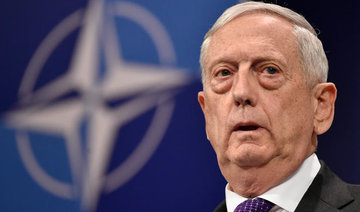
Defense Secretary Jim Mattis has strongly defended what he calls US non-combat support for the Saudi-led war in Yemen.
“New restrictions on this limited US military support could increase civilian casualties, jeopardize cooperation with our partners on counterterrorism, and reduce our influence with the Saudis — all of which would further exacerbate the situation and humanitarian crisis” in Yemen, Mattis wrote in a recent letter to McConnell.
Both the US and Saudis view the Houthis as Iranian proxies. Mattis said the withdrawal of US support would embolden Iran to increase its support for the Houthis.
Sen. Bob Corker, R-Tennessee, the chairman of the Foreign Relations Committee, also urged senators against the resolution, promising a full debate on the use of force at an upcoming hearing in April.
“We’re not shying away from this debate,” Corker said. “The proper way to deal with these issues is to deal with them in committee.”
The panel’s top Democrat, Sen. Bob Menendez of New Jersey, met with the crown prince before the vote and signaled the tough debate ahead. While Menendez said he was not ready to abandon an ally, he expected to see diplomatic measures and alleviation of the humanitarian suffering in Yemen.
“My vote today is not a blank check for US military support,” Menendez said. Nor, he said, was it a “thumbs up” to Saudi Arabia for “business as usual.”


![]()

US Senate votes against bill to end American participation in Yemen conflict
US Senate votes against bill to end American participation in Yemen conflict

Latest updates


© 2026 SAUDI RESEARCH & PUBLISHING COMPANY, All Rights Reserved And subject to Terms of Use Agreement.