BEIRUT: The Syrian army has in effect cut off the two large eastern Ghouta towns of Douma and Harasta by advancing into areas between them and the rest of the rebel enclave, and by bringing roads linking them into firing range, a war monitor said.
The advances on Saturday morning included taking the town of Mesraba at a narrow point joining the northern and southern halves of the rebel area, the Britain-based Syrian Observatory for Human Rights said.
The ferocious three-week assault on the last major rebel stronghold near Damascus has captured about half its area and killed 960 people, according to a war monitor.
The Britain-based Syrian Observatory for Human Rights also said on Saturday that warplanes, helicopters and artillery were used in bombardment of the area overnight.
Syrian President Bashar Assad and Russia, his main ally, say the campaign is needed to end rebel shelling of Damascus and to end the rule of insurgents over the area’s civilians.
The offensive follows the pattern of previous assaults on rebel strongholds, deploying massive air power and tight sieges to force insurgents to accept “evacuation” deals.
These involve rebels surrendering territory in exchange for safe passage to opposition areas in northwest Syria, along with their families and other civilians who do not want to come back under Assad’s rule.
Late on Friday, a small number of fighters and their families from the former Al-Qaeda affiliate previously known as the Nusra Front left eastern Ghouta under such a deal.
But the group represents only a small portion of the insurgent presence in the enclave, and both Jaish Al-Islam and Failaq Al-Rahman have said they are not negotiating a similar deal for themselves.
Shortages
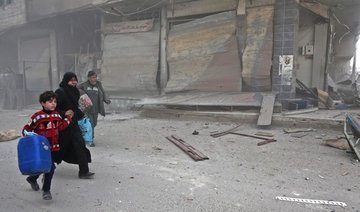
The intensity of the government’s attack on an enclave that has been besieged since 2013 and suffers acute shortages of food and medical supplies has drawn Western condemnation and demands by UN aid agencies for a humanitarian halt in fighting.
The United Nations estimates that some 400,000 people are trapped in the enclave.
“Living conditions are harsh... Shop owners and traders are sending their workers to the shelters to sell food for three times their price before the offensive,” said a man in Saqba who identified himself as Abu Abdo in a voice message.
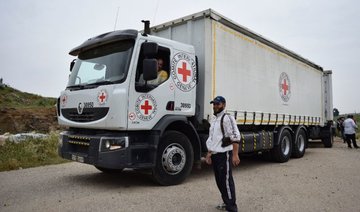
Aid agencies have tried to deliver aid into eastern Ghouta, but they have only been able to bring in a portion of the amount they wanted.
A convoy was unable to finish unloading on Monday because of continued fighting, bringing in the remaining undelivered food parcels on Friday despite bombardment nearby.
However, UN agencies said most medical supplies had been stripped from the convoy by Syrian government officials and added that the food supplies brought in were insufficient.
The government has opened what it says are several safe routes out of eastern Ghouta for civilians, but none are known to have left so far and Damascus and Moscow accuse the rebels of preventing them from fleeing the fighting.
Insurgent groups in eastern Ghouta deny this, but a Reuters witness on Friday saw gunfire and mortar fire from inside the rebel territory near one of the crossing points.


![]()

Syrian regime forces surround two Eastern Ghouta towns: Observatory
Syrian regime forces surround two Eastern Ghouta towns: Observatory
Latest updates


© 2026 SAUDI RESEARCH & PUBLISHING COMPANY, All Rights Reserved And subject to Terms of Use Agreement.