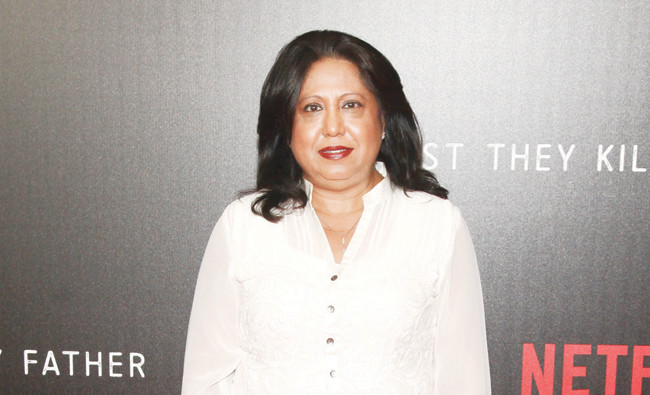
NEW YORK: The UN envoy for sexual violence in conflict, who just returned from Iraq, said she found “a gross lack” of support for women and girls who were raped and forced into sexual slavery by Daesh extremists, and survivors she met “were like living corpses.”
Pramila Patten said the survivors were released early this year and told her they are confined to camps because of the double stigma of being victims of sexual violence and sexual slavery, and of being associated with Daesh — and fear of being perceived as an affiliate of the militant group.
“Some also expressed a fear of being detained,” she told a news conference on Friday.
“So they are very much confined, including by their parents. They are not stepping out of their camp and have not had an opportunity to avail themselves of even the limited psycho-social support that there is inside the camp.”
Patten, who visited Iraq from Feb. 26-March 5, said many women who remain displaced expressed serious concerns for their safety if they return home and shared their fear of reprisals.
She said she met with all religious leaders, and while “they show a lot of empathy toward the women returning” she was told that Turkmen women will be rejected by their community. And she said Yazidi women, who have historically been subjected to persecution, expressed a wish to leave Iraq.
During a lightning charge in June 2014, Daesh terrorists took over Iraq’s second-largest city, Mosul, and nearly a third of the country, plunging it into the most severe crisis since the US-led invasion in 2003. Mosul was liberated last July, and Prime Minister Haider Abadi declared an end to Daesh’s self-styled caliphate.
Impact of conflict
But Patten said the impact of the conflict and Daesh occupation is impacting not only the women but their children.
She said provincial authorities in Mosul told her women who were raped and held as sex slaves have abandoned their children born to Daesh terrorists. As a result, she said, the authorities have had to set up orphanages for “thousands of children.”
Patten said she will be seeking more information about the orphans, who are from all religious faiths.
In talks with Prime Minister Abadi and regional and provincial officials, she said it was essential to shift “the stigma from the victims to the perpetrators.”
Psychosocial support
Despite all humanitarian efforts, Patten said: “I find a gross lack of both physical and mental health, psycho-social support, and especially in the quality of the psycho-social support that is required by survivors of sexual violence.”
She said: “There is a need for very specialized service, which I think is simply not there.”
In her meetings, Patten said she also called for a scaling-up of medical, mental health and psychological services and economic opportunities for victims of sexual violence.
Patten said she also relayed to government officials a strong message from survivors to step up efforts to free those still in captivity and locate the missing.
According to officials dealing with genocide and religious leaders, she said, 3,154 Yazidis are missing including 1,471 women and girls — and 1,200 Turkmen are missing including 600 women and 250 children.