HOUSTON: Amin Nasser, chief executive of Saudi Aramco, said the oil and gas industry must “push back” against suggestions that oil demand is in long term decline and that Saudi energy assets will be left “stranded” in the ground as alternative energy sources are developed.
In a keynote address at the CERAWeek by IHS Market gathering of top energy experts in Houston, Texas, Nasser also warned that the oil market faces “multiple downside political risks,” and needs $20 trillion of investment over the next 25 years — the size of the American economy.
He was speaking on the 80th anniversary of the discovery of oil in Saudi Arabia, when American geologists found significant reserves of crude in Dhahran, which led to the creation of Saudi Aramco.
“Today I want to be clear about what really lies ahead for our industry, and the actions we must take to secure that future,” he said.
“We must leave people in no doubt that misplaced notions of ‘peak oil demandʼ and ‘stranded resourcesʼ are direct threats to an orderly energy transition and energy security,” he said, adding: “Oil and gas will continue to play a major role in a world where all energy sources will be required for the foreseeable future.”
On the current oil market, he said market fundamentals were healthy. “Despite recent volatility in the financial markets, the broad-based recovery in the global economy remains on track. It is particularly encouraging to see expectations of stronger economic growth in the emerging and developing world because that is where most oil demand growth is expected to be. Oil demand globally also remains healthy,” he said.
Nasser pointed to flaws in all the various alternatives that have been advocated as future energy sources.
“The hot topic in energy transition is the future role of oil in transport. At the heart of it is the light duty road passenger vehicles segment (cars) that accounts for about 20 percent of global oil demand today. Many wrongly believe that it is a simple matter of electric vehicles quickly and smoothly replacing the internal combustion engine,” he said.
The future for alternatives to the motor car and internal combustion engine was “far more complex,” he said.
“In fact, there are five strong technology horses racing each other to become the powertrain of the future — advanced internal combustion engines; hybrid electric vehicles; plug-in hybrid vehicles; pure battery electric vehicles; and hydrogen fuel cell vehicles. The first three are powered by an internal combustion engine. And let us not forget that more than 99 percent of the passenger vehicles on the road today have an internal combustion engine and will be with us for a long time,” he pointed out.
The transformation of the motor industry was still unclear, Nasser said. “In fact, some of the most disruptive technologies are only just emerging, including highly advanced integrated engine-fuel systems like the ones our researchers are working hard on at Saudi Aramco in collaboration with car and truck engine manufacturers.
“So, given the world’s focus on climate change, there should be a global priority on improving the efficiency and lowering carbon emissions from internal combustion engines as well as fuels, especially when the other two horses in the race — pure battery electric vehicles and hydrogen fuel cell vehicles — still face a range of problems,” he added.
There were other factors that further complicated the search for oil alternatives. “There are also major hurdles before alternatives can be deployed at scale. Affordability is one, as customers continue to place great importance on up-front costs, especially in developing nations. Another is that it will become increasingly difficult for governments to subsidize such enormous numbers, although this is often glossed over,” Nasser said.
“It will require massive infrastructure, which is particularly challenging in developing nations as they are least well-equipped and can least afford this in the face of other economic and social priorities. Yet the majority of vehicle growth will be in those very same nations.”
Analysts estimate that traditional motor car usage accounts for 20 percent of global oil demand, but that figure is complicated by future demographic trends.
“Further adding to the complexity will be the extra two billion people on the planet by 2050, a world economy three times its current size., and a global middle class that will reach five billion by 2030 – with two-thirds of it in Asia driving consumption. These macro factors will only grow demand for road passenger transport,” Nasser said.
“So, yes, battery electric vehicles will grow and have a welcome role to play in global mobility. But given the competition and complexity of the transition, their impact on the 20 percent oil demand should not be exaggerated,” he added.
The rest of the demand side presented great opportunities for oil producers, he said. “In petrochemicals alone, oil use is expected to increase by almost 50 percent, while the number of air passengers each year is expected to almost double to 8 billion over the coming two decades.”
There were also new outlets being developed for Aramco products, he insisted. “For example, Saudi Aramco recently signed an agreement centered on a potential breakthrough technology that will directly convert up to 70 percent of a barrel of crude into petrochemicals.
“This could transform the role of oil as a major petrochemical feedstock, substantially lighten the carbon footprint of oil consumption because of its non-combustible nature, and reduce costs by 30 percent, and become a large and reliable outlet for our future oil production,” he said.
“I also see huge potential in producing advanced materials for use in a wide range of high growth industries. Just imagine a future where skyscrapers, cars (including electric ones!), and even our own pipelines are built with these advanced oil-based materials.
“Looking further ahead, if we combine hydrogen from oil with carbon capture, utilization, and storage then green hydrogen comes within reach – not only for transport but also power and heat,” he added.
Oil and gas will continue to play a major role in a world where all energy sources will be required for the foreseeable future.
But he insisted that the energy industry needed action in four main areas to enable it to face the future:
“First, we need to expand exploration. Last year, only 7 billion barrels equivalent of oil and gas combined were discovered, which is among the lowest on record.
“Second, we must not only meet the growth in oil demand but also offset a large natural decline in developed oil fields. Even conservative estimates suggest about 20 million barrels per day of new capacity is required over the next five years,” Nasser said
“Third, our industry needs more than 20 trillion dollars over the next quarter century to meet rising demand for oil and gas (including in aging infrastructure). That is virtually the size of the US economy, and we have already lost 1 trillion dollars of investments since the downturn.
“This staggering amount will only come if investors are convinced that oil will be allowed to compete on a level playing field, that oil is worth so much more, and that oil is here for the foreseeable future,” he said.
“That is why we must push back on the idea that the world can do without proven and reliable sources. We also need an environment that encourages long-term investments, as we are seeing here in the United States, and in Saudi Arabia with our ambitious Vision 2030,” Nasser added.
Finally, he said, we need to intensify our efforts to both enhance current technologies as well as create new, game-changing ones. That requires us to devote more resources to longer term research, particularly low-to-no carbon products. And it means regulators must be policy holistic and technology agnostic – let the market decide,” he said.


![]()

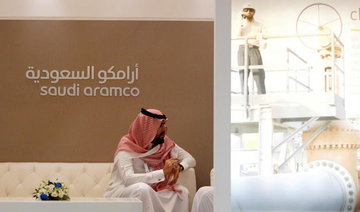
‘Oil and gas will continue to play a major role in the world,’ says Aramco’s Nasser
‘Oil and gas will continue to play a major role in the world,’ says Aramco’s Nasser


Latest updates





Recommended


© 2026 SAUDI RESEARCH & PUBLISHING COMPANY, All Rights Reserved And subject to Terms of Use Agreement.