BELGRADE: Serbs are unlikely to support full recognition of Kosovo as independent in exchange for EU membership, so only a compromise can stop Kosovo’s status from festering for decades in a “frozen conflict,” Serbia’s president warned on Friday.
The European Union has told Serbia it could join the bloc by 2025, provided it carries out reforms at home and resolves its differences with Kosovo, a province which declared independence 10 years ago.
The bloc has not said explicitly what form an agreement between Serbia and Kosovo must take, but Germany’s foreign minister, Sigmar Gabriel, told reporters in Pristina on Wednesday that Serbian “acceptance of Kosovo’s independence” was a condition.
Serbia’s leadership has been seeking a formula it can sell to the public in a referendum. Some commentators have suggested a deal under which Belgrade might stop short of recognizing Kosovo as sovereign, but accept it joining the United Nations, which Serbia’s veto-wielding ally Russia has so far blocked.
Aleksandar Vucic, Serbia’s president, a former Serb nationalist who has changed his views over the past decade to become pro-European, said any decision would have to be put to Serbian voters, many of whom consider Kosovo the cradle of their Orthodox faith.
“The people would decide; if you think that can get a majority, I’m not so sure,” Vucic told Reuters in an interview.
“We have to look at today’s reality and to understand relations in the world and relations in Kosovo and to understand that it (Kosovo) is not ours as we taught ourselves, but neither is it theirs as they try to show it,” he said.
“If there is no compromise we will have a frozen conflict for decades. We should not leave that to our children to deal with.”
Kosovo broke away from Serbia in 1999 when NATO bombed for 11 weeks to halt a wave of killings and expulsions of ethnic Albanian civilians by Serbian security forces waging a two-year counter-insurgency war.
It declared independence in 2008 and has been recognized by more than 100 countries around the world, including the major Western powers. However, five of the EU’s 28 members do not recognize Kosovo as sovereign, complicating the bloc’s ability to take a united stand.
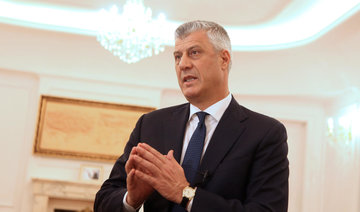
On Tuesday, Kosovo’s president, Hashim Thaci, told Reuters that he expected a deal with Serbia within the year and that it would result in Kosovo’s membership of the United Nations.
In exchange, some of Vucic’s allies, including his foreign and defense ministers, have called for Kosovo to be partitioned, with Serbia taking a northern slice populated by minority Serbs which Kosovo has struggled to integrate. Vucic declined to comment on such calls.
He insisted agreement was possible, but that it would require “political will in Brussels to reach a compromise, rather than continuing to put pressure on Serbia.”
Quoting the Serbian writer Borislav Pekic, Vucic said Serbia should look to the future: “We should not kiss the ground our ancestors walked on, but rather the ground our children will walk on.”

Serbs won’t back Kosovo recognition for EU seat, president warns
Fear grips Congo’s Uvira as M23 rebels take control, displacing 200,000
- On Saturday, the situation in Uvira still had not returned to normal
- “Some people left the city, but we stayed,” Maria Esther, a 45-year-old mother of 10, told AP
UVIRA, CONGO: A climate of fear reigned Saturday in Uvira, a strategic city in eastern Congo, days after it fell to the Rwanda -backed M23 group, as fighting in the region escalated despite a US mediated peace deal.
The Associated Press gained rare access to the city, which was the Congo government’s last major foothold in South Kivu province after the provincial capital of Bukavu fell to the rebels in February. Its capture allows the rebels to consolidate a broad corridor of influence across the east.
M23 said it took control of Uvira earlier this week, following a rapid offensive launched at the start of the month. Along with the more than 400 people killed, about 200,000 have been displaced, regional officials say.
On Saturday, the situation in Uvira still had not returned to normal. There was absolute silence and no traffic, apart from military jeeps circulating on the empty streets. The banks were closed and people have not resumed their jobs — only a few dared to go out during the day, and no one ventured outside after sunset, with armed M23 fighters patrolling the city.
“Some people left the city, but we stayed,” Maria Esther, a 45-year-old mother of 10, told AP. “But the situation hasn’t returned to normal, we haven’t resumed our usual activities because there’s no money circulating.”
Joli Bulambo, another resident of Uvira, said: “People thought that the situation that had happened in Goma with the deaths would be the same here in Uvira, but fortunately, there were not many deaths because God helped.”
M23’s latest push
The rebels’ latest offensive comes despite a US-mediated peace agreement signed last week by the Congolese and Rwandan presidents in Washington.
The United States accused Rwanda of violating the agreement by backing a deadly new rebel offensive in the mineral-rich eastern Congo, and warned that the Trump administration will take action against “spoilers” of the deal.
The accord didn’t include the rebel group, which is negotiating separately with Congo and agreed earlier this year to a ceasefire that both sides accuse the other of violating. However, it obliges Rwanda to halt support for armed groups like M23 and work to end hostilities.
Marco Rubio, US Secretary of State, said on X on Saturday: “Rwanda’s actions in eastern DRC are a clear violation of the Washington Accords signed by President Trump, and the United States will take action to ensure promises made to the President are kept.”
There was no immediate reaction from Rwanda.
The rebels’ advance pushed the conflict to the doorstep of neighboring Burundi, which has maintained troops in eastern Congo for years, heightening fears of a broader regional spillover.
A struggle for mineral rich territory
More than 100 armed groups are vying for a foothold in mineral-rich eastern Congo, near the border with Rwanda, most prominently M23. The conflict has created one of the world’s most significant humanitarian crises, with more than 7 million people displaced, according to the UN agency for refugees.
Local UN partners report that more than 200,000 people have been displaced across the province since Dec. 2. Civilians also have crossed into Burundi, and there have been reports of shells falling in the town of Rugombo, on the Burundian side of the border, raising concerns about the conflict spilling over into Burundian territory.
Congo, the US and UN experts accuse Rwanda of backing M23, which has grown from hundreds of members in 2021 to around 6,500 fighters, according to the UN
Rwanda, Congo and M23 trade accusations
Congo’s Foreign Minister Thérèse Kayikwamba Wagner on Friday accused Rwanda of trampling on the peace agreement, which she described as bringing “hope of a historic turning point.”
She warned, however, that the “entire process … is at stake,” and urged the Security Council to impose sanctions against military and political leaders responsible for the attacks, ban mineral exports from Rwanda and prohibit it from contributing troops to UN peacekeeping missions.
“Rwanda continues to benefit, especially financially but also in terms of reputation, from its status as a troop-contributing country to peacekeeping missions,” Wagner told AP.
Bertrand Bisimwa, deputy coordinator of the AFC/M23 rebel movement told AP in an exclusive interview Friday that peace commitments have remained largely theoretical. “Regardless of the ceasefire agreements we sign and the mutual commitments we make, nothing is implemented on the ground,” he said.
Asked about the expansion of M23 operations toward the Uvira region, Bisimwa said the region was a long-standing hot spot of ethnic tensions and violence. “For a long time, people were attacked and killed because of their community affiliation,” he said.
On Friday, Rwanda’s Foreign Minister Olivier Nduhungirehe told diplomats that Congo had declared it would continue fighting in M23 recaptured territories and it was only after M23 retaliated that the international community “suddenly woke up.”
“The DRC has openly declared that it would not observe any ceasefire and would instead continue fighting to recapture territories held by the AFC/M23, even as the peace process unfolded,” he said.
While Rwanda denies the claim that it backs M23, it acknowledged last year that it has troops and missile systems in eastern Congo, allegedly to safeguard its security. UN experts estimate there are up to 4,000 Rwandan forces in Congo.