TEHRAN: Iranian lawmakers held a closed-door session on Sunday to discuss the deadly protests that hit the country last week, while more pro-regime rallies were held in several cities.
“The security officials confirmed that most of those arrested have been released,” Gholamreza Heydari, a reformist lawmaker in Tehran, told parliament’s ICANA website.
He was speaking after the session in which MPs grilled Interior Minister Abdolrahmani Rahmani Fazli, Intelligence Minister Mahmoud Alavi and secretary of the Supreme National Security Council Ali Shamkhani over the days of unrest that straddled the new year.
Mohammad Reza Kachouie, another deputy, said most of those detained were unemployed people, “without university degrees.”
“The parliament meeting principally looked into the condition of the people, the economic situation and unemployment. The enemy is trying to infiltrate the country by using these issues,” he told ICANA.
A reformist MP Bahram Parsaie said blame should not focus on President Hassan Rouhani but on decades of poor governance.
“I hope we face up to reality and take lessons from past mistakes,” ICANA quoted him as saying.
The protests began on December 28 over economic issues before quickly spiralling out of control and turning against the regime as a whole, leaving 21 dead and hundreds arrested.
Police have previously said they have released many of the hundreds arrested during the unrest, but that the main instigators were “in the hands of the judiciary.”
Some lawmakers voiced concern over the Internet controls put in place during the unrest, including a ban on Iran’s most popular messaging app, Telegram, which officials said had been used to incite violence.
“The parliament is not in favor of keeping Telegram filtering in place, but it must pledge that it will not be used as a tool by the enemies of the Iranian people,” Behrouz Nemati, spokesman for the parliament’s presiding board, wrote on Instagram, which was also temporarily blocked during the unrest.
Many Iranians use Telegram as their main source of news and a way of bypassing the highly restrictive state media, with almost a third of Iran’s 80 million people using the app daily.
Some 9,000 online businesses have been disrupted by the blocking, semi-official news agency ISNA reported, quoting a report by the culture ministry’s digital media center.
Pro-government rallies were again held in several cities on Sunday, this time in Qazvin, Rasht, Shahr-e Kurd and Yazd.
Tens of thousands of people have participated in similar rallies in the past few days.
The rallies are “the people’s response to the rioters and troublemakers and their supporters,” said state television.


![]()
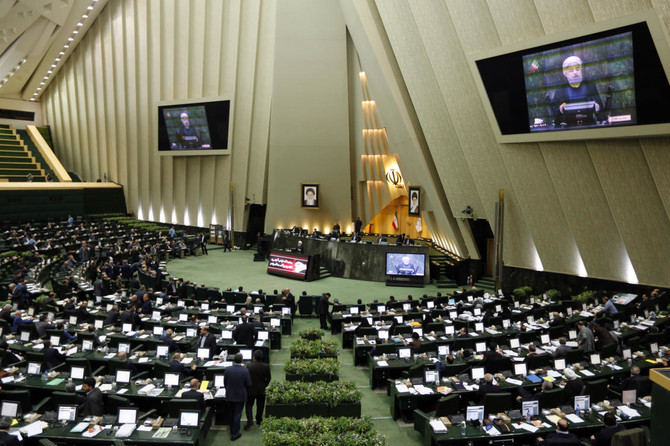
Iran parliament holds special meeting on protests
Iran parliament holds special meeting on protests
Latest updates


Recommended


© 2026 SAUDI RESEARCH & PUBLISHING COMPANY, All Rights Reserved And subject to Terms of Use Agreement.