ADDIS ABABA: Ethiopian police said they had seized thousands of rounds of ammunition sent by Eritrea to rebels in Ethiopia’s Amhara region, an allegation Eritrea dismissed as a falsehood intended to justify starting a war.
The charge by Ethiopia’s federal police escalates a feud between Ethiopia and Eritrea, longstanding foes who reached a peace deal in 2018 that has since given way to renewed threats and acrimony.
The police said in a statement late on Wednesday they had seized 56,000 rounds of ammunition and arrested two suspects this week in the Amhara region, where Fano rebels have waged an insurgency since 2023.
“The preliminary investigation conducted on the two suspects who were caught red-handed has confirmed that the ammunition was sent by the Shabiya government,” the statement said, using a term for Eritrea’s ruling party.
Eritrea’s Information Minister Yemane Gebremeskel told Reuters that Ethiopian Prime Minister Abiy Ahmed’s Prosperity Party (PP) was looking for a pretext to attack.
“The PP regime is floating false flags to justify the war that it has been itching to unleash for two long years,” he said.
In an interview earlier this week with state-run media, Eritrean President Isaias Afwerki said the Prosperity Party had declared war on his country. He said Eritrea did not want war, but added: “We know how to defend our nation.”
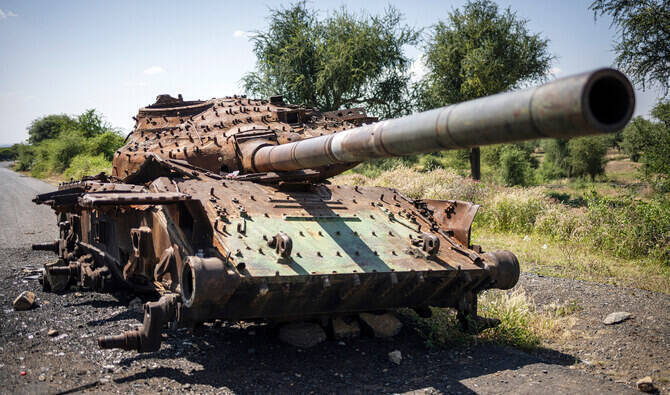
The two countries fought a three-year border war that broke out in 1998, five years after Eritrea won its independence from Ethiopia. They signed a historic agreement to normalize relations in 2018 that won Ethiopia’s Abiy the Nobel Peace Prize the following year. Eritrean troops then fought in support of Ethiopia’s army during a 2020-22 civil war in Ethiopia’s northern Tigray region.
But relations soured after Asmara was frozen out of the peace deal that ended that conflict. Since then, Eritrea has bristled at repeated public declarations by Abiy that landlocked Ethiopia has a right to sea access — comments many in Eritrea, which lies on the Red Sea, view as an implicit threat of military action.
Abiy has said Ethiopia does not seek conflict with Eritrea and wants to address the issue of sea access through dialogue.

Ethiopia accuses Eritrea of arming rebels in escalating war of words
Short Url
https://arab.news/24qrk
Ethiopia accuses Eritrea of arming rebels in escalating war of words
- The charge by Ethiopia’s federal police escalates a feud between Ethiopia and Eritrea
- The two countries fought a three-year border war that broke out in 1998
CIA tracked Iranian leaders for months ahead of attacks that began with 3 strikes in 60 seconds
WASHINGTON: Israeli and American authorities spent weeks tracking the movements of senior Iranian leaders, including Supreme Leader Ayatollah Ali Khamenei, sharing information that allowed the strikes to be carried out in a surprise daylight attack, according to an Israeli military official and a person familiar with the operation.
The eventual barrage of US-Israeli attacks on Iran came so quickly that they were nearly simultaneous — with three strikes in three locations hitting within a single minute — killing Khamenei and some 40 senior figures, including the head of the Revolutionary Guard and the country’s defense minister, the Israeli military official said Sunday.
The official insisted on anonymity to more fully detail the attack, but said that a variety of factors created a golden opportunity to take out much of Iran’s leadership, like weeks of training and monitoring the movements of senior figures as well as intelligence in real-time before the attack began that key targets were gathered together.
Striking by day also gave an additional element of surprise, said the official, who said that so many major, rapid-fire strikes were critical to keep key officials from fleeing after the first strike. The official said Israel closely cooperated with its US counterparts and had used a similar tactic at the beginning of last June’s war — which resulted in the killing of several senior Iranian figures.
The official also noted Khamenei having posted defiant tweets taunting President Donald Trump in the days before the attack.
The details about the strikes came as the conflict entered its second day, with Trump saying in a video message Sunday that he expected it would continue until “all of our objectives are achieved.” He did not spell out what those objectives were.
The Republican president also said the US military and its partners hit hundreds of targets in Iran, including paramilitary Revolutionary Guard facilities, Iranian air defense systems and nine warships, “all in a matter of literally minutes.”
CIA had long tracked top Iranian leaders
Before the attacks, the CIA had for months tracked the movements of senior Iranian leaders, including the country’s supreme leader.
The intelligence was shared with Israeli officials, and the timing of the strikes was adjusted in part because of that information about the Iranian leaders’ location, according to the person, who was not authorized to comment publicly and spoke on condition of anonymity.
The intelligence-sharing between US and Israel reflects the preparation that went into the strikes, which continued for a second day Sunday after Khamenei’s killing threw the future of the Islamic Republic into uncertainty and raised the risk of escalating regional conflict.
Arkansas Republican Sen. Tom Cotton, chairman of the Senate Intelligence Committee, told CBS’ “Face the Nation” that tracking the movements of the supreme leader and the heads of other adversarial nations “is obviously one of the highest priorities of our intelligence community.”
The US regularly shares intelligence with allies including Israel. Those partnerships, and the accuracy of the intelligence they yield, is often critical not only to the success of a military operation but also to the public’s support for it.
Virginia Sen. Mark Warner, the senior Democrat on the committee, told The Associated Press that, historically, “our working relationship with the Mossad and Israel is really strong.” Mossad is the Israeli spy agency.
Warner said he has serious concerns about the justification for the strikes, Trump’s long-term plans for the conflict and the risks that US service members will face. The military announced that three American troops had been killed in the Iran operation.
“No tears will be shed over their leadership being eliminated, but always the question is: OK, what next?” Warner said.
Iran has signaled it’s open to talks with the US
A senior White House official said Iran’s “new potential leadership” has suggested it is open to talks with the United States. That official, who spoke on condition of anonymity to discuss internal administration deliberations, said Trump has indicated he’s “eventually” willing to talk but that for now the military operation “continues unabated.”
The official did not say who the potential new Iranian leaders are or how they made their alleged willingness to talk known. Separately, Trump told The Atlantic that he planned to speak with Iran’s new leadership.
“They want to talk, and I have agreed to talk, so I will be talking to them,” he said Sunday, declining comment on the timing.
The potential future diplomatic opening comes as the details were emerging about the detailed planning that went into the US-Israeli strikes and some of the targets that were hit in Iran.
US Central Command said that B-2 stealth bombers struck Iran’s ballistic missile facilities with 2,000-pound bombs. That mirrors the approach that the military took in June, when Trump agreed to deploy B-2 bombers to attack three key Iranian nuclear sites.
Trump said during his State of the Union speech last week that Iran had been building ballistic missiles that could reach the US homeland — a justification he repeated again Saturday as he announced that the bombardment of Iran was underway.
Iran has not acknowledged that it is building or seeking to build intercontinental ballistic missiles. The US Defense Intelligence Agency, however, said in an unclassified report last year that Iran could develop a militarily viable intercontinental ballistic missile by 2035 “should Tehran decide to pursue the capability.”
The eventual barrage of US-Israeli attacks on Iran came so quickly that they were nearly simultaneous — with three strikes in three locations hitting within a single minute — killing Khamenei and some 40 senior figures, including the head of the Revolutionary Guard and the country’s defense minister, the Israeli military official said Sunday.
The official insisted on anonymity to more fully detail the attack, but said that a variety of factors created a golden opportunity to take out much of Iran’s leadership, like weeks of training and monitoring the movements of senior figures as well as intelligence in real-time before the attack began that key targets were gathered together.
Striking by day also gave an additional element of surprise, said the official, who said that so many major, rapid-fire strikes were critical to keep key officials from fleeing after the first strike. The official said Israel closely cooperated with its US counterparts and had used a similar tactic at the beginning of last June’s war — which resulted in the killing of several senior Iranian figures.
The official also noted Khamenei having posted defiant tweets taunting President Donald Trump in the days before the attack.
The details about the strikes came as the conflict entered its second day, with Trump saying in a video message Sunday that he expected it would continue until “all of our objectives are achieved.” He did not spell out what those objectives were.
The Republican president also said the US military and its partners hit hundreds of targets in Iran, including paramilitary Revolutionary Guard facilities, Iranian air defense systems and nine warships, “all in a matter of literally minutes.”
CIA had long tracked top Iranian leaders
Before the attacks, the CIA had for months tracked the movements of senior Iranian leaders, including the country’s supreme leader.
The intelligence was shared with Israeli officials, and the timing of the strikes was adjusted in part because of that information about the Iranian leaders’ location, according to the person, who was not authorized to comment publicly and spoke on condition of anonymity.
The intelligence-sharing between US and Israel reflects the preparation that went into the strikes, which continued for a second day Sunday after Khamenei’s killing threw the future of the Islamic Republic into uncertainty and raised the risk of escalating regional conflict.
Arkansas Republican Sen. Tom Cotton, chairman of the Senate Intelligence Committee, told CBS’ “Face the Nation” that tracking the movements of the supreme leader and the heads of other adversarial nations “is obviously one of the highest priorities of our intelligence community.”
The US regularly shares intelligence with allies including Israel. Those partnerships, and the accuracy of the intelligence they yield, is often critical not only to the success of a military operation but also to the public’s support for it.
Virginia Sen. Mark Warner, the senior Democrat on the committee, told The Associated Press that, historically, “our working relationship with the Mossad and Israel is really strong.” Mossad is the Israeli spy agency.
Warner said he has serious concerns about the justification for the strikes, Trump’s long-term plans for the conflict and the risks that US service members will face. The military announced that three American troops had been killed in the Iran operation.
“No tears will be shed over their leadership being eliminated, but always the question is: OK, what next?” Warner said.
Iran has signaled it’s open to talks with the US
A senior White House official said Iran’s “new potential leadership” has suggested it is open to talks with the United States. That official, who spoke on condition of anonymity to discuss internal administration deliberations, said Trump has indicated he’s “eventually” willing to talk but that for now the military operation “continues unabated.”
The official did not say who the potential new Iranian leaders are or how they made their alleged willingness to talk known. Separately, Trump told The Atlantic that he planned to speak with Iran’s new leadership.
“They want to talk, and I have agreed to talk, so I will be talking to them,” he said Sunday, declining comment on the timing.
The potential future diplomatic opening comes as the details were emerging about the detailed planning that went into the US-Israeli strikes and some of the targets that were hit in Iran.
US Central Command said that B-2 stealth bombers struck Iran’s ballistic missile facilities with 2,000-pound bombs. That mirrors the approach that the military took in June, when Trump agreed to deploy B-2 bombers to attack three key Iranian nuclear sites.
Trump said during his State of the Union speech last week that Iran had been building ballistic missiles that could reach the US homeland — a justification he repeated again Saturday as he announced that the bombardment of Iran was underway.
Iran has not acknowledged that it is building or seeking to build intercontinental ballistic missiles. The US Defense Intelligence Agency, however, said in an unclassified report last year that Iran could develop a militarily viable intercontinental ballistic missile by 2035 “should Tehran decide to pursue the capability.”
© 2026 SAUDI RESEARCH & PUBLISHING COMPANY, All Rights Reserved And subject to Terms of Use Agreement.


