WASHINGTON: President Donald Trump admitted the Middle East peace process was in difficulty and threatened to cut aid to Palestinians worth more than $300 million a year, drawing a rebuke that they would not be “blackmailed.”
“We pay the Palestinians HUNDRED OF MILLIONS OF DOLLARS a year and get no appreciation or respect,” Trump tweeted.
“With the Palestinians no longer willing to talk peace, why should we make any of these massive future payments to them?”
It was not immediately clear whether Trump was threatening all of the budget, worth $319 million in 2016, according to US government figures.
“We will not be blackmailed,” senior Palestinian official Hanan Ashrawi said in a statement Wednesday after Trump’s tweet.
“President Trump has sabotaged our search for peace, freedom and justice. Now he dares to blame the Palestinians for the consequences of his own irresponsible actions!“
The US has long provided the Palestinian Authority with much-needed budgetary support and security assistance, as well as an additional $304 million for the UN’s programs in the West Bank and Gaza.
Unless Trump follows through on his customary tough talk, the message is likely to be seen as primarily political.
Trump came to office boasting that he could achieve the “ultimate deal” that secures peace in the Middle East, something that has eluded presidents since the late 1960s.
For most the last half century the United States has been seen as indispensable — if sometimes imperfect — arbiter of the peace process.
Trump’s actions are likely to cast that further in doubt.
He has heaped pressure on Palestinians to do a deal, threatening to close the de facto “embassy” in Washington, recognizing Israel’s contested claim on Jerusalem and now threatening aid.
Efforts to harness improved Arab-Israel relations to push a peace deal have been at least temporarily derailed by his decision to recognize Jerusalem as Israel’s capital, breaking with decades of American policy.
The decision sparked almost universal diplomatic condemnation and deadly protests in the Palestinian territories.
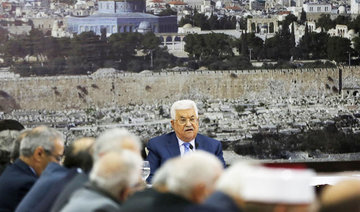
It also prompted Palestinian president Mahmud Abbas — 82-years-old and facing the prospect of entering the history books as the leader who “lost Jerusalem” — to cancel a planned meeting with Vice President Mike Pence.
Christian and Muslim leaders in Egypt took similar steps.
Pence was forced to delay his December visit to the Middle East until later this month, and aides were on Tuesday forced to reject rumors of further delays.
“As we’ve said all along, the vice president is going to the Middle East in January,” said Pence spokeswoman Alyssa Farah. “We’re finalizing details and will announce specifics of the full trip in the coming days.”


![]()

Trump threatens to cut aid to Palestinian territories
Trump threatens to cut aid to Palestinian territories

Latest updates


© 2026 SAUDI RESEARCH & PUBLISHING COMPANY, All Rights Reserved And subject to Terms of Use Agreement.