NEW DELHI: India’s capital launched a metro train with driverless technology Monday, though officials said it would operate with a driver for at least a year or two.
Prime Minister Narendra Modi took an inaugural ride on a short section of the 12.6-kilometer (7.8-mile) Magenta Line, which connects the southern part of New Delhi with the satellite city of Noida, an IT hub across the Yamuna river.
The Delhi Metro Rail Corp. has said the highly automated train will run initially with a driver but could become driverless in the future. An official told the Indian Express newspaper that it would have human operators for “a year or two.”
One of the new trains crashed through a wall at a depot last week, sparking concern about the automation technology. However, Delhi Metro said human error was the cause, with workers forgetting to re-engage the brakes after they had been disengaged for maintenance. The train rolled down a ramp and into the wall.
The Magenta Line is the latest addition to the Delhi Metro system, which opened 15 years ago and covers more than 200 kilometers (125 miles). It has made commuting to work and school much easier for many Delhi residents, though road congestion and air pollution remain serious problems.


India’s new ‘driverless’ metro train keeps driver for now
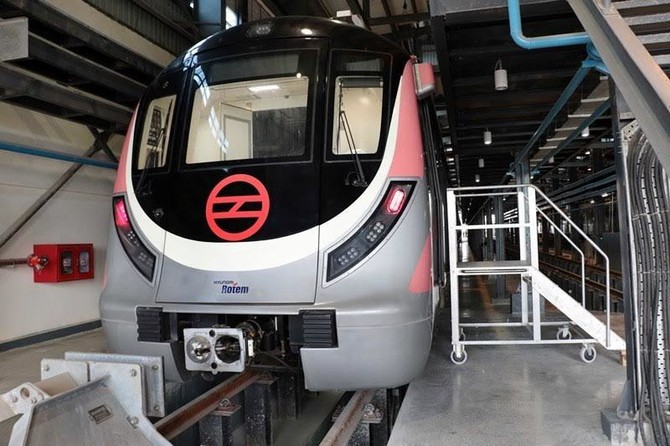
India’s new ‘driverless’ metro train keeps driver for now

Makkah museum displays world’s largest Qur’an
MAKKAH: The Holy Qur’an Museum at the Hira Cultural District in Makkah is showcasing a monumental handwritten copy of the Holy Qur’an, recognized as the largest Qur’an of its kind in the world.
The manuscript measures 312 cm by 220 cm and comprises 700 pages, earning the museum recognition from Guinness World Records for displaying the world’s largest Qur’an, the Saudi Press Agency reported.
The manuscript is a magnified reproduction of a historic Qur’an dating back to the 16th century, the SPA stated.
The original copy measures 45 cm by 30 cm, with the chapters written primarily in Thuluth script, while Surah Al-Fatiha was penned in Naskh, reflecting the refined artistic choices and calligraphic diversity of the era.
The Qur’an is a unique example of Arabic calligraphy, gilding and bookbinding, showcasing Islamic art through intricate decorations, sun-shaped motifs on the opening folio, and elaborately designed frontispiece and title pages that reflect a high level of artistic mastery.
The manuscript was endowed as a waqf in 1883. Its original version is currently preserved at the King Abdulaziz Complex for Endowment Libraries, serving as a lasting testament to Muslims’ enduring reverence for the Qur’an and the richness of Islamic arts across the centuries.


