RIYADH: Saudi Energy Minister Khalid Al-Falih on Wednesday quipped his phone had not stopped ringing with calls from investors as the Kingdom ramps up spending to record levels.
He was speaking at a press conference in Riyadh that was also attended by Public Investment Fund (PIF) Managing Director Yasir Al-Rumayyan, and Commerce and Investment Minister Dr. Majid Al-Qassabi.
The trio fielded questions from reporters on Saudi Arabia’s record budget announced on Tuesday.
They stressed that supporting small and medium-sized enterprises (SMEs) was a main theme of this year’s budget with SR72 billion ($19.2 billion) allocated to the private sector — including SR12 billion for SMEs.
Saudi Arabia plans the highest level of government spending in its history next year, when expenditure will hit more than SR1.1 trillion.
Al-Rumayyan said that small businesses were “the major movers” of the country, and outlined plans to help as many as 400 companies based in the Kingdom to go global.
When asked about the impact of the graft crackdown on the economy, Al-Qassabi said corruption had been rampant for decades and it was necessary to eradicate it.
“The rule of law will follow and I think this will attract many investors,” he said. “We have seen the results, and because of that we now have real competition and all Saudis have a fair chance.”
The energy minister agreed that the move had not impacted foreign investors because “they have not been partners in corruption.”
Foreign investors now are running toward investing in Saudi Arabia, Al-Falih told reporters. “My phone hasn’t stopped ringing because of it. Last week we signed many agreements.”


![]()
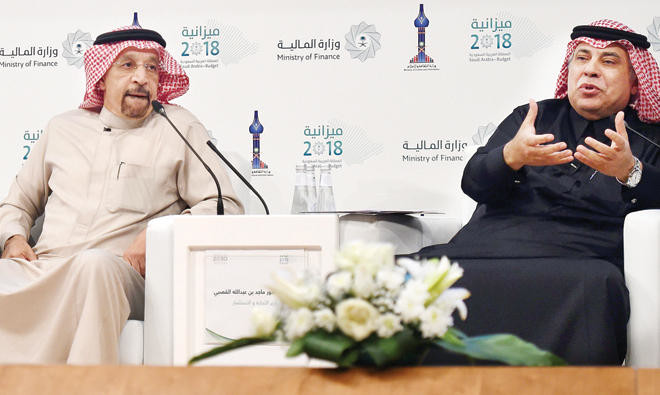
Saudi energy minister says phone has ‘not stopped ringing’
Saudi energy minister says phone has ‘not stopped ringing’

Latest updates


© 2026 SAUDI RESEARCH & PUBLISHING COMPANY, All Rights Reserved And subject to Terms of Use Agreement.