LONDON: An oil price at its highest for two years — at about $63 per barrel — has allowed Saudi Arabia to deliver a budget that targets growth and investment, while also maintaining fiscal restraint that will see the deficit reduce further.
The Kingdom has been able to pull this off after last month’s accord by the Organization of the Petroleum Exporting Countries (OPEC) and non-OPEC oil producers to retain production cuts of 1.8 million barrels per day (bpd) throughout 2018, albeit with a review halfway through the year.
First agreed at the end of 2016, these cuts have reduced global stockpiles and revived the price after the worst slump in decades in 2014/15 when the price fell below $30 per barrel. This has allowed Saudi Arabia to ease austerity for the poorest and furnished it with funds to diversify and grow the economy. Global investment banks have raised their forecast for the oil price next year, encouraged by the cuts agreement, on the assumption the price will still be low enough to encourage consumption which, in turn, has helped to bring about robust growth in the global gross domestic product (GDP) in 2017.
Goldman Sachs has estimated that Brent crude — the international oil benchmark — will trade at an average of $62 a barrel in 2018.
Another bull, JPMorgan, said “solid fundamentals and tightening balances,” as well as OPEC’s willingness to balance markets, are reasons for its positive outlook. It reckons on an average of $60 per barrel next year.
“OPEC’s decision to extend cuts through 2018 to take OECD oil inventories down to the 5-year average is clearly supportive of prices,” said the bank in a note to clients on Dec. 8.
RBC Capital Markets has forecast $62.30, while UBS increased its 2018 Brent projection to $60 from $55. Citigroup is most bearish, warning in a recent note that the bullish supply and demand dynamic will run out of steam, and an upsurge in US shale production could spook the market. For Barclays, crude’s rally will encourage the US and other non-OPEC producers to boost output in 2018, helping tip the scales toward a gain in inventories once again.
On Dec. 18, the International Energy Agency (IEA) said it expected the early part of 2018 to see a surplus of 200,000 bpd and a deficit of the same order at the end of the year, inferring the market would not be broadly balanced until the concluding months of 2018.
The IEA also said US shale producers were more active now that the oil price is back over $60. It said US drilling and well completion rates have picked up as prices have rebounded.
The worry will always be that a big supply response by US shale producers could depress the price next year. Russian companies are worried that the cuts agreement — though good for their budgets — could mean conceding market share to rivals in America and elsewhere.
But at a recent forum in London, OPEC Secretary-General Mohammed Barkindo said the global oil market was tightening at an “accelerating pace,” and he cited a sharp reduction in worldwide inventories as evidence that last year’s agreement by producers to cut supply was having an effect.
He added: “OPEC stocks in September were about 160 million barrels above the five-year average, down from 340 million in January. There has been a massive drainage of oil tanks across all regions, a balanced oil market was fully in sight.”
OPEC and other producers want to get stocks down to the five-year average in order to remove the glut built up when the price was above $100.


![]()
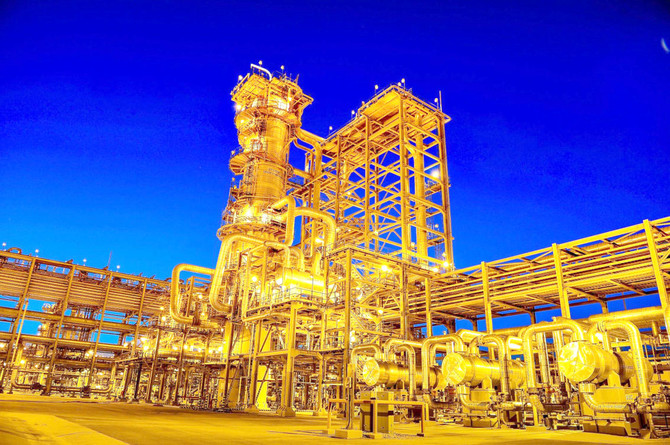
Oil production cuts bring budget boost in Saudi Arabia
Oil production cuts bring budget boost in Saudi Arabia


Latest updates


© 2026 SAUDI RESEARCH & PUBLISHING COMPANY, All Rights Reserved And subject to Terms of Use Agreement.