ISLAMABAD: Pakistan’s Supreme Court dismissed a graft case against cricketer-turned-opposition leader Imran Khan Friday, ensuring he will contest a general election due next year, just months after the same body ousted ex-Prime Minister Nawaz Sharif.
Khan had faced being disqualified from holding political office over charges including unreported assets, namely the funds he used to buy a scenic, sprawling property in the Bani Gala hills on the outskirts of the capital Islamabad.
He has dismissed the claims as a political vendetta, saying he used money earned from his career as one of Pakistan’s most famous World Cup cricketers to buy the land and that he has the documentation to prove it.
“No omission or dishonesty can be attributed to him. This petition has no merits and is dismissed accordingly,” Chief Justice Mian Saqib Nisar said, reading from the judgment to a packed courtroom.
Shortly after the judgment Khan held a press conference in Karachi where he told reporters “Pakistan’s highest court has exonerated me.”
“The taxpayers and those who earn their money through fair means and pay taxes should not be compared with the robbers and thieves,” Khan added.
Pakistan has been roiled by military coups and instability for much of its 70-year history, and the general election due in 2018 will only be its second ever democratic transition.
Khan’s Pakistan Tehreek-e-Insaf (PTI) party, which already holds northwestern Khyber Pakhtunkhwa province, hopes to capitalize on Sharif’s ousting and the disarray of his ruling Pakistan Muslim League-Nawaz (PML-N) to gain seats. Few observers of Pakistan’s volatile politics are willing to predict with any certainty who will take the election, however.
Sharif swiftly installed party loyalist Shahid Khaqan Abbasi as prime minister after the court sacked him in late July following a corruption investigation spurred by the Panama Papers leak.
But Abbasi is widely seen as a placeholder as Sharif himself has refused to relinquish leadership of the party, despite being barred from contesting elections, leaving the PML-N floundering.
Its weakness was brutally exposed last month when it was forced to capitulate to the demands of small and previously unknown militant group that had held a weeks-long sit-in in the capital to demand the resignation of the federal law minister over claims linked to blasphemy.


![]()
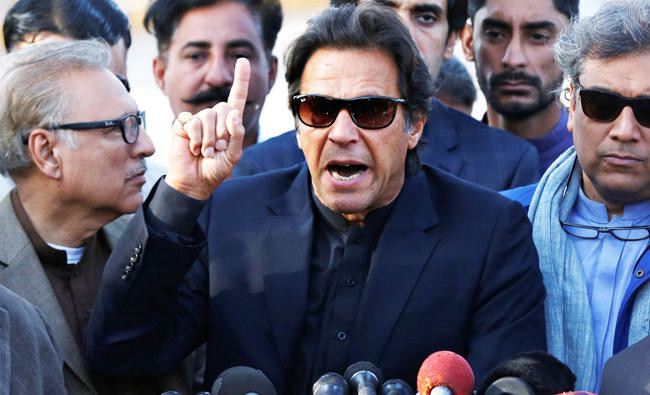
Top Pakistani court dismisses graft case against Imran Khan
Top Pakistani court dismisses graft case against Imran Khan

Latest updates


© 2026 SAUDI RESEARCH & PUBLISHING COMPANY, All Rights Reserved And subject to Terms of Use Agreement.