


LONDON: The Committee to Protect Journalists has called on Sudan’s paramilitary Rapid Support Forces to “immediately release” three female journalists and “stop arbitrarily detaining members of the press,” as the country’s war continues to impose a near-total shutdown on independent reporting.
Mawaheb Ibrahim and Zahraa Muhammad Al-Hassan, both reporters at Nyala State Radio, and Ishraqah Abdulrahman, a presenter and host at the station, have been held in Nyala, the capital of South Darfur state, since Feb. 28.
“Journalists in Sudan are already working under extremely dangerous conditions amid a devastating war, and detaining reporters only further restricts the flow of information from a conflict that remains severely underreported,” said Sara Qudah, the CPJ’s regional director, on Monday.
Members of the RSF arrested the three women after they attended a workshop for female journalists in Nyala, detaining them alongside several other women and transferring them to Korea Prison.
They remain held without formal charges, no clear justification for their arrest, or having had any court appearance, according to a local journalist following the case, who spoke to the CPJ on condition of anonymity, citing fear of reprisal.
The Sudanese Journalists Syndicate said it was deeply concerned about a growing number of cases of arbitrary detention and enforced disappearance targeting journalists across Sudan, including in Darfur and Sennar state.
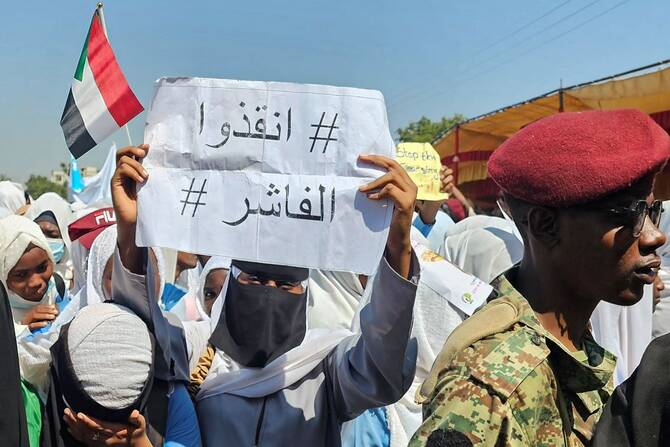
The whereabouts of at least eight other journalists are unknown, among them freelance journalist Muammar Ibrahim, who has been in RSF custody since his arrest when fleeing El Fasher city, North Darfur, in October.
The war between the Sudanese Armed Forces and the RSF, which erupted in April 2023, has created one of the world’s largest humanitarian crises and made Sudan one of the most dangerous countries for journalists.
According to the CPJ, at least 15 journalists and media workers have been killed since the conflict began.
The fighting has also produced a sweeping information vacuum which has left many journalists facing abduction, disappearance, sexual violence and deadly attack, a situation compounded by a communications blackout and acute shortages of food, medical care and safe shelter.


