

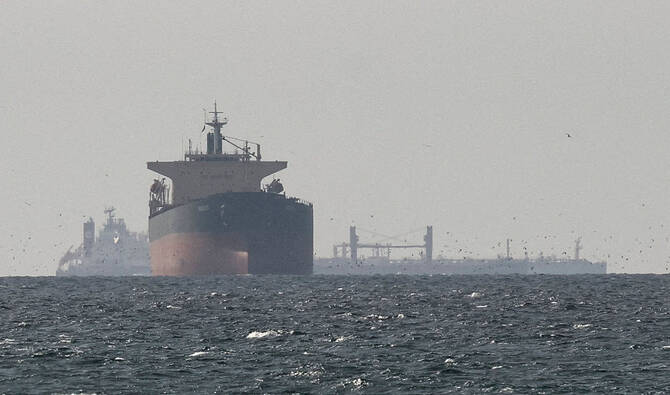

KARACHI: A Pakistani oil tanker bound for Karachi appeared to have successfully traversed the Strait of Hormuz and is sailing through the Gulf of Oman, ship‑tracking website MarineTraffic said on Monday, despite Iran’s closure of the strategic waterway amid the US‑Israeli war.
The passage comes as shipping through the key waterway has been disrupted by the escalating US–Israeli strikes on Iran and Tehran’s counterattacks on US interests as well as commercial and oil infrastructure in the Gulf, disrupting global energy supplies and trade flows.
The Strait of Hormuz, a narrow channel between Iran and Oman linking the Gulf to the Gulf of Oman, carries roughly one-fifth of the world’s oil and a quarter of seaborne liquefied natural gas exports.
The crude oil tanker “KARACHI,” sailing under the Pakistani flag, was located in the Gulf of Oman several hours earlier, according to MarineTraffic. The vessel with the call sign AQRX departed on Feb. 28 from Das Island in the Arabian Gulf and is en route to Karachi.
“Crude Oil Tanker KARACHI is currently located in the Oman Gulf,” MarineTraffic said on its website Monday evening. “KARACHI (IMO: 9903413) is a Crude Oil Tanker and is sailing under the flag of PAKISTAN.”
Iran’s Revolutionary Guard Corps has warned it could target vessels attempting to pass through the strait, contributing to severe disruption in commercial shipping since US–Israeli strikes on Iran late last month prompted retaliatory action by Tehran.
However, Iranian Foreign Minister Abbas Araghchi said in an interview with CBS News that Iran was open to talking with countries seeking safe passage for their vessels through the Strait of Hormuz, adding that it was up to Iran’s military to decide which vessels will be allowed to pass. Global oil markets have been rattled by the escalation, with prices surging amid fears of prolonged supply disruptions.
Meanwhile, Pakistan has stepped up efforts to secure crude supplies, seeking assistance from Saudi Arabia to route shipments via Red Sea ports while also considering fuel-conservation measures.
Islamabad has called for de-escalation and dialogue amid fears of a prolonged disruption that could strain energy supplies, drive up shipping costs and worsen the country’s balance-of-payments position.
A Thailand-flagged cargo ship, Mayuree Naree, was attacked in the Strait of Hormuz last week, Reuters reported. Images of the vessel engulfed in black smoke and rescued sailors circulated widely in the media.
In another report on Mar. 13, Reuters quoted four sources as saying that Iran had allowed two Indian‑flagged liquefied petroleum gas carriers to sail through the Strait of Hormuz.


