JEDDAH/ANKARA: Saudi King Salman told US President Donald Trump that any decision to move the US Embassy in Israel to Jerusalem before a permanent peace settlement is reached will inflame the feelings of Muslims, the Saudi Press Agency (SPA) reported on Tuesday.
King Salman had received a telephone call from Trump about developments in the region and the world.
The king asserted to Trump that any American announcement regarding the situation of Jerusalem prior to reaching a permanent settlement “will harm peace talks and increase tensions in the area,” the SPA said.
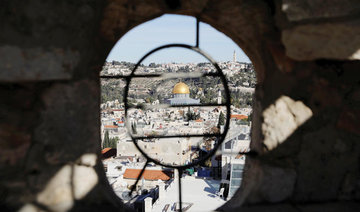
It quoted King Salman as saying that Saudi Arabia supported the Palestinian people and their historic rights and asserted that “such a dangerous step is likely to inflame the passions of Muslims around the world due to the great status of Jerusalem and Al-Aqsa Mosque...”
Earlier, the Saudi Cabinet expressed deep concern over such reports.
The step, if taken, will contradict the principle of not affecting ongoing negotiations, the Saudi Cabinet said after the weekly meeting chaired by King Salman.
The Cabinet extended firm support for the Palestinian people in establishing their state with East Jerusalem as its capital.
It insisted that the US take into consideration the grave and negative consequences of the step to avoid harming its ability to continue efforts to achieve a just solution for the Palestinian cause in line with the relevant international references and the Arab Peace Initiative.
Later on Tuesday, US President Donald Trump told Arab leaders that he intends to move his country’s embassy to Jerusalem.
Palestinian President Mahmoud Abbas, Jordan’s King Abdallah and Egyptian President Abdel Fattah El-Sisi, who all received phone calls from Trump on Tuesday, joined a mounting chorus of voices saying that any unilateral US move on Jerusalem could unleash turmoil.
Trump notified Abbas “of his intention to move the American Embassy from Tel Aviv to Jerusalem,” Abbas spokesman Nabil Abu Rudeineh said.
Abbas, in response, “warned of the dangerous consequences such a decision would have to the peace process and to the peace, security and stability of the region and of the world” and also appealed to the Pope and the leaders of Russia, France and Jordan to intervene.
The Jordanian monarch told Trump that moving the embassy would have “dangerous repercussions” and would obstruct US efforts to promote Israeli-Palestinian peace talks, according to a palace statement.
Egypt’s El-Sisi cautioned Trump against “taking measures that would undermine the chances of peace” and complicate matters in the Middle East, a presidential statement released in Cairo said.
None of the leaders’ statements said whether Trump, who was also due to talk to Israeli Prime Minister Benjamin Netanyahu, specified the timing of an embassy move.
But US officials, speaking on condition of anonymity, said Trump would sign a national security waiver — as have his predecessors — keeping the embassy in Tel Aviv for another six months but would commit to expediting a move. It was unclear, however, whether he would set a date, according to Reuters.
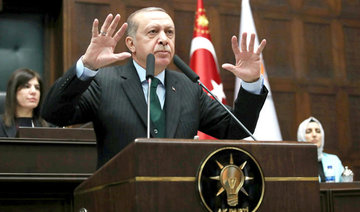
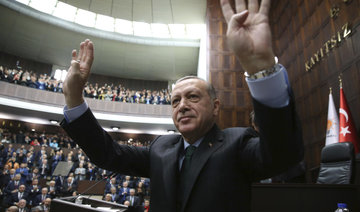
Turkish President Recep Tayyip Erdogan said Turkey may cut diplomatic ties with Israel if Washington goes ahead with the move.
“You cannot take such a step. Jerusalem is a red line for Muslims,” he said, adding that such a decision would be a violation of international law, and “a big blow to the conscience of humanity.”
Erdogan said Turkey would call for an immediate meeting of the Organization of Islamic Cooperation (OIC), which Turkey currently chairs, to oppose the move.
Experts think the potential fallout from recognition of Jerusalem will further complicate not only Turkey-Israel relations, by obstructing the ongoing efforts for rapprochement process, but will also have serious repercussions throughout the region.
“Such a decision would be ill-timed and controversial in the sense that provoking tension between the Arab world and Israel will not only undermine US efforts to broker an Israeli-Palestinian peace but also damage the fragile cooperation between Israel and the Gulf countries against Iran,” Selin Nasi, an Istanbul-based analyst of Israel-Turkey relations, told Arab News, while noting that Turkey’s capacity to prevent the US from recognizing Jerusalem is limited.