Pakistan’s Daachi Foundation: Celebrating the country’s heritage one wildly-popular event at a time

1 / 12
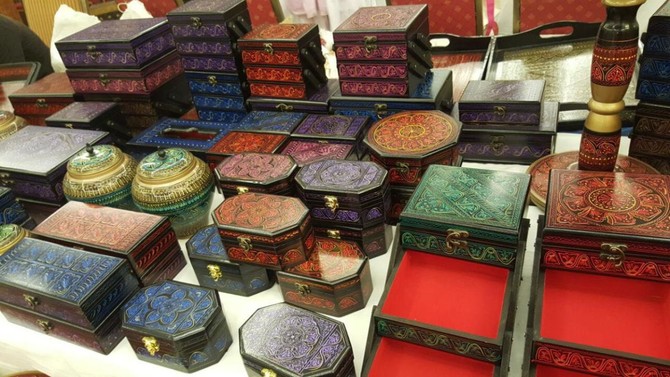
Trinket boxes with intricate carvings and hand painted details. (Courtesy Daachi Foundation)
2 / 12
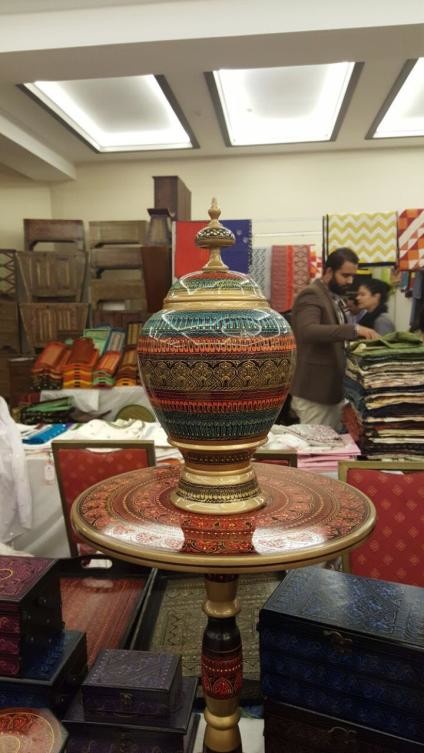
Colorful pottery. (Courtesy Daachi Foundation)
3 / 12
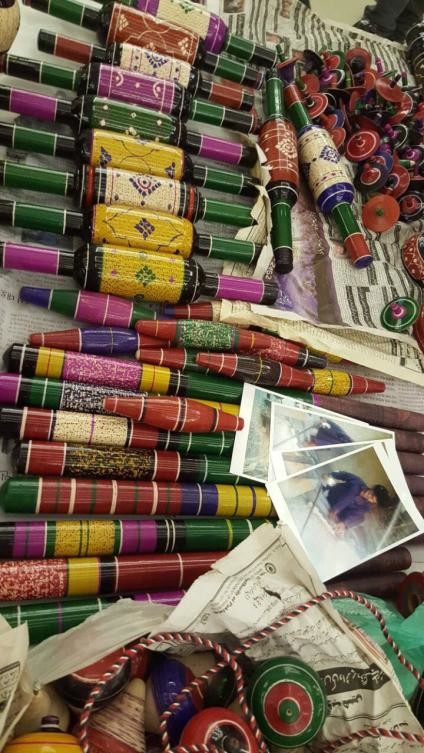
Hand painted rolling pins. (Courtesy Daachi Foundation)
4 / 12
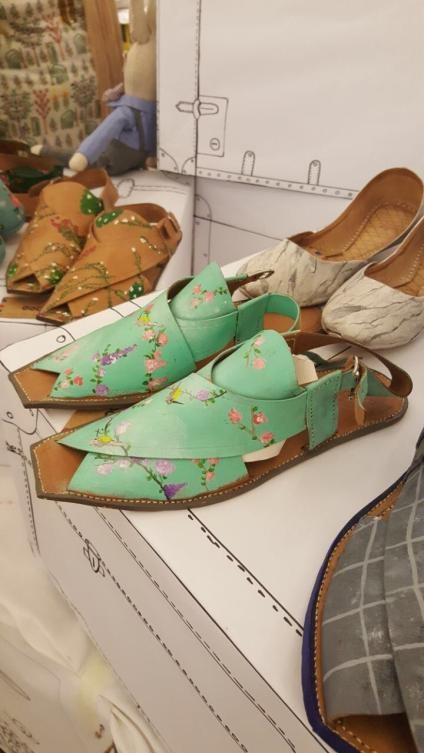
Hand painted Peshwari chapals. (Courtesy Daachi Foundation)
5 / 12
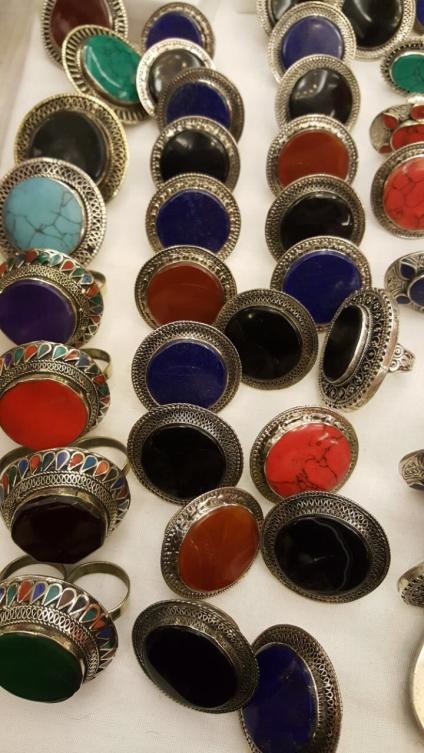
Traditional stone and silver rings, worn across provinces in Pakistan. (Courtesy Daachi Foundation)
6 / 12
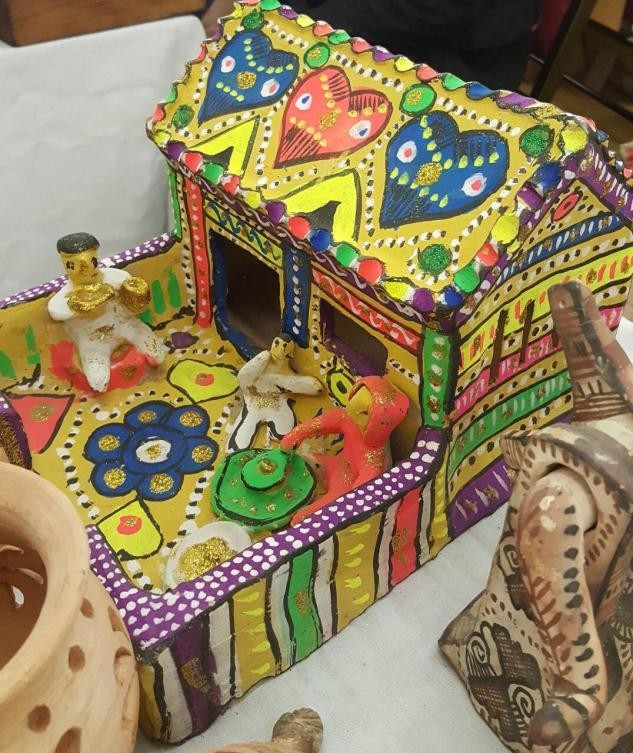
Hand painted decor for the home. (Courtesy Daachi Foundation)
7 / 12
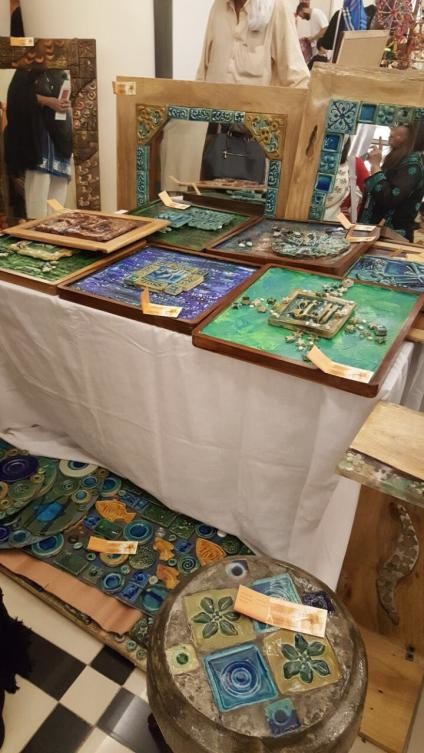
Mirror work. (Courtesy Daachi Foundation)
8 / 12
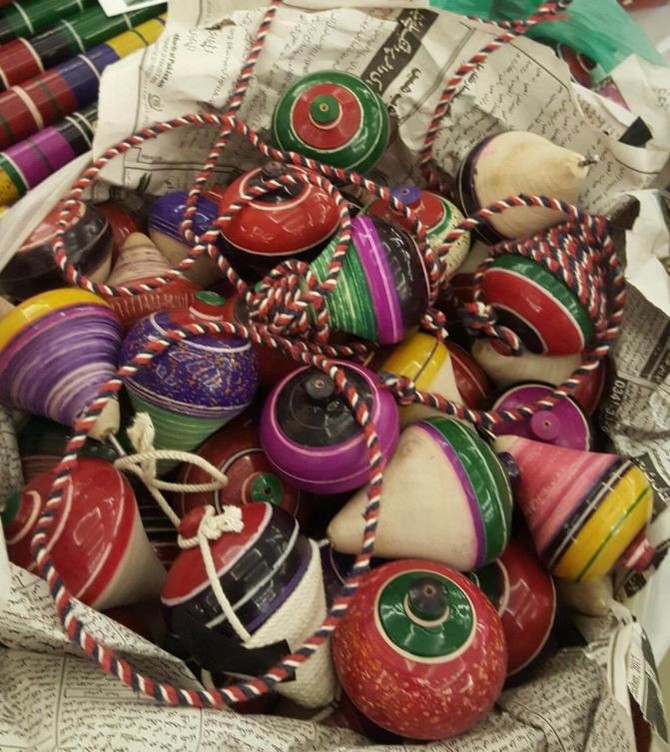
A craft project displayed at the event. (Courtesy Daachi Foundation)
9 / 12
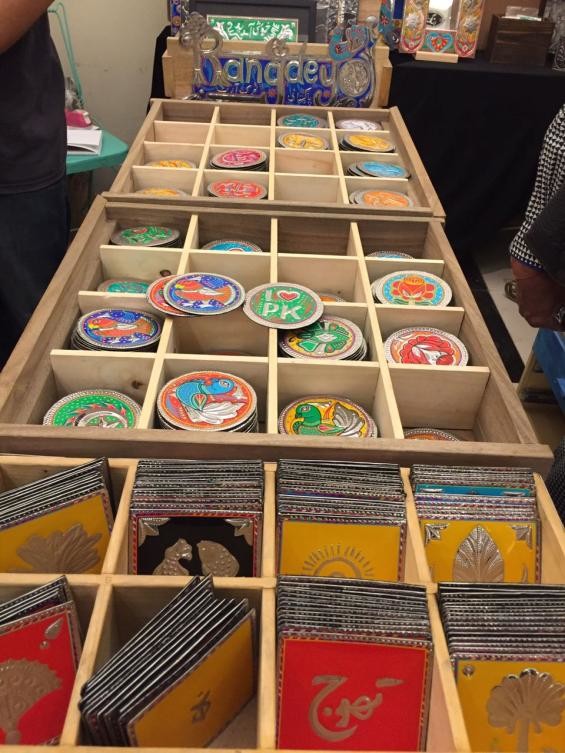
Metal and paint truck art inspired work put on coasters. (Courtesy Daachi Foundation)
10 / 12
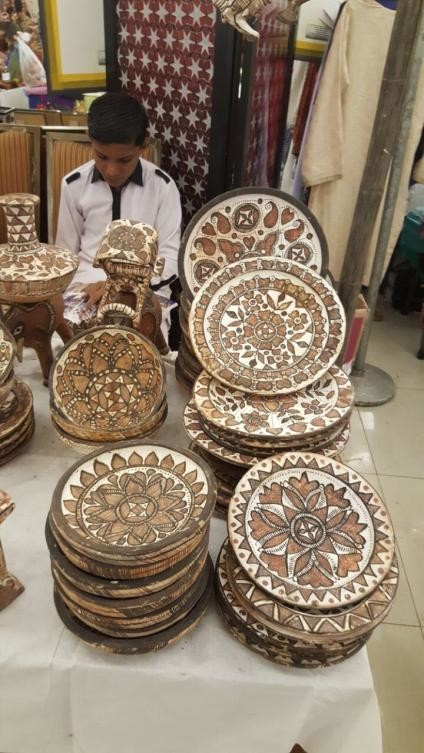
Etched clay plates. (Courtesy Daachi Foundation)
11 / 12
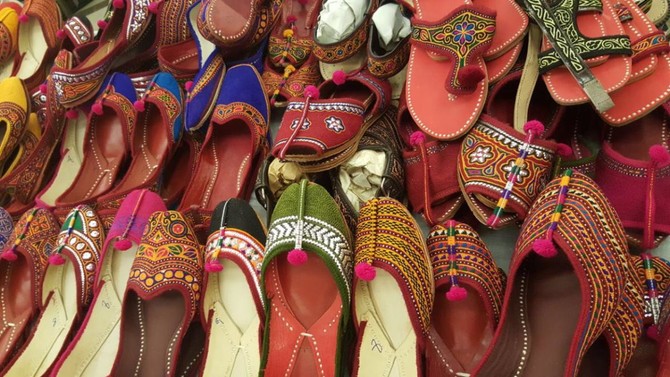
Traditional khussay, shoes worn by women as traditional dress in Pakistan. (Courtesy Daachi Foundation)
12 / 12
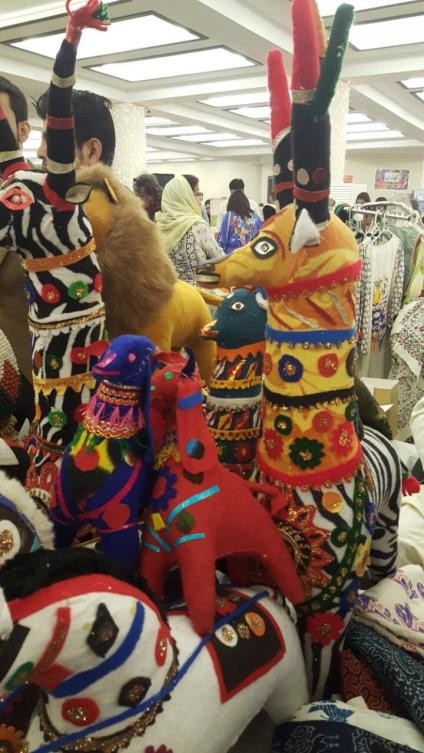
Handmade and embroidered stuffed toys. (Courtesy Daachi Foundation)
Updated 16 November 2017
Follow

Pakistan’s Daachi Foundation: Celebrating the country’s heritage one wildly-popular event at a time

LAHORE: The 11th edition of the Daachi Arts and Crafts Exhibition took place this past weekend at the Qasr-e-Noor Community Center in Model Town, Lahore. The non-profit Daachi Foundation strives to bring to the forefront Pakistan’s rich cultural heritage and history through preserving and exhibiting its craftsmanship.
In a time where fast paced and instant gratification outweighs the patience for intricacy, craft industries dominated by master artisans are increasingly threatened with extinction. Daachi’s exhibitions aim to bridge the gap between consumer and artisan.
Pakistan is home to a wide array of ethnicities, languages and approaches to everyday life. The craftsmanship that is used in carving a wooden stool, embroidering a regional style dress or painting a lamp all tell of the rich history of Pakistan and the tales of its many different people.
Since 2011, the Daachi market has grown exponentially. The founder of the organization, Ayesha Noorani, sought out beautiful venues to play host to the exhibitions, but it outgrew most spaces. Last year alone, the footfall for the event, which has developed a cult-like following, exceeded 10,000.
Daachi’s efforts have made Pakistani born and bred items must-haves in the country, growing the businesses of these artisans. A loyal fan base has been born as event after event brings with it a growing number of artisans from far and wide with exciting and innovative takes on centuries-old techniques. For artisans, who may find the investment expensive, Daachi provides them with transportation, free stalls and accommodation so that they can come purely to sell their hard work and help stabilize themselves as viable businesses.
Daachi is run by volunteers who are largely working professionals. “Whether they are art and design teachers or practitioners, architects and so on,” Sahar Atif of Daachi told Arab News that their goal is to “to preserve and protect the cultural heritage of Pakistan and to have an individual identity for that culture.”
With over 11 events having taken place in the last six years, Daachi is looking to further expand its reach. They plan to establish an Artisans’ Village, a permanent shop and residential set up for artisans to sell their goods, engage with designers and teach their craft.


Hamza Hawsawi on headlining The Fridge in Riyadh

Updated 14 February 2026
Follow

Hamza Hawsawi on headlining The Fridge in Riyadh

DUBAI: Saudi R&B artist Hamza Hawsawi headlined The Fridge’s “Concert Series KSA Season 1” over the weekend, performing a show in Riyadh’s JAX District as part of a two-day program spotlighting emerging talent.

Hawsawi’s performance followed “The Fridge Open Mic,” which took place at the same venue the night before. The open mic offered rising artists a professional stage to perform original material in front of a live audience, creating space for experimentation and discovery within the local music scene.

Speaking during the event, Hawsawi highlighted the importance of platforms such as open mics for artists. “I think it is important because an open mic is an opportunity to get to know new artists,” he said. “For industry professionals, like Fridge, it is an eye-opener to the scene, and it lets you understand how the scene is going, what kind of artists you’re gonna be dealing with in the future.”

From an artist’s standpoint, he added, the format remains essential for growth. “We do need open mics. We do need to be out there and to try different things, and to sing to different people, and to test our art and find out if people are gonna gravitate towards it or not.”

Hawsawi has spent more than 15 years developing a sound rooted in R&B, soul and pop, building an audience that now spans the region and beyond. He has accumulated more than 33 million global views and collaborated with a range of regional and international artists. 

His track “Million Miles” was selected as the official Rally Dakar anthem, while his live performances have included stages such as MDLBeast and the Abu Dhabi Grand Prix.

Asked whether he feels a responsibility to help shape the Saudi R&B scene, Hawsawi described a fluid relationship with that role. “Sometimes I feel that sense of responsibility,” he said. “Other times I feel like I’m just a human being trying to express my feelings … But we’re just artists at the end of the day.”

He added that while he sometimes embraces being a beacon for the genre, “other times I feel like I want to be low-key, and I don’t even want to be seen or heard.”

Hawsawi also reflected on one of his personal challenges as an artist in the Kingdom: writing and performing primarily in English. 

“That has been the biggest challenge to face,” he said. 

While Arabic remains the most widely spoken language in Saudi Arabia, Hawsawi explained that English allows him to express what he feels more clearly, particularly when it comes to emotion and meaning.

“The nuances of what I feel and all the metaphors for me trying to say something but not saying it, you know, not a lot of people get that,” he said, noting that his work often reaches a niche audience. “But I’m happy with that.”