



AlUla fuel stations redefine desert architecture

1 / 4
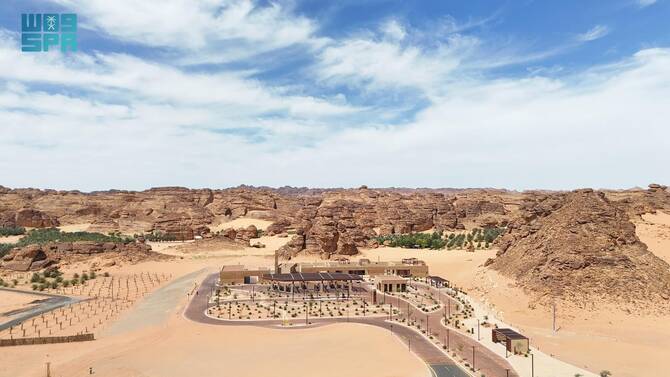
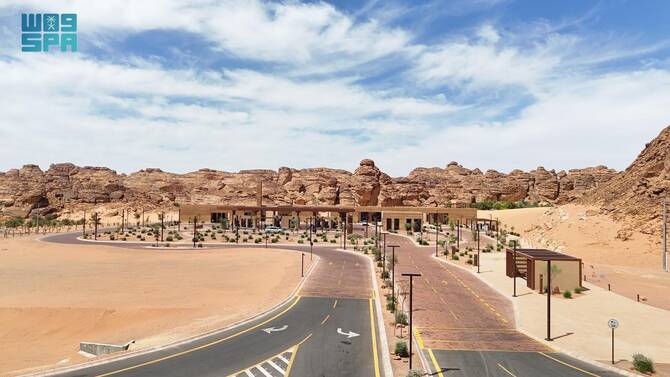
The designs use contemporary materials and lines that reflect AlUla's identity, enriching aesthetics and user experience while preserving the desert setting. (SPA)
2 / 4
The designs use contemporary materials and lines that reflect AlUla's identity, enriching aesthetics and user experience while preserving the desert setting. (SPA)
3 / 4
The designs use contemporary materials and lines that reflect AlUla's identity, enriching aesthetics and user experience while preserving the desert setting. (SPA)
4 / 4
The designs use contemporary materials and lines that reflect AlUla's identity, enriching aesthetics and user experience while preserving the desert setting. (SPA)
Short Url
Updated 15 February 2026
Follow

AlUla fuel stations redefine desert architecture

ALULA: Fuel stations in the AlUla governorate showcase a modern approach to urban planning, with designs inspired by the region’s natural landscape and desert palette.

They harmonize architecture with the environment, enhance the urban landscape, and redefine traditional fuel stations, according to the Saudi Press Agency.

The designs use contemporary materials and lines that reflect AlUla’s identity, enriching aesthetics and user experience while preserving the desert setting.

Architect Salwa Samargandi of SAL Architects developed these innovative designs, balancing functionality and aesthetics with inspiration from AlUla’s cultural heritage.

One fuel station project won the World Architecture Award in the Realized Projects category, selected by an international jury.

These initiatives are part of the Royal Commission for AlUla’s efforts to enhance infrastructure, support national talent, and improve services for residents and visitors.

The commission also established the AlUla Design Studio to guide architects and the community in creating projects that harmonize with the natural environment.

The studio offers consultations on new constructions and restorations, ensuring compliance with urban planning and sustainability standards.

This participatory approach preserves AlUla’s architectural heritage while empowering the local community to choose development options that respect the region’s history and uphold safety and sustainability.


Saudi Arabia launches initiative to reroute Gulf cargo to Red Sea ports

Updated 13 March 2026
Follow

Saudi Arabia launches initiative to reroute Gulf cargo to Red Sea ports

  • The initiative comes as shipping through the Strait of Hormuz has been severely disrupted by the widening conflict in the region
  • Since the US and Israel struck Iran last month, Tehran has moved to restrict passage through the waterway


RIYADH: Saudi Arabia has launched an initiative to redirect shipping from ports in the Arabian Gulf to its Red Sea ports amid the ongoing US-Israel-Iran war.

Transport Minister Saleh Al-Jasser, who also chairs the Saudi Ports Authority (Mawani), launched the Logistics Corridors Initiative alongside Zakat, Tax and Customs Authority Governor Suhail Abanmi, Mawani President Suliman Al-Mazroua, and other officials, the Saudi Press Agency reported.

The initiative will establish dedicated operational corridors to receive containers and cargo redirected from ports in the Kingdom's Eastern Region and other Gulf Cooperation Council states to Jeddah Islamic Port and other Red Sea coast ports.

Al-Jasser said the Kingdom was committed to ensuring supply-chain stability and the smooth flow of goods through global trade routes. Jeddah Islamic Port and other west coast ports, he added, were already playing a key role in accommodating shipments redirected from the east, while also linking Gulf cargo to regional and international markets.

The initiative comes as shipping through the Strait of Hormuz has been severely disrupted by the widening conflict in the region. Iran has long threatened to close the strait — the world's most critical oil and gas chokepoint, through which roughly a fifth of global oil supplies pass — in the event of a war.

Since the US and Israel struck Iran last month, Tehran has moved to restrict passage through the waterway, sending freight rates soaring and forcing shipping companies to seek alternative routes.

Saudi Arabia's Red Sea ports offer a viable bypass, connecting Gulf cargo to global markets without passing through the strait.